

An ever Resident Evil, 19/03/2026
Tom Regan dives deep on three decades of horror gaming magic 🧟

This week’s Video Games Industry Memo is supported by Catalyst

A large-scale consortium project led by the Christchurch Call Foundation addressing misogynistic pathways to violent extremism
We explain how Resident Evil has stayed at the top of the horror game for three decades
Baseball, sand and Norman Reedus lead the games of the week
And we ponder the implications of a vat of human brain cells playing Doom
Hello VGIM-ers,
Tom here, back once again in the VGIM Pilot seat, manically pressing all the buttons in a bid to steer us through another week.
As I pen today’s edition in a rainy south London, it somewhat pains me to know that Big George™ is lounging around in Mexico, presumably sipping margaritas and eating his body weight in tacos.
It seems unfair, however, to let George have all the fun. So, as well as celebrating my 35th birthday today (in what some are declaring ‘Regan Day’), I thought I’d gracefully let another ‘R’ take centre stage this week - the daddy of video game horror, Resident Evil.
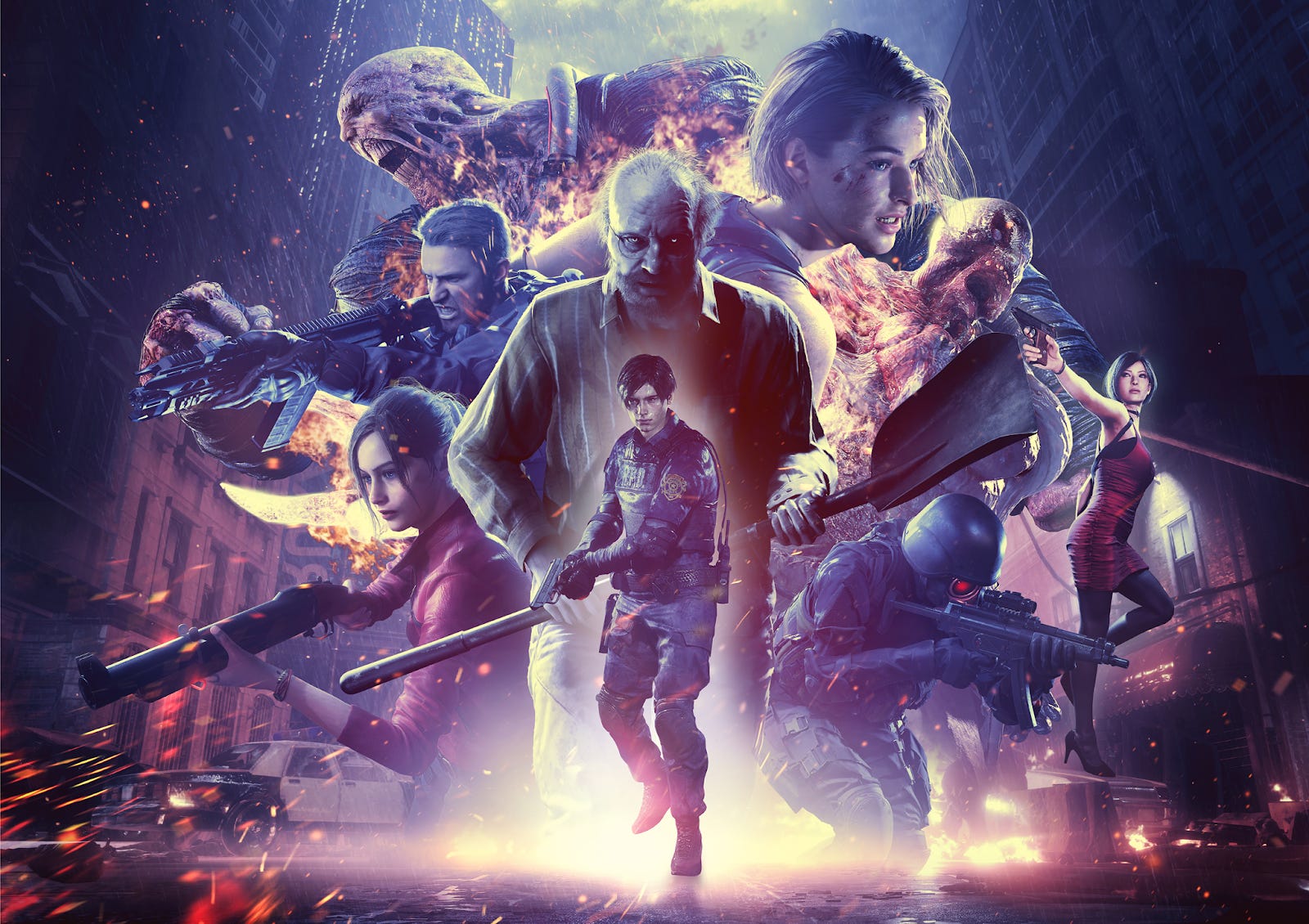
This year, Capcom’s creepy classic turns 30. While many franchises born in the ‘90s have vanished without a trace, much like the shuffling undead, Resident Evil remains a phenomenon that simply refuses to die. Age 30 is usually when we all start making worrying groans of our own, yet as Resident Evil hits over 183 million sales, Capcom’s zombie-led horror still appears to be in rude health - peeling flesh and mutating cranium aside.
So, for this week’s big read, dim the lights, grab a potted herb and join me and some spin-kick-happy guests as we delve into what makes Capcom’s seminal survival horror so unkillable…
The big read - Resident Evil at 30 - Why decades later, Capcom’s seminal survival horror series refuses to die
And a happy birthday to you too, Tom: It’s long been theorised that during times of global upheaval, people turn to fictional horror in a bid to find cathartic comfort. In 2026, as Gaza lies in ruins, Ukraine toughs out its fourth year of Russia’s invasion, and a US-Israel coalition drops countless bombs on the Middle East, by that logic, there couldn’t be a better moment to release Resident Evil: Requiem.
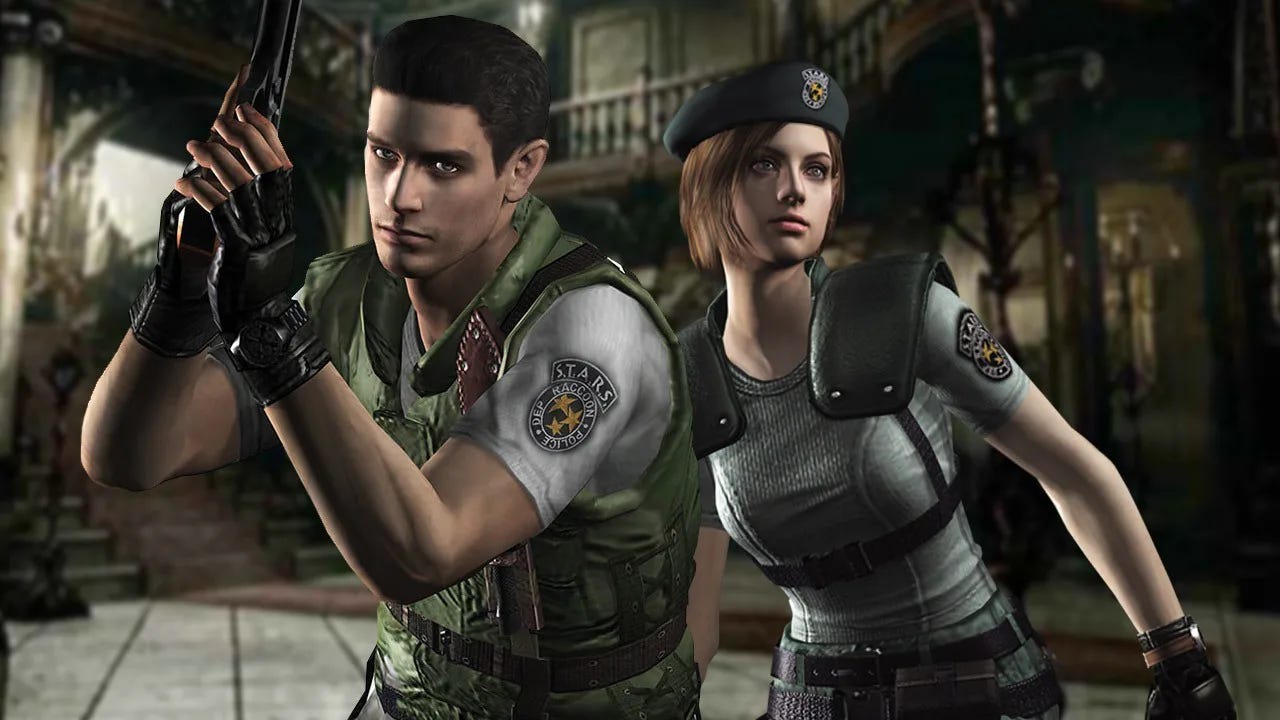
Dawn of the Digital Dead: While Silent Hill is the hipster virtual horror favourite, when it comes to blockbuster scares in video games, Resident Evil is really the only franchise that matters. Starting life on the PlayStation in 1996, Capcom’s John Romero-inspired opus combined action, zombies, puzzle-solving and unparalleled tension - with a distinctly B-movie twist. While video games had attempted to scare players silly throughout their nascent steps into existence, adventure games’ crude visuals and languid pace meant that they rarely translated into anything truly harrowing. It wasn’t until 1989, with Japanese RPG Sweet Home and 1992’s Alone In The Dark, that the medium successfully managed to unsettle players. Both games were huge inspirations for a young game developer named Shinji Mikami, whose aim was to harness PlayStation’s 32-bit tech to deliver truly visceral virtual scares.
Uncanny horror valley: “Back in the early days, when I was making the first Resident Evil, I spent three months studying the psychology of horror,” Mikami told The Guardian in 2014. “With Resident Evil, we went with human and human-shaped enemies because people are generally more scared by other people, rather than some obscure creature that we don’t recognise.”
Direct to the point: It’s a theory that undoubtedly paid off. When Resident Evil hit shelves, it proved that video games could scare audiences as much - if not more - than their Hollywood horror counterparts, forcing players to willingly put themselves in danger.“I loved the look of the game: the camera angles, the characters, the zombies, says Special Gun Productions and ex-Video Gamer Editor, Steve Burns. “Back then, people were banging on about games being ‘like movies’, but Resident Evil’s camera angle choices - the sense of it being properly ‘directed’ - made it closer to an interactive movie than any of that FMV tat of the time. In the mid-1990s, that was a big deal to a film dork like myself.”
Clench for success: While games weren’t short of guns and monsters before 1996, Capcom tied them together with a secret ingredient - tension. With limited bullets, scant healing items and infamously fiddly tank controls, navigating every new corridor and opening each new doorway became an exercise in sphincter-clenching terror. It’s why even 30 years on, the original Resident Evil remains a masterpiece, still oozing atmosphere in a way that many ‘90s games simply can’t emulate. It was also a runaway hit, shifting four million copies in its first year and spawning two PS1 sequels - single-handedly transforming the horror video game from a niche prospect into a highly bankable blockbuster.
Life long fear: “I don’t think it can be stated enough how smart Capcom has been about the series. “ reflects RPGSite owner and veteran games journalist, Alex Donaldson, “If you look at Resident Evil’s peers, those games that either debuted or exploded in popularity on the PS1 both inside and outside the horror genre, it has endured uniquely well.”
Over-the-shoulder of giants: While Mikami and his team laid the foundations for the survival horror genre that later Capcom titles Dino Crisis and Onimusha and rival franchise Silent Hill would emulate, in 2005, Capcom shocked the industry by redefining action games, dropping tank controls in favour of tight, over-the-shoulder gunplay in Resident Evil 4. It’s a game that not only changed the series forever but also set a lofty new standard for the entire action genre, inspiring countless imitators. “Resident Evil 4 essentially codified what we expect from third-person shooters,” says Burns, “A game so good you can do anything to it: remake it, put it in VR, etc, and it’s still the best thing you’ve ever played.”
Why Resi doesn’t stay dead for long
Fighting to keep up: Following Resident Evil 4’s success in the 2010s, it seemed as though Capcom had abandoned horror entirely. After Japanese developers led the way creatively during the early noughties, the dawn of the HD gaming era saw studios in the land of the rising sun struggling to adapt to the increased artistic and technical demands of creating HD-quality games. As Gears of War spawned a wave of third-person shooter imitators, Capcom followed suit, toning down the series’ horror elements to raise the action bar higher than they did with Resident Evil 4.
A change of perspective: Much like the tentacle monstrosities that explode out of its zombies’ heads, a large reason for Resident Evil’s continued success is that it’s a series that constantly evolves, adapting itself to the modern gaming landscape in order to survive. After 2012’s bombastic Resident Evil 6 failed to land with critics or consumers, Capcom turned its eye to the indie horror scene for inspiration. Taking their cues from Hideo Kojima’s P.T and 2013’s Outlast, 2017’s Resident Evil 7 shifted survival horror into first person, combining classic Resi gameplay staples with a newly cinematic sense of dread - winning back fans in the process.
Perfectly on trend: “A big problem we see time and time again now is games taking so long to build that by the time they release, the trends they chased are outdated,” reflects Donaldson, “RE7 is the perfect example of a developer and publisher reading the room, making adjustments, and catching the new trend at perfectly the right time - and it speaks to the overall approach that has made this series so successful in general.”
Emerging from the ditch: “After Shinji Mikami and his team boldly reinvented the series with Resi 4, it slid into a bit of a ditch quality-wise,” agrees Andy Kelly, PR Manager at Devolver and author of Alien Isolation book, The Perfect Organism, “ But with RE7 and almost everything that’s come since, Capcom have revitalised the series again and I’m as excited by it as I ever have been. I especially like how the series has become an almost anthology-like vessel for experiments in horror gameplay, environment design, and storytelling.”
Dream for a Requiem: The ninth mainline entry in the series - and 30th overall release - Requiem, continues this anthology-esque approach, seeing the franchise fuse its newer, first-person horror iteration - continued in 2021’s Village - and the bombastic action it popularised with Resident Evil 4. While not as critically acclaimed as Capcom’s lavish 2024 Resident Evil 4 Remake, Requiem is already a bigger hit, shifting 5 million units in less than a week.
The (survival) horrors persist
Zombie horde-ing your attention: Thanks to Resident Evil, zombies are now utterly unescapable in video games, paving the way for House Of The Dead, Dying Light, Left 4 Dead, Call Of Duty’s zombie mode, and a little franchise called The Last Of Us - stop me if you’ve heard of it.
The sound of fear: While Resident Evil’s mainline films, straight-to-streaming releases and cringe-inducing Netflix shows are largely memorable for all the wrong reasons, Resident Evil’s soundtrack continues to captivate, taking over London’s Hammersmith Apollo in December as part of a 30th anniversary concert tour. “Music might not be the first thing that comes to mind when most people think of Resident Evil (shout out to the Japan exclusive musical theatre production, Musical Biohazard: Voice of Gaia) but audio (or the lack of) is an incredibly important part of the franchise, given its survival horror setting,” says Mat Ombler, head of Music and Gaming partnerships at Laced Records and author of the MusicEXP newsletter. “The save room themes throughout the series are some of my favourite pieces of video game music; the literal sounds of safety and respite.”
A big tent: Thanks to its hugely varied strands of series DNA, post 2017, Capcom has wisely ensured that there’s always something for its varied fans to love. “By having different strands and styles of Resident Evil, Capcom both creates an incredible strength and a challenging weakness - there are a lot of fans of a lot of different styles of games, all of whom need to be addressed.,” reflects Donaldson, “But all of those people are engaged, and if you don’t like one you know the next isn’t far away, thanks to the nippy development cadence - which is a great position to be in.”
Ever-creative: Locked into a clever cadence of alternating between releasing lavish remakes and genre-blending new entries, it seems as though Capcom isn’t close to running out of ideas for the seminal survival horror series just yet. “As someone who has worked with Capcom and has seen how it creates its games behind the scenes, I’m confident that it will keep making great titles”, says Burns. “Like other long-running franchises that keep reinventing themselves, Resi has the knack for crafting noteworthy characters, particularly villains,” Burns continues. “Nemesis, Wesker, that tall lady with the hat: like the baddies in the best Bond movies, the games have compelling antagonists that stick in the memory, and that’s before you even get to the heroes and their (suplex-driven) evolutions between games.”
An ongoing inspiration: As studios shutter each week and once seemingly untouchable AAA juggernauts like Ubisoft repeatedly fail to recoup investments, Resident Evil serves as the rarest proposition in 2026 - a consistently bankable AAA blockbuster. “In this world of live service games that live forever, we need more examples of great-quality, critically-acclaimed, and wildly-successful single-player games.” Donaldson reflects, “Resident Evil has become the sort of thing that could become a north star: reasonable scope, smart budgets, a good release cadence, and a strong sense of variety within those releases. Resident Evil provides a strong example of what can work in the space - and if that example went away, the industry would be poorer for it.”
A message on behalf of our supporter Catalyst: VGIM is running its first-ever online webinar on Tuesday 31st March dedicated to building healthier video game communities.
Join us, and a panel of experts, to discuss the work of Catalyst, its digital bystander training programme, and how fostering positive video game communities can create a better world.
You can sign up for the event here.
Events and conferences
PAX East, Boston - 26th-29th March
London Games Festival, London - 13th-19th April
Games for Change Summit, London - 15th April
gamescom Latam, São Paulo - 29th April - 3rd May
Summer Games Fest - Los Angeles - 5th-8th June
Games of the week
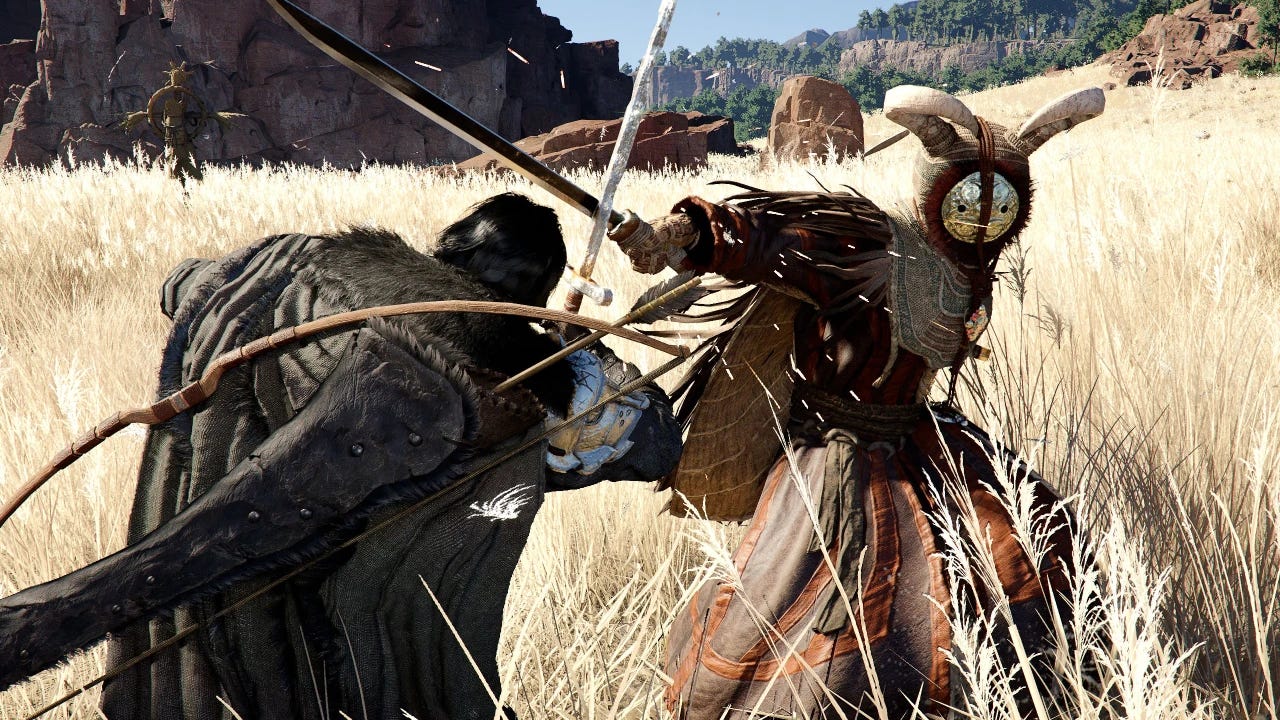
Crimson Desert - Not to be confused with Crimson Dessert, the Red Velvet baking sim, Pearl Abyss’ latest open-world RPG is a prequel to the hugely popular MMO Black Desert Online. Expect dynamic combat, arcane foes, and presumably, a lot of sand.
MLB The Show 26 - Long-running baseball game MLB The Show is back, bringing virtual baseball to the masses. Will it be a home run? Or just one of the bad things that happens in baseball? Either way, I’m very much out of my depth.
Death Stranding 2 - Nine months after its initial PS5 release, Hideo Kojima brings his surrealist Norman-Reedus-starring delivery sim to PC, taking the goo-battling babysitting to giddying new heights. Lord knows how modders will attempt to make this game any weirder, but I look forward to seeing them try.
Before you go…
Australian startup Cortical Labs is doing its bit to grow the global video game audience by, checks notes, getting petri dishes full of human brain cells to play Doom.
The Guardian has taken a closer look at the company’s work, pondering whether this blob of human matter is displaying true sentience.
Keep up with VGIM: | Linkedin | Bluesky | Email | Power Play |