

Combatting antisemitism in games, 21/05/2026
We explore a new tool tackling anti-semetic hate crimes in games


The Anti-Defamation League discusses tackling anti-semitism in games
China bans latest Nvidia gaming chip during Trump’s state visit
Forza Horizon 6 screeches its way to the top of the week’s releases
Hello VGIM-ers,
Welcome to you from noisy North London. It turns out that when Arsenal win the Premier League A LOT of people honk horns in Wood Green.
Anyway, I have a smidge of news about South London book events that I think you’ll like.
I’m heading to Backstory in Balham on Tuesday 16th June to chat about Power Play. And I’m being interviewed by a very special guest.
Keith Stuart, gaming correspondent at The Guardian and thoroughly brilliant author, will be politely questioning/grilling me about all things video games and geopolitics.
Tickets to the event are £15 or £35 if you want to throw in a hardback copy of the book.
You can join us for our chit-chat here.

The big read - Combatting antisemitism in games
Grim statistics: Antisemitic hate and violence have been rising around the world. In December 2025, 15 people were murdered in Sydney in an anti-semitic attack. In London, there have been arson attacks on ambulances owned by a Jewish charity and stabbings in Golders Green – an area considered home to a large amount of the capital’s Jewish population. Antisemitic assaults also reached a record high stateside in 2025.
Hate within game spaces: Hate has also, unfortunately, found its way into video game ecosystems. In 2024, the Anti-Defamation League (ADL) revealed that Steam was hosting 1.8 million unique instances of hateful content across its platform. This included thousands of groups, millions of avatars and user profiles containing references to Nazism, approving of ‘white power’ or glorifying violent extremists. The ADL criticised Valve for ‘failing to systematically address the issue of extremism and hate on the platform.’
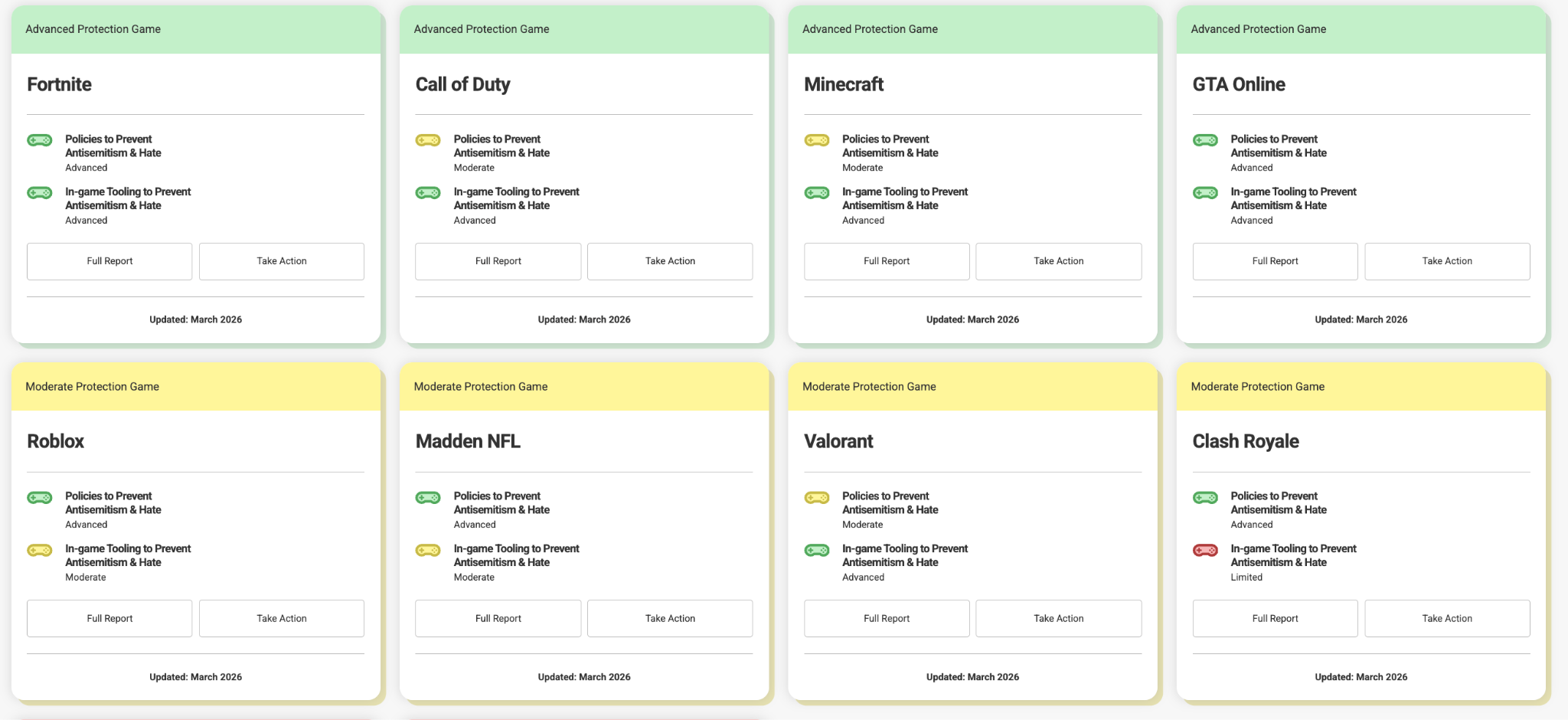
A new tool: After publishing its research, the ADL began to build a tool to assess games and game platforms for hateful content. This resulted in the creation of the Online Gaming Leaderboard, a resource which rates 10 popular games for how their policies and tools handle antisemitic hate. It then pops out a rating and report card to alert the company about the issues identified by the organisation, and to provide parents and players with information about the game they’re playing. Big winners included Call of Duty, Minecraft and Grand Theft Auto Online. Counter-Strike 2 and PUBG, by comparison, scored poorly.
Pertinent questions: What goes into the rating system that the ADL has created? What has the leaderboard taught us about the approach of leading developers towards antisemitic and extremist content? And where does it go from here? I chatted with Daniel Kelley, Senior Director, Center for Technology and Society at the Anti-Defamation League, to find out more.
How the system works
Filling a gap: The ADL created its Online Gaming Leaderboard to transparently assess how games handle antisemitic and hateful content. “There was previously no robust public-facing resource to evaluate the safety of online multiplayer games as digital social spaces,” says Kelley. “The leaderboard is the first-ever comprehensive public evaluation of how leading video game companies address antisemitism and hate in their online multiplayer games.”
Assessing social spaces: The leaderboard is designed to inform people about the nature of the online spaces they’re about to play in. “Our goal is to measure the efforts of video game companies to make their online multiplayer games safe, especially in terms of the social aspect of these spaces,” he said. In parlance that’ll be familiar to British readers, it’s about rating the atmosphere in the pub rather than what’s on the telly.
Lost to the ether: The ADL found it hard to measure exactly what was going on via in-game communication because of its ephemeral nature. “Most online game spaces are not persistent in the way that traditional social media is — when a match of Fortnite ends, for example, all of the interactions that happened during that match are no longer visible to anyone, including researchers,” explained Kelley. This led to it focusing on the framework and technologies used by developers to police hate instead.
Points on the board: Its scoring system reflected this focus. “Games were evaluated on criteria in two broad categories: policies to prevent antisemitism and hate and in-game tooling to prevent antisemitism and hate,” Kelley told me. Titles were assessed by eight core criteria, divided into four in each category. On the policy front, the leaderboard awards different levels of points for policies countering antisemitism and hate, policies expressly forbidding terrorist or extremist content, whether it displays an in-game code of conduct and if the company has documented plans on when it escalates to law enforcement. In-game moderation tools, meanwhile, were rated on their effectiveness in filtering out antisemitic or violent anti-Israel usernames. The ADL also assessed how well blocking, muting and reporting worked within games. It also applied demerits to games where it identified a disconnect between policies and user reality, such as the presence of antisemitic experiences on a user-generated content platform.
An important clarification: At this point, I paused to check with Kelley how the ADL defined ‘violent anti-Israel usernames’ in its testing process to determine whether it risked eliminating critical free speech of Israeli leadership (e.g. I hate Netanyahu) or implied criticism of its policies (e.g. a phrase like Save Gaza). Kelley told me that the two terms they tested were “Killzionists” and “murderIsraelis”. This provided meaningful clarification that satisfied me that the system was focused on hate and wouldn’t inadvertently suppress reasonable freedom of expression (whether knowingly or otherwise).
Procedure generated: With the system in place, the ADL picked its ten titles to measure, created its report and produced a scorecard for each game. It then contacted games companies ahead of publication to offer them a chance to correct elements of the organisation’s rating system, or engage on areas of concern identified.
Lessons learned
And the scores are in: I headed to the ADL’s leaderboard to check the ratings of the 10 games it investigated. In its traffic light scoring system, four games achieved a green Advanced Protections rating (Fortnite, Call of Duty, Minecraft and Grand Theft Auto Online), four games reached a middling Moderate Protections amber score (Roblox, Madden NFL, Valorant and Clash Royale), and two came out with red Limited Protections ratings next to their names (Counter-Strike 2 and PUBG).
Defying expectations: One of the things that immediately stood out to the ADL was the fact that games with violent content or reputations were often better at protecting players from hate. “A game’s public reputation regarding content does not necessarily mirror its commitment to safety,” Kelley said. “For example, two of our top-rated games are Grand Theft Auto Online and Call of Duty. Both of these games deal with adult content — crime and war — so it may seem strange that these are “safe” online games to play. But what we found is that both companies that make these games have done a significant amount of work to create robust policies and user tools, possibly because of the nature of the content of their games.” This contrasted with a platform like Roblox, which Kelley said, “only had moderate protections according to our evaluation.”
Constructive conversation: Kelley also told me that game companies were often more responsive to concerns raised via the leaderboard than they expected them to be. “Prior to launch, we met with almost all of the video game companies whose games we were rating,” Kelley said “In the conversations, we wanted to ensure that our ratings were accurate and to advocate for them to do better in terms of the gaps we pointed out. Notably, EA and Take Two acted based on our first round of engagement prior to launch in fairly significant ways.”
Raising the bar: Although the industry has engaged with the issue, the ADL did find other companies to be less responsive. Kelley wants to see more support for people in the biz who are pushing for concerted efforts to counter hate. “While reviewing the criteria for the leaderboard with experts in the field, we heard broadly that these were an effective baseline of expectations for online multiplayer games, but that in the future, we should raise the bar,” he argued.
Ahead of the social media game: However, Kelley was also keen to speak favourably of the industry’s overall approach – especially in comparison to social media businesses who are quietly backsliding on addressing hate on their platforms. “In the past, I have said that the game industry is behind social media in terms of its maturity in dealing with these issues”, Kelley said “Given the game industry’s continued commitment to leaning in on these issues, and the huge steps back traditional social media companies like Meta and others are taking around hate, I would reverse that perspective: the game industry is actually being a lot more thoughtful and forward looking on these issues at present.”
On the board
Building on the foundation: According to Kelley, “the launch of the leaderboard is just the beginning” for the project. Kelley told me that the ADL plans to assess more games against its criteria, update its report cards for the 10 games that it has rated so far, and check how useful it is for the leaderboard’s main audiences as it moves out of beta testing.
Widening the net: My feeling is that the ADL’s work is a useful starting point for a much bigger conversation about how we cultivate safe digital spaces in general. Its overall approach towards countering antisemitism and hate is understandable given the organisation’s focus. But with other specific forms of hate, such as misogyny, racism and homophobia measurably making spaces more dangerous – and building pathways to radicalisation or violence in the process – the initiative feels like one piece in the puzzle rather than the full jigsaw.
Serious games: Still, one of the central conclusions of Power Play is that civil society doesn’t take the power of video games as a digital third place capable of influencing reality seriously enough. This is, at the very least, an expression of what happens when an organisation does. And if that can meaningfully reduce hate online and harm in our streets, I’d like to see the approach rolled out more widely in the future.
News in brief
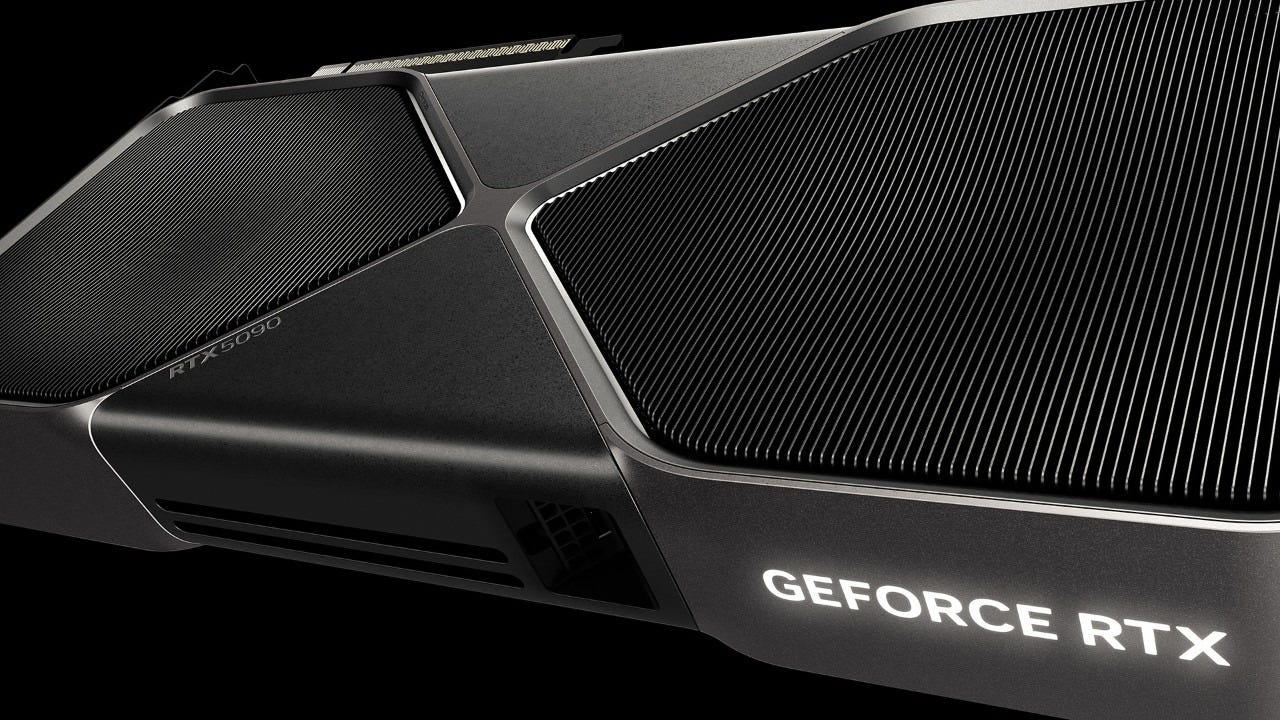
Huangway or another: An FT exclusive reveals that Beijing banned Nvidia gaming chips during Jensen Huang’s visit. Last week, Huang hopped onto Air Force One to join Donald Trump’s trip to China, and the People’s Republic responded by quietly adding the RTX 5090D V22 chip to their customs list of banned goods. As both countries battle it out for AI domination, China is loading up on chips from domestic companies Huawei and Cambricon. While the tech CEO is betting that the “market will open” after the US thumbs up licenses to sell H200 chips to China, no chips have actually been shipped due to regulatory hiccups.
Victory Royale?: David smashed Goliath, Muhammad Ali knocked out Frazier, and now Fortnite shimmies its way back into Apple’s app story everywhere – except Australia. Epic Games and Apple have been hashing it out since 2020, when the latter removed Fortnite from app stores for bypassing platform fees and offering their own in-app payments. Epic parried by accusing the company of forcing “junk fees” and anticompetitive practices. Now the game is back, so long as Apple holds up their end of the bargain and publicly discloses its fee structure…
Pirating players: Hackers broke into a podcaster’s PlayStation Network account, locking him out of hundreds of digital games. Colin Moriarty, host of Sacred Symbol and ex-editor for IGN, posted about the cyberattack on X. Despite Sony fixing the issue swiftly, the attack shows how surprisingly easy it is for hackers to take over PSN accounts. Last year, a French journalist was hacked and realised that cybercriminals could bypass 2FA and reset access simply by phoning up customer service, handing over the account username and reading out an old transaction number. Sony has said diddly squat about the whole hoo-haa, so keep an eye out for any irregular transactions on your account. As the pirated profile warned, “you’re next.”
OKRE’s Computing: Ukie teamed up with OKRE and BFI to publish a report on video game impact. Turns out, we don’t know all that much about games, neither on their “economic value” nor their social and cultural influence. Mostly, this is down to a lack of accessible industry data. “As a result, decisions about and within the sector are based on a limited, partial view,” they claimed. It’s ok, guys, we just need to lock in.
Game guides for everyone: Discord has dropped a shiny new Player’s Guide, complete with Wellbeing Principles. This library of resources is there to help navigate digital discourse, online relationships and empathy through handy tip sheets. Plus, they’re thrown in a course on empathetic communication, which has tips like saying “mh-hmm” during calls and actually helpful stuff for navigating suicidal chat. Built with Crisis Text Line, ECPAT (a global charity for child safety), The Christchurch Call and Gamersafer, among others, the guide hopes to make online chat friendlier.
Moving on
Luella Moore has started as the Senior Producer for Melbourne International Games Week...Rob Vicars now has the title Director, Global Gaming and Creative Sync at Warner Music Group…Ana Vasquez is the EMEA Communications Manager for Niantic, working on Pokémon Go…And John Ciancutti is Roblox’s brand new Chief Growth Officer…
Jobs ahoy
Soul Assembly has an Executive Producer gig in Leamington Spa…Miniclip has reposted its opening for a Senior Legal Counsel, Product & Regulatory…Roblox is hunting for a Senior Manager Policy Comms on a short-term contract…Discord wants a Director of Product Communications in its SF office…And Take-Two still has a Director, Global Affairs (Europe) post open…
Events and conferences
Power Play Book Tour, UK - Multiple dates, May-July
BitSummit, Tokyo - 22nd-24th May
Games Industry Law Summit, Berlin - 2nd-4th June
Summer Games Fest, Los Angeles - 5th-8th June
VGIM Business Breakfast, Brighton - 15th July

Games of the week
Forza Horizon 6 - Power slide around an open-world version of Japan in the latest entry in Playground Games’ ever-popular racing series.
LEGO Batman: Legacy of the Dark Knight - Watch Traveller’s Tales develop the DC game Rocksteady probably should have made next, but with a lot more LEGO involved.
Yoshi and the Mysterious Book - Flip through this puzzle-packed, family-friendly adventure with more than a hint of Yoshi’s Island on the Switch 2.
Before you go…
Kingdom Come: Deliverance developer Warhorse Studios has confirmed that it is working on a brand new role-playing game set in Middle-earth.
VGIM can confirm that we’re already excited at the prospect of sacking off its world-defining main storyline to spend hours manually sharpening virtual swords at a nearby blacksmith.
Keep up with VGIM: | Linkedin | Bluesky | Email | Power Play |
Thanks to Anna Mahtani for scribbling the news, checking for typos and constantly topping up our water cups in the office this week.
 | A guest post by
|
Israel is a violent genocidal regime, and its supporters have been very effective at stifling dissent across the west. If you think this won't be weaponized to block political speech then you're very naive.
I think this is a good article, but one that's weakened by only talking about Nazism and White Power, not formally labeling the two actual attacks mentioned in the opening paragraph.