

How LGBTQ+ video game content is censored across the world, 11/06/2026
A new VGIM long-read report lifts the lid on censorship of queer game content

This week’s Video Games Industry Memo is sponsored by Moore Kingston Smith

Advising businesses across the video games industry, with a full range of commercial and financial services.
VGIM publishes 12,000-word report exploring LGBTQ+ censorship in games
Summer Game Fest’s biggest announcements dominate the news
NBA’s new 3 versus 3 multiplayer game tops the week’s releases
Hello VGIM-ers,
I’m writing to you this morning from First Playable in Florence, where I’m here promoting Power Play and writing about the Italian games biz (more on that later this month).
Before we get into today’s newsletter, it’s one week to go until Power Play launches. And a few people have asked me how best to support the book before it lands on Thursday 18th June in the UK.
The simplest answer is to pre-order it. Whether you want to buy the hardback or listen to the audiobook, getting your order in now helps rack up first-week sales, increases visibility on platforms and encourages bookstore owners to invite me to more events. You can get your pre-order in here, via your favoured bookseller or audiobook distributor.
The next best thing is to tell people about Power Play. Word of mouth is just as big a deal in selling books as it is with games.
If you’re excited to read the book, want to share how it looks in your hands when it arrives next week or want to be kind about the quality of my audiobook narration, tell your friends about it in person or share on social media. Use the link above to make sharing easy.
Finally, you can support the event by attending one of the events on my book tour.
I’ve just added Sunday Papers Live to my tour schedule on 5th July, but I have dates in London, Bradford, Cambridge, Norwich and New York coming up (and more to announce next week too). Get a ticket to one of the events here.
And with that done, let’s get into the newsletter.
The big read - How LGBTQ+ video game content is censored across the world
Some context: Over the past year, VGIM has reported on the rising censorship of lesbian, gay, bisexual, transgender, queer, and other sexual orientations and genders (LGBTQ+) content in video games. We’ve examined how Russia’s censorship agencies work with storefronts like Steam to chastise developers for creating queer games. We’ve unpicked Steam and itch.io’s blunt censorship of LGBTQ+ titles due to a botched response to an international pressure campaign. We’ve also highlighted concerns over game companies rolling back support for Pride, as part of wider fears about industry self-censorship.
A really big read: But I felt that there was a lot more to say on this topic. That’s why VGIM has produced its first report called Trapped in the Network. Funded by industry advocacy group Out Making Games, it explores why LGBTQ+ communities are targets for oppression across the world, why digital censorship plays a role in silencing their voices, and how video game content has become a prime target for states and non-state groups seeking to suppress the community.
Grab it now (or read on for the summary): You can read the full 12,000-word report by downloading it using the button below. But if you want a quick summary before you dive in, then read on.
How we got here
Quick précis: The report opens by explaining how censorship evolved in a digital age, why LGBTQ+ communities have been censored generally and why video games have increasingly attracted the attention of censors.
The three ‘fs’: Before the arrival of the internet, censorship was a predominantly centralised process governed by states through fear and good ol’ fashioned physical violence. Three decades on from the rollout of the net, it has decentralised enormously. Whereas censorship used to be all about creating fear from the top-down, this is much harder to do in a digital landscape when content is easily created and shared by individuals. So, modern censors changed approach. They impose friction on users by making it harder to access content online through filters, blocks and other technological means. They flood the online conversation using friendly media, supporters or bots to dilute real voices. And by imposing punishments publicly and loudly against hand-picked targets, authorities can project fear more effectively than ever through digital channels. This encourages people and communities to self-censor; silencing targeted groups in a way that makes the rest of the population feel like nothing is going on.
Four actors: This decentralised censorship landscape is shaped by actors across society, who work in tandem — whether deliberately or organically — to chill free expression. States continue to set the rules for censoring content, setting out punishments for breaking them and deploying resources to enforce them. Platforms increasingly act as an indirect policer of these rules, trading ongoing access to a market in return for operating on behalf of censors. Businesses and institutions end up self-censoring content to try to meet the demands of platforms, as much as to stay on the right side of the state. And in a flattened digital landscape, groups or individuals who lobby noisily can impose further fear on creators through grassroots pressure campaigns – deepening self-censorship by engendering fear, or helping states identify content or creators who may have slipped its net.
Wedge issue: LGBTQ+ communities are a target for oppression because typically censorious actors like authoritarian governments, religious regimes and populist groups seek to ‘other’ queer communities to divide and conquer their populations. Censorship (or self-censorship of) LGBTQ+ content and communities is invaluable because it suppresses stories that could push back against the prevailing narrative. The enforced silence also allows dominant powers to spread false or malicious narratives about the community unchallenged, deepening control and strengthening oppression simultaneously.
Commercial censorship: Trapped in the Network shows that censorship of LGBTQ+ content within video games has occurred for decades. Initially, it was driven less by state censorship and more by prudish attitudes towards the community in the United States in the 1980s and 1990s. Games such as Caper in the Castro, Final Fight and even Super Mario Bros 2 each made adjustments to queer-coded games to secure publishing deals or certification to release as a by-product of moral panics around sexuality.
The emergence of an inclusive playerbase: However, censorship of LGBTQ+ games in the past decade has deepened because, somewhat ironically, queer games and communities became a major part of the industry. Games like The Last of Us, Baldur’s Gate 3 and Stardew Valley demonstrated the cultural and commercial value of representing queer experiences. Workforce surveys such as Ukie’s census showed that the UK industry workforce was twice as likely to be LGBTQ+ as the general population. The Gay and Lesbian Alliance Against Defamation (GLAAD) identified a similar rainbow dollar trend in the player base in the US, reporting that 17% of the country’s players identified as LGBTQ+.
An authoritarian counterattack: However, the prominence of LGBTQ+ content and communities in games occurred just as the political environment surrounding the industry became more authoritarian. The rise of China as the biggest consumer market, Saudi Arabia as a major investor and the outright hostility of the modern US political right to LGBTQ+ has centred the industry around territories which, for varying reasons, suppress queer voices. Online safety laws designed to rightfully protect children and individuals from sexual exploitation online have been maliciously weaponised to conflate LGBTQ+ content with inappropriate or illegal sexual content. And the industry’s failure to combat misogynistic hate movements such as 2014’s has empowered pressure groups to attack creators from minority backgrounds, including the LGBTQ+ community. This created the conditions for censorship and self-censorship of game content to rise worldwide.
A message from our sponsor: Moore Kingston Smith advises businesses across the video games industry, combining sector expertise with a full range of commercial and financial services. From Video Games Tax Relief and Expenditure Credit to growth strategy, business planning and exit, MKS supports companies at every stage of their lifecycle. The team also provides tax, outsourcing and cash flow management services, alongside support for international expansion - helping studios stay focused on creating games while building successful, sustainable businesses. Find out more here.
How censorship of LGBTQ+ games actually works
Onto the practicalities: After explaining how censorship of LGBTQ+ games and communities has evolved, Trapped in the Network explains how it happens via the four main actors propping up modern decentralised digital censorship.
Rules of the censorship game: At a state level, countries continue to set the rules of censorship and create the enforcement structures to suppress LGBTQ+ content. Regulators in states like China, Russia and Saudi Arabia set vague but flexible rules banning game content which promotes ‘non-traditional’ genders or sexuality (e.g. Russia) or ‘effeminate’ masculinity (eg. China) to give them maximum discretion to ban content they don’t like. They use regulatory bodies like content rating agencies, culture ministries or the state’s official censorship body to stop LGBTQ+ content getting into the market (e.g. Saudi Arabia’s General Authority for Media Regulation). These enforcement bodies then enact those deliberately vague laws to empower them to take action against queer content, such as ordering stores to delist titles that get past the censorship process or removing market access for businesses that are seen to support queer content when politically convenient (e.g. Russia’s decision to ban Roblox in part for featuring LGBTQ+ experiences and content). This creates fear for communities and creators in the country, as well as market entrants.
Providing a platform: Platforms and storefronts are the next layer of censorship because they work — whether willingly or not — with regulators who enforce censorship to maintain market access. Many do this by responding to content takedown requests directly to take down LGBTQ+ video game content on request. But platforms often inadvertently expand censorship through poor moderation strategies, or by allowing inadequacies in their infrastructure to be weaponised by states or pressure groups to affect queer creators operating outside censored territories. Steam and itch.io’s response to Collective Shout’s campaign to convince payment providers to withdraw support for each store is a prime example of this in action. Because neither store had an effective content rating or moderation process to protect legitimate free expression, the blunt removal of thousands of games with ‘sexual’ content caught many that simply featured LGBTQ+ themes. This imposes friction on queer content, reducing discoverability, damaging commercial viability and diminishing voices.
Censoring the self: Beyond platforms, game developers and publishers have contributed to the problem through self-censorship. Whether through fear of harm or through desperation to enter a market, decisions by developers to tone down — or reduce — LGBTQ+ content within their games contribute to a chilling of free expression. Removing support for queer communities within titles that previously backed them publicly (e.g. Jagex’s rollback of Pride content in Runescape) or ‘straight-washing’ content to gain entry to markets (e.g. Riot’s decision to remove K’Sante’s LGBTQ+ identity in League of Legends to enter markets like China and Turkey) are prime examples of self-censorship. This shows how fear quietens the community’s voice, often where it is most needed.
Pressure groups attack: Finally, the report shows how groups and individuals can apply pressure from the bottom up to deepen censorship of LGBTQ+ content and other minority groups. The most prominent example in the past few years was the concerted attack on narrative consultancy Sweet Baby Inc. What started as an unfounded attack against a business providing much-needed sensitivity services for game developers, including when writing LGBTQ+ stories effectively, turned into a hate campaign that seeks to harass developers creating games which promote the “avoidance of traditional male and female terminology” in their content. But it goes beyond this too, with creators on Steam being targeted by ‘No Woke’ campaigns for featuring queer content and 52% of LGBTQ+ players reporting to GLAAD that they have received hate online. This floods the information environment with an inaccurate perception of what players think about LGBTQ+ content, dissuading developers from supporting the community and strengthening actors willing to politicise the debate (e.g. Elon Musk suggesting Sweet Baby Inc was at the centre of Gamergate 2).
The contagion effect: The biggest problem with increasing censorship of queer content is that it does not confine itself to borders. With games plugged deeply into digital infrastructure and reliant upon selling globally, the values transmitted from markets like the United States and China – as well as from investment hubs like Saudi Arabia – often spread to the rest of the world. This risks turning localised censorship efforts into globalised norms.
How to fight back
Bravery needed: So, what can be done about it all? The report rounds off with a range of conclusions, primarily targeted at different groups across the censorship net. But the primary conclusion is that the best way to begin to solve the problem of censoring LGBTQ+ content is, bluntly, to be braver about protecting freedom of speech, creativity and expression within games.
Take action: Democracies need to be much punchier about protecting the rights of LGBTQ+ communities to exist, while also teaching the public through digital literacy programmes how authoritarian groups and populists deliberately target minorities to sow division. Platforms need to evolve much more sophisticated approaches to moderating game content on their platform to stop malicious efforts to conflate queer content with illegal sexual content (and, in the process, prevent brute force attacks from pressure groups who attack payment infrastructure or review bomb to distort the discourse). Developers and publishers need to recognise the value of LGBTQ+ communities to the games market, maintain – rather than roll back – support for them within their titles, and give greater agency to players in areas like character creation screens to allow them to make ‘ambiguous’ content that acts as an invaluable source of safe self-expression. Preventing aggressive groups and individuals from dominating the discourse by taking strong stances against blatantly hostile campaigns, stamping out hate speech, and supporting staff who face abuse on the social media frontlines is key.
Freedom at stake: But to do this, we need to accept two things. There is a rising tide of censorship of LGBTQ+ content in games, and there needs to be a joined-up whole-of-society approach to tackling the problem within liberal democracies. Otherwise, we won’t just see LGBTQ+ communities silenced and suppressed in an increasingly authoritarian digital landscape. All voices will be diminished.
News in brief - Summer Game Fest round-up edition
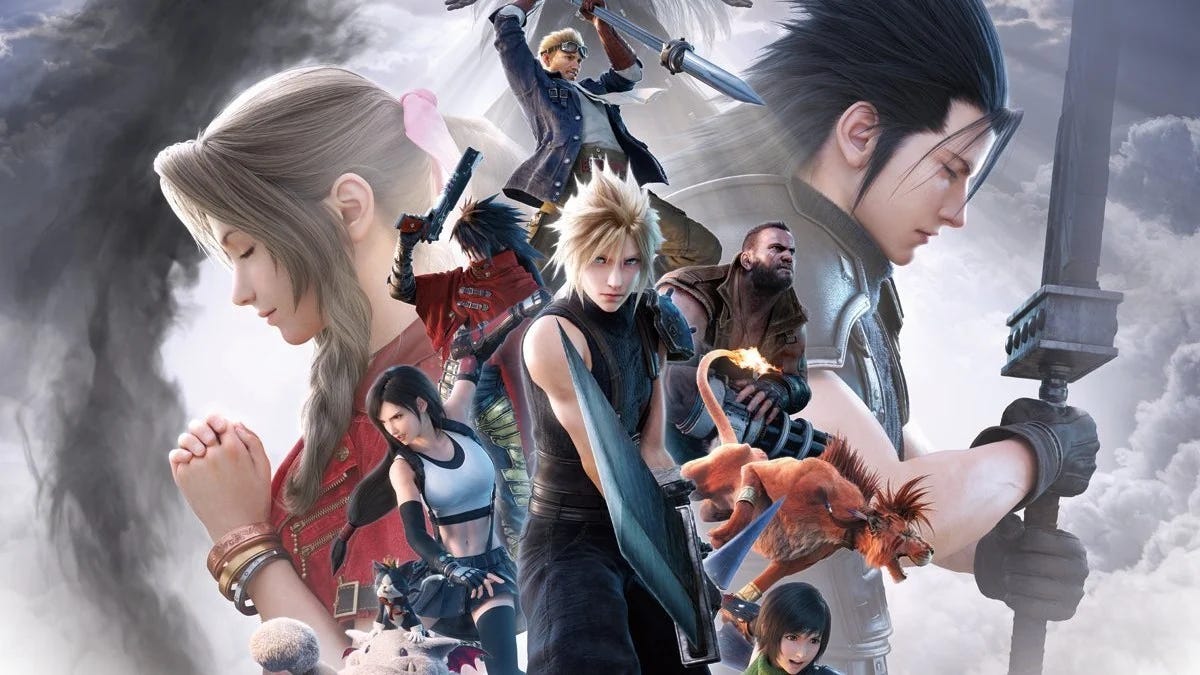
The main event: Ah, Summer Game Fest. The bafflingly busy week where the game industry announces everything at once has pretty much wrapped up. And the reviews are that it was alright, y’know. Geoff Keighley and Lucy James announced the third entry in the Final Fantasy VII remake series (and its subtitle of Revelation), another Resi reboot in the form of Code Veronica and a new Cuphead game to get excited about. Eurogamer has a full list of everything else announced, which you can find in the link above.
Having a Laufey: Geoff’s gun was technically jumped by PlayStation. Sony rushed out of the blocks with a State of Play that revealed the next chapter in the Until Dawn horror series, an extended look at the forthcoming Wolverine action game and Dave the Diver spinoff Bancho the Chef. Eyebrows were raised during the announcement of God of War: Laufey, a new entry in the franchise that explores what happens when Kratos’s wife heads into the afterlife. And the reason why eyebrows headed north was the presence of a gelatinous cube, played by actor Jack Quaid, as Laufey’s sidekick. Each to their own, I guess.
Back in its XBOX: Last Sunday’s XBOX showcase told us a lot about the company’s likely strategy under Asha Sharma’s leadership. It announced a return to console exclusivities with news on Gears of War: E-Day and Clockwork Revolution, notably keeping the word ‘PC’ out of executive mouths while doing so. It kept its cross-platform options open for multiplayer games like Forza and Call of Duty, where user counts are king. Less strategically, Sharma ended the event by going full Oprah, by effectively shouting “and you get an XBOX” at the showcase’s many attendees. A nice touch, I’m sure you’ll agree.
Ninten-do what you feel like: As someone rushing to get a lot of this newsletter written before I flew to Florence, I was obviously delighted when Nintendo slipped an under-the-radar Direct into the calendar on Tuesday 9th June. The company briefly baffled fans when it dedicated five minutes of the Direct to showing Yoshiaki Koizumi lose a thumb-wrestling match in the soon-to-be-released Nintendo Switch Sports Resort. But the announcement of a closed network test for From Software’s multiplayer game Duskbloods, a release date for Deltarune Chapter 5, a new Kingdom Hearts game and the first look at the long-teased Ocarina of Time remake won them over again.
PC Gaming Show Mastered the Race (for releases): But if you asked me to pick the showcase that I enjoyed the most, it was the PC Gaming Show. Sure, it had an advantage over the others because I was deeply interested in finding out more about the new Warhammer 40k Total War game. But chuck in the reveal of a definitive edition of WW2 strategy game Company of Heroes, a follow-up to the criminally underrated Cassette Beasts and a deeper look at Control Resonant and I was a very happy man indeed.
A message from our sponsor: Moore Kingston Smith has launched a new industry survey to gather insights on market conditions, business performance and the effectiveness of government support and funding, to create valuable benchmarks and develop a clearer picture of the UK video games landscape. Share your insights here.
Moving on
Sam Hilary has been appointed Brand Director at Team 17…Mark Nolan is the new Head of Marketing at GamerSafer…George Corner has been appointed Commercial Director at The Game Business…And Side has been busy hiring lots of people, with Sijo Jose arriving as Chief Services Officer and Kaley Hurst becoming Chief Marketing Officer…
Jobs ahoy
Google DeepMind is hiring a Game Designer in its London office…LEGO Digital Play is looking for a Lead Engineer for its mobile games team…SEGA Europe needs a Paid Influencer Manager (presumably because an unpaid one would get it in trouble with the law)...Nintendo needs a Manager for its eShop, dealing with those pesky publisher/developer relations…And if you fancy a stint in Tokyo, Ubisoft is hiring a Communications and Content Specialist…
Events and conferences
Power Play in conversation with Keith Stuart, London - 16th June
Serious Play Europe, Mainz - 18th-19th June
Develop, Brighton - 14th-16th July
VGIM Business Breakfast, Brighton - 15th July
Games for Change, New York - 21st-22nd July
Games of the week
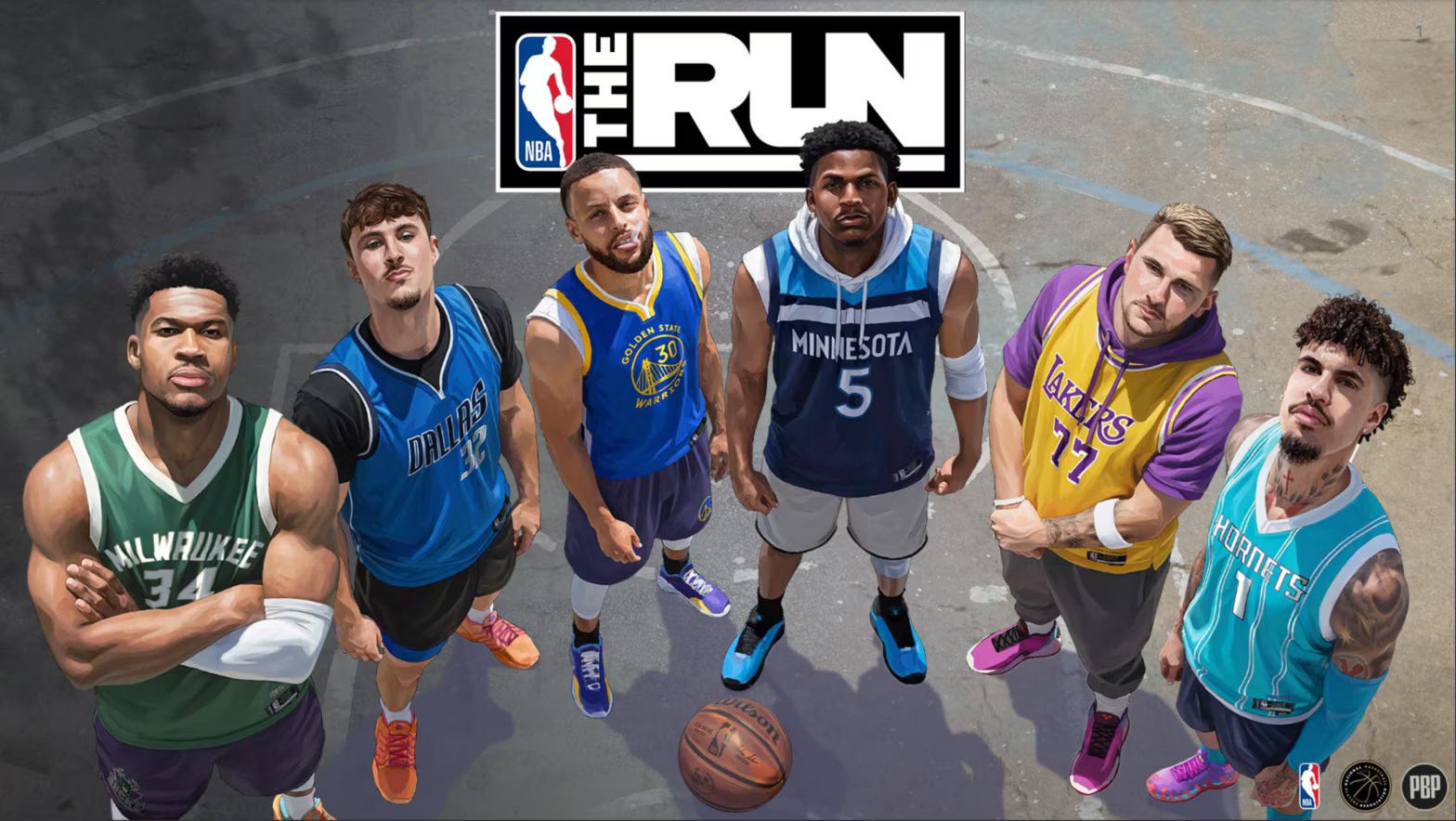
NBA: The Run - Three vs three basketball in the style of Rematch and Rocket League? Put me in, coach.
Unrailed 2: Back on Track - It’s a co-op railroad digging game that’s best played with friends, so expect Transport Tycoon with a side-helping of Overcooked.
Voidling Bound - It’s a third-person shooting game that’s a little bit like Palworld and a little bit like Helldivers, if that sounds like your cup of tea.
Before you go…
The World Cup kicks off today, but who is going to win it? Electronic Arts has predicted that Spain will emerge as winners, according to SportBible.
Sure, EA’s football game has successfully predicted the past four winners of the tournament. But can the game’s predictive powers win me over like Paul the Octopus, the football result-predicting cephalopod, did?
Of course not.
Keep up with VGIM: | Linkedin | Bluesky | Email | Power Play |