

Inside Italy's Indie Revolution, 02/07/2026
Why 'punk' Italian indie devs are attracting global publisher interest 🇮🇹

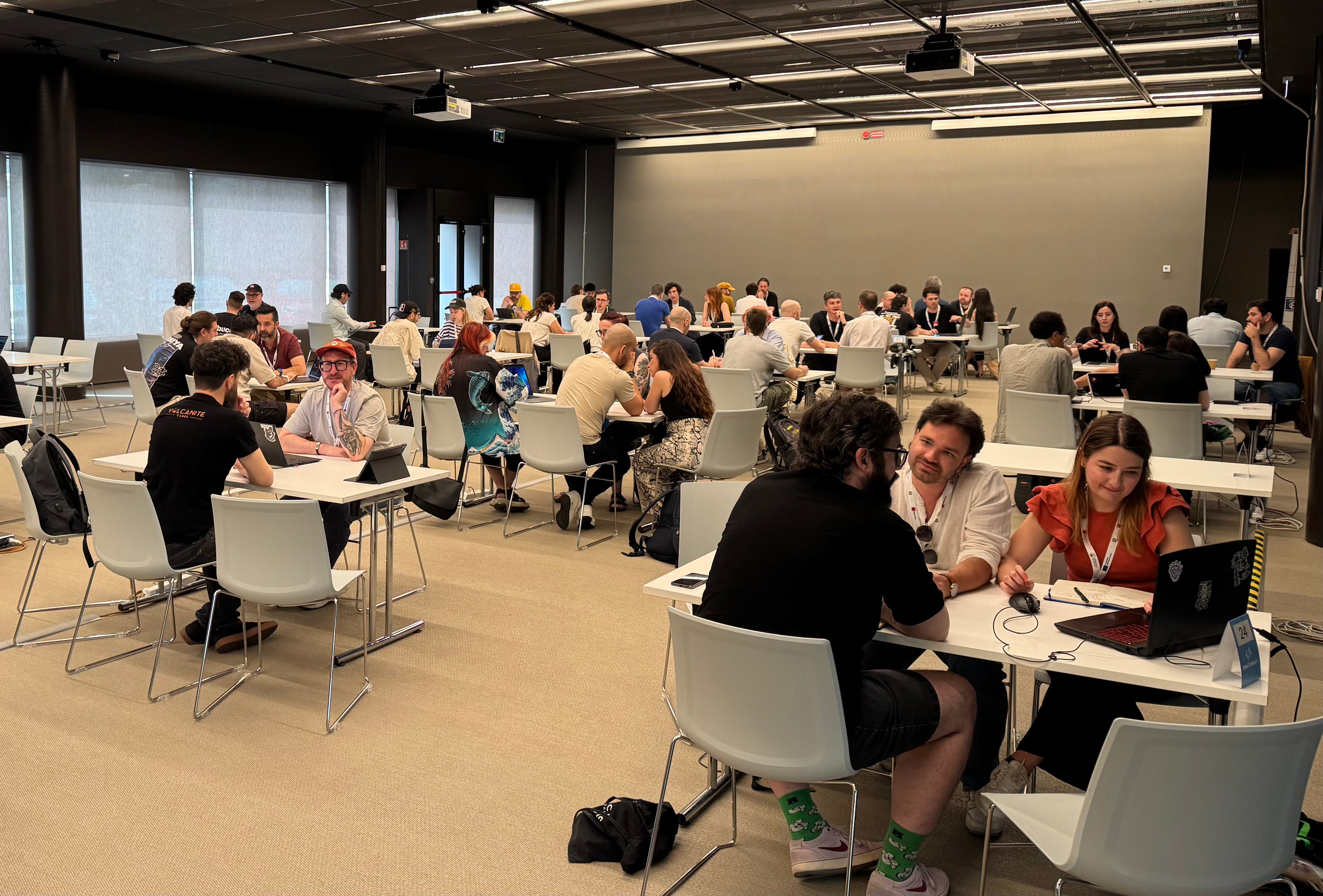
I explore the state of play in the Italian video game industry
UK PM-in-waiting Andy Burnham tips regional agenda that the local games biz will love
Kingdom Come: Deliverance 2 leads this week’s Steam releases
Hello VGIM-ers,
The UK book tour gets underway properly this week. I’ve got four formal events and an informal stop-off for you to say hello at.
On Saturday 4th July, I’m at the Bradford Literature Festival joining BAFTA longlisted short film-maker Dr Myriam François, academic Meshael Al-Mannai, and award-winning investigative journalist Dr Nafeez Ahmed for a session about how media shapes geopolitical power and who tells the stories that drive the world. Event tickets here.
Then on Sunday 5th July, I’m appearing at Sunday Papers Live just before Baroness Kidron, Ava Santina and Robin Ince to chatter all things Power Play. Tickets here.
I’ve then got two events at Waterstones in the East of England. I’ll stop off in Norwich on Wednesday 8th July from 6pm until 7:30pm. I’ll then pop over to Cambridge on Thursday 9th July for another talk and signing from 7pm onwards.
Finally, I’ll be signing some stock at Waterstones in Hitchin on Saturday 11th July. Once I’m done squiggling on books, I’ll pop over to the Sun Hotel between 10:30am and 12:00pm. Let me know if you’re coming along here.

The big read - Forza Italia’s games industry?
Tiny violins: Sometimes, the life of a writer is hard. Other times, it isn’t. And it’s fair to say that last month’s trip to First Playable in Florence was one of the less taxing research trips I’ve taken in my lifetime.
Boots on the ground: I had been invited to attend the event way back in the misty depths of time (April 2026) to talk about Power Play. But while there, I was presented with an excellent opportunity to learn about the Italian video game sector – a sector I knew comparatively little about. And after spending three days baking in the Tuscan sun chatting to industry figures both inside and outside the Italian game sector, I came to an interesting conclusion.
Something to build on: The country’s game sector is less developed and mature than many European rivals. But it has a rich seam of creative, punky talent in need of funding. And with international publishers already recognising the talent on display, some targeted public funding and business education schemes could power the sector forward.
An indie renaissance
Middle of the pack: Italy is a mid-ranking player in the European games market. IIDEA, the Italian video game trade association, reports that its consumer market is valued at €2.4bn. That’s roughly a quarter of the size of Germany’s market (€9.4bn) and less than half of France’s (€5.9bn). Its economic impact is also relatively small. IIDEA estimated that the sector generated between €180 million and €200 million for the Italian economy and supported 2400 employees in 2024. By contrast, Australia, a country with half the population of Italy, posted almost identical employment and economic impact figures that same year.
Physical problems: The Italian games industry’s lack of maturity is partly the result of a delayed transition from physical to digital distribution over a decade ago. Paolo Paglianti, Head of Communications at strategy game specialists Slitherine and former long-suffering game journalist, told me over a lunch of Pappardelle al Cinghiale that only a handful of Italian-founded games businesses (including the Guildford-headquartered business he worked for) rapidly changed their business models when Steam and the App Store changed the distribution game. A decade on, only a few major game companies remain in the country, including Milestone (the makers of the licensed Moto GP games), Ubisoft Milan (responsible for the Mario Rabbids game) and Nacon (whose Italian team worked on the surprisingly good Robocop: Rogue City). The rest withered away, leaving a wave of up-and-coming independents with little experience to make their way in an increasingly competitive video game market.
Growing up fast: However, those inexperienced businesses have steadily found their feet. Italy’s video game company count has grown significantly over the past decade and a half. In 2012, IIDEA reported that 48 video game companies were located in the country. In 2024, the company count had ballooned to over 200 developers. Hubs emerged in Turin and Milan in proximity to the country’s biggest developers, with 34BigThings, which recently regained independence from Embracer Group, based in the former and the likes of Nacon located in the latter. Bologna, meanwhile, has emerged as a thriving development hub with the help of an entrepreneurial game developer. Ivan Venturi, who has been developing games since the 1980s, was credited by three people at the conference as driving the creation of Emilia-Romagna’s Game Farm initiative in 2021 – accelerating growth of the industry in the city. And while the Italian sector has benefitted from trends like the democratisation of game development, Bologna’s growth as a cluster shows the increasing seriousness with which Italian game developers are handling the business of making games.
Under their wings: Intriguingly, these burgeoning game businesses are attracting a lot of interest from international publishers. Due to an outrageous stroke of luck when checking into my hotel, I was welcomed into the cadre of international publishers attending the event. And to my surprise, the group was massive. At one event I was invited along to, there were more than 30 publishers in attendance. This included reps from every major console platform, Europe’s best-known publishers and a couple of people representing publishers based as far afield as Korea and Australia.
Weirdly useful: Something was drawing all of these publishers together. And while the promise of three sunny days in one of the most beautiful cities on earth is undoubtedly part of First Playable’s appeal, the publishers I met told me that the up-and-coming Italian indie scene was full of a captivatingly weird creativity that could cut through in a content-stuffed market.
The Masters of Horror
Punk culture: “Italian game development is punk because the development happens without funding,” said Michael Orsini, a charming narrative game designer who shared the Italian indie experience while I quietly sweated my way through my second t-shirt of the trip during an outdoors coffee meeting. “It’s all roughed out. There are a lot of small indie games that talk about culture.”
Racing, horror, stories: According to Thalita Malagò, CEO at IIDEA, Italian game culture manifests in three preferred genres: one that aligns with mass cultural interests, the other two with its more artistic tendencies. “I would say there are three main lines. One is more traditional. Racing games are still an important part of our industry. We have Milestone and Kunos Simulazioni [creators of Assetto Corsa] that are working in this field and doing very well,” she explained. “We have a lot of horror games, and this is the second line. I would say that is also in common with the creative tradition of Italy because, for example, in the movie sector we have Dario Argento [a film director once described as the Master of Horror]. So that’s something else set in the culture. And I would mention a third line that is something more narrative and experimental, where we have a lot of developers that are trying to innovate on content or experiences.”
Horses ride in: Malagò’s third line is epitomised by Santa Ragione’s Horses. The narrative game, which was controversially pulled from both Steam and the Epic Games Store, won Outstanding Experience at the Italian Game Awards that I attended during the course of First Playable. The development team, consisting of Pietro Righi Riva, Nicolò Tedeschi and advisor Yves Hohler, encouraged the Italian sector to “resist the mainstream temptation and keep the subversive aspects of our industry”, indicative of Orsini’s point about the culture of the sector.
A buffet of nightmares: The games revealed during the awards with a Geoff Keighley-style ‘world premiere’ excitement showed how effectively Italian developers craft visually arresting horror games. Entalto Studio’s The Alighieri Circle: Dante’s Bloodline channelled the Divine Comedy through Amnesiac: The Dark Descent. Remothered: Red Nun’s Legacy, the third entry in a Sicilian-developed horror series, asked the question of what would happen if Resident Evil’s Mr X had served life in a convent. Wonderful Neoran Valley was the oddest game of this bunch, with the trailer shifting from cute Pokémon-style roguelite battling to footage of creepy monsters that caused brief flashbacks to clambering into the well in Ocarina of Time.
High hit-rate: At the time, the impactfulness of distinctive peculiarity was slightly lost on me. Trying to follow an Italian language awards show that was live dubbed in English by what sounded like a 50-a-day-smoker was overwhelming. But the next day, when the bulk of publisher and developer meetings took place, multiple contacts confirmed that this punky, avant-garde and just-a-little-bit-weird style helped Italian indies to stand out. One publisher told me that the comparatively unconstrained creativity of local developers gave them an edge over international rivals because the distinctiveness gave publishers a much better chance of piquing audience interest. Another publisher, who receives thousands of game pitches per quarter, told me that they had seen multiple pitches in a single morning that were worthy of a follow-up meeting; a remarkably high hit rate for a developing cluster.
Excluding some interest: Of course, not every publisher found what they were looking for. Mobile publishers found little of what they wanted, given the indie nature of the local industry. Publishers looking for games outside of narrative and horror genres had a lower hit rate. But given the size of the Italian market, the predominantly positive reception to what Italian indies were offering was promising. The question is whether they’ll get enough domestic support to translate great ideas into games that sell across the world.
Taxing times
Tasty stew: The Italian games industry has the ingredients to form a successful game cluster. It has hubs and a few big developers to prop up emerging talent. It has an increasingly thriving indie scene. Publishers are willing to travel to check out what’s on offer (it is very hard spending three days in Italy in summer). And one contact who has had longer ties with the Italian industry told me that indies have organically sharpened their pitching skills over the past decade, improving the likelihood that someone picks their game up.
Light up: But despite its growth and the benefits of its punky vibes, successful Italian game developers are still stuck in hobbyist mode. Tiny Bull Studios, made up of Bruno Candita, Enrico Martina and Simone Ercole, won the best Italian Game Award for their release The Lonesome Guild. During their acceptance speech, the team shared that the game struggled to deliver commercially in a way that allowed them to comfortably focus on game development. “We’ve got to keep the light shining on Italy to keep making games that’ll change people’s lives”, they implored.
Managers needed: To some extent, Tiny Bull’s story is simply a reminder of the nature of the highly competitive nature of the games industry. But IIDEA recognises local developers need help developing the commercial and business savvy to turn creative thinking into financial success. “We have really a lot of excellent chefs, but we need to have the ones who manage the restaurant,” Malagò said, when I asked what expertise the Italian sector was currently missing. “That is probably as important as preparing the food.”
Learning on the game farm: On the skills side, the Italian industry is attempting to fill its commercial gap through collective industry and civil society action. Game Farm’s success in Bologna has sparked other accelerators like Slitherine’s Gecko Fork programme, which is offering Italian indies pro bono access to its proprietary strategy game development engine to make a vertical slice to pitch for funding. Talks and roundtables at First Playable’s conference focused on building business cases and stories worthy of turning a good idea into one that could be financed. I was also introduced to a local university asking whether it could support the industry by building courses for game business founders. I encouraged them to do so.
Business developing: On the business side, the Italian industry is working hard to build international relationships to power domestic growth. The hordes of publishers willing to decamp to Florence to take meetings undoubtedly boosted the confidence of Italian developers. Orsini told me that his belief that publishers were “big companies that look down on you and judge your game” was instantly dispelled by his one-to-one meetings with scouts. Other national trade associations came to the event to trade knowledge with the Italian industry, with Video Games Poland Association – the Polish trade body – sharing the growth stories of its sector and its developers during the first day of the conference. Funding from European institutions was also dangled in front of developers during a session run by InvestEU, an initiative from the European Investment Bank designed to boost sustainable investment in sectors like the ‘audio-visual’ industries (EU translation note: that means video games). It felt a little premature for a growing sector, but its presence was nevertheless welcomed with a room full of interested developers.
Capped impact: Undoubtedly the sector’s biggest concern is the comparative lack of public funding for local game developers from Italian policymakers. Italy does have a 25% tax credit for video game developers, which was introduced in 2021, but it is limited to €1 million per project and €12 million across the country per year. According to Malagò, the credit has supported 90 companies on 140 projects for €50 million. By comparison, the UK’s Video Game Expenditure Credit supported £327m of spend in just one tax year between March 2023 and March 2024. The restrictive nature of the cap limits the ambition of projects. The fact that tax relief may elapse entirely if Italian policymakers fail to extend it by renotifying the European Commission of its necessity by the end of the year — a necessary administrative step — is clearly frustrating for Malagò.
Missed opportunities: “I don’t think they are aware enough about what they are missing,” she replied when I asked her whether the cap on the national tax credit is capping ambitions in Italy. “They should invest within the creative and cultural industry. And unfortunately, at the moment, this is not happening for reasons that are not dependent on us.” Malagò also believes that winning this battle is necessary to open up room for the industry to lobby for prototype funding and grants that are “more accessible and more useful” to independent developers scrabbling for cash to get a game off the ground. But if the industry can’t expand, let alone keep, its current relief, the chances of getting additional useful public funding feel low.
Something to build on: Still, I left Florence with the feeling that something is brewing in the Italian video game industry. Its developers are comparatively inexperienced, there’s a skills gap on the business side, and the Italian government doesn’t have much of a game plan for the sector. But with publishers seemingly recognising that Italy is producing an intriguing crop of creative indie developers with well-made games, the sector has something to hold onto. And with a little bit of luck, the local industry continuing to pull together and some extra support from the country’s government, the Italian games sector could be on to a good thing.
VGIM’s flights and accommodation to First Playable were covered by the conference organisers.

News in brief
Burnham boosts the regions: Andy Burnham, the MP for Makerfield and Prime Minister-in-waiting, delivered his first setpiece speech outlining his vision for the UK economy. For wider politicos, Burnham’s assertion that Britain has been barely functional for the better part of twenty years and that the country needs a new direction caught the eye. For games companies, his focus on giving more powers to metro mayors, driving ‘growth in every postcode’ and some accidental hat tips to video game clusters like Dundee provides room for quiet optimism for a sector already spread across the country.
The Kids Internet and Digital Safety Act is alright (for now): Miranda Nazaaro of The Hill reports that the House comfortably passed the Kids Internet and Digital Safety Act (KIDS) in a vote earlier this week. Members voted 267-117 in favour of the act, which bundled together 14 digital safety bills covering hot video game industry regulatory topics like age verification and data protection duties. But KIDS does not include a ‘duty of care’ provision for tech platforms that was previously included in the Senate-backed Kids Online Safety Act (KOSA) bill – setting up an almighty online safety scrap Stateside.
Steering to a conclusion: The UK’s Competition and Markets Authority has launched two consultations asking developers for their opinion on a new Steering Conduct Requirement it plans to impose on Apple and Google’s App Stores. The requirement would mean that neither store could “prevent, restrict or limit a developer” from communicating with an end user (including via data generated through an app store download), or prevent a steered commercial transaction on another platform unless there was a legal reason to do so (e.g. preventing fraud). You’ve got until 28th July to respond, so get cracking.
DRAMatic development: Samsung, SK hynix and Micron have been sued in a class action lawsuit in Northern California, alleging that the companies have coordinated to artificially drive up the cost of DRAM components. 17 plaintiffs argue that “concerted anticompetitive behaviour by three Oligopolists” has caused DRAM prices to rise by 700% in four years, with the complaint arguing for injunctive relief and damages. One to keep an eye on, if only for the ongoing use of the phrase DRAM Oligopolists (which is an excellent band name, if you ask me).
Climate changing: And finally, some welcome news about the usefulness of video games in understanding public opinion about the climate. A new paper from the European Commission’s Research and Innovation team explores how PlanetPlay worked with Jane Yau, a researcher from the Leibniz Institute for Research and Information in Education, to receive 200,000 responses from players to climate surveys embedded in games like Subway Surfers.
Moving on
Fateless has appointed Noam Sagie as Chief Marketing Officer…Meg Clarke has been appointed Head of Discovery at Critical Reflex…Austin Rathe has been appointed VP and Global Comms Lead at Unity…Jon Rissik has been named Chief Growth Officer at Everplay Group…And UK trade body TIGA has announced a new board featuring names such as Tim-Repa Davies, Gemma Brown and Marco Minoli. Intriguingly, neither of the Kingsley brothers — who head up Rebellion and have long been associated with TIGA — is on the board…
Jobs ahoy
Sony Interactive Entertainment is hiring a Director, Litigation to work across EMEA…Roblox needs a Developer Engagement Representative to help out with its events…Sega Europe is hiring a Head of Brand…Playground still needs a Senior Game Designer…And Supercell is hiring a Game Lead for Boom Beach…
Events and conferences
Develop, Brighton - 14th-16th July
VGIM Business Breakfast, Brighton - 15th July
Games for Change, New York - 21st-22nd July
ChinaJoy, Shanghai - 31st July-3rd August
Serious Play, North Carolina - 5th-7th August
Games of the week - Steam Summer Sale recommendations
It’s slim pickings on the week’s releases. That’s why I’m recommending a few picks from Steam’s summer sale to add to your libraries and never get round to playing.
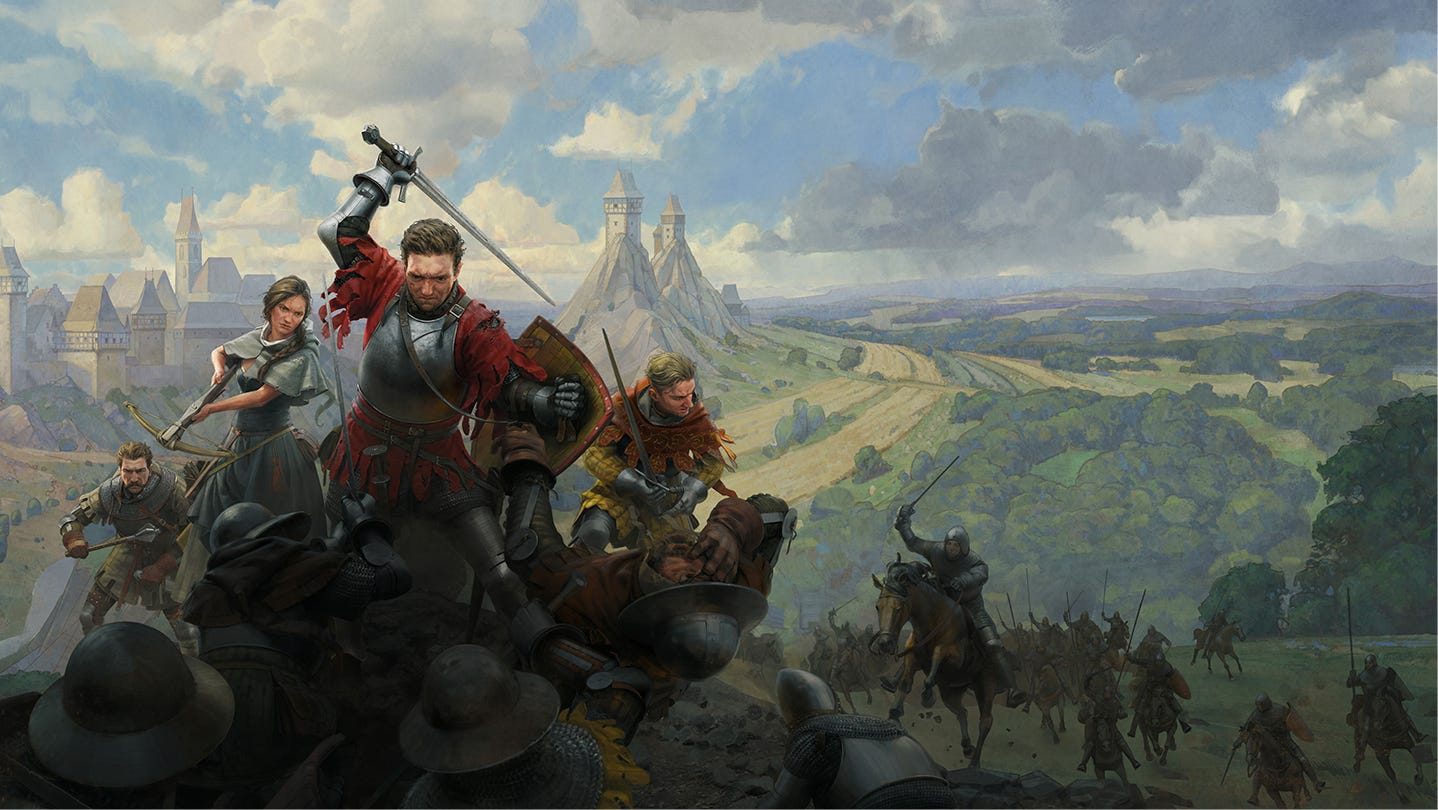
Kingdom Come: Deliverance 2 - Spend dozens of hours and only £20 to live out your roleplaying dreams in 15th-century Czechia.
Split Fiction - Get Hazelight’s latest, and some say greatest, split-screen co-op adventure for 35% off its usual £40 asking price.
Dispatch - And get all the episodes of the superhero episodic narrative hit of last year for under twenty quid.
Before you go…
We know that the video game hardware is going up in price. But if you’re a politician, try not to follow the example of Manuel Adorni in trying to overcome it.
Argentinian news outlet La Nacion alleges that Adorni, who is the cabinet chief to the country’s controversial President Javier Milei, used staffers’ credit cards to spend thousands of dollars on video game equipment.
No jokes about Adorni still not being able to afford a Steam Machine, please.
Keep up with VGIM: | Linkedin | Bluesky | Email us | Buy Power Play |