

Mirth and fun in New York, 23/07/2026
I go to Games for Change and end up thinking about Mamdani ❤️

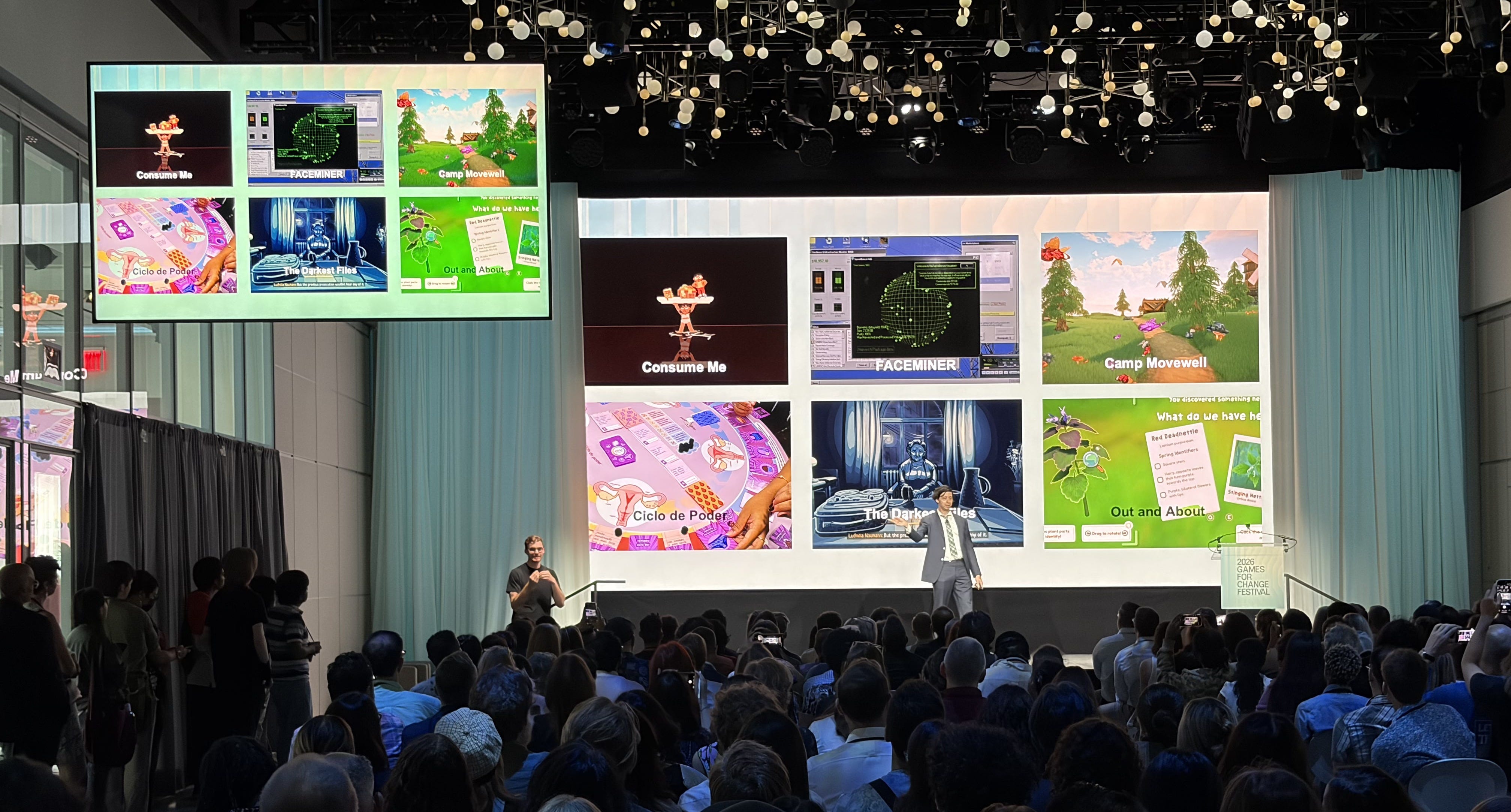
Games for Change Festival brings powerful play to Mamdani’s city
New UK Prime Minister Andy Burnham puts the digital back in DCMS
Splatoon Raiders fires its way onto Switch 2 in the week’s releases
Hello from North America, VGIM-ers.
It’s been a brilliant week on the East Coast. Power Play launched in North America. The weather has been fantastic. And I’ve eaten so much good food that I’m at risk of exploding.
I’m taking the rest of this week off to enjoy my time Stateside. So rather than relentlessly self-promote like I usually do, let’s dive straight into the newsletter.
The big read - Mirth and fun in New York
Hackneyed introduction: New York. The Big Apple. Other synonyms for America’s biggest city exist. But what doesn’t exist outside of its hallowed streets, hefty sidewalks and toasty Metro subway stations is the Games for Change Festival.
Explanatory spiel: The Festival celebrated its 23rd edition this week, with thousands of attendees from across the games industry, business and civil society gathering to understand the power of the medium to drive social good in areas as diverse as healthcare, the environment and urban planning.
Mirth and fun in New York: It’s the first time I’ve attended Games for Change in New York, which may be a surprise to some given my involvement in bringing a satellite summit to London earlier this year. But even back in April, I knew I had to make it out to this year’s festival because I thought it’d have its own distinct energy — some of which I captured during my two days at the event.
So fun they played it twice
Welcome to New York: The kind of community you get is so often shaped by where you convene it. New York feels like the place where positive, energetic change is possible. I landed in the city on Saturday evening, a little nervous about arriving in Donald Trump’s America. Once I was past the border, I realised I was in Zohran Mamdani’s New York. And that city is having a hell of a moment right now.
A gorgeous sign: The World Cup final added an extra swirl of internationalism to an already global city, with New Yorkers gleefully embracing it as part of a summer of sport shaped by Knicks in Five. Everyone you talk to feels like they have a spring in their step, whether they’re citizens proud to be surfing against a populist tide or city workers cheerily waving people into Flushing’s botanical gardens for a Spain vs Argentina viewing party. Even the most mundane things imaginable seem to have a little extra spark in them, such as the ‘Hello, gorgeous’ road sign next to the Brooklyn Bridge that has delighted the majority of New Yorkers.
Summer of games: Games for Change opened with a similar burst of civic pride. Alia Jones-Harvey, Associate Commissioner of Education and Workforce Development at the Mayor’s Office of Media and Entertainment (MOME), was the first speaker on stage. She proudly described Games for Change as “New York’s biggest video game event” before reeling off the MOME’s efforts to support the industry: a $2m investment into a digital game design course at City College of New York; support for local groups like New York’s Videogames Critics Circle and the local IGDA chapter; a reminder about the city’s ongoing Summer of Games, which started in May and stretches into September.
Playful Politics: Playfulness with purpose makes sense in Mamdani’s New York because it aligns with how he communicates with his city. In the conference’s opening keynote, Nick Fortugno, a game designer and professor, perfectly highlighted the effectiveness of an authentically joyous style. Whether it’s jumping in a pool in a suit to celebrate the arrival of New York’s swimming season or running a scavenger hunt during his mayoral campaign, “play is everywhere with Mamdani,” according to Fortugno. That’s a superpower for building a community, a “big we” in Fortugno’s words, capable of changing the mood and fortunes of an entire city.
Community channelled
A change-making community: Fortugno and Jones-Harvey’s talks gave a real sense of why New York is a natural home for the Games for Change community. The rest of my time at the conference showed me how naturally it coalesces together.
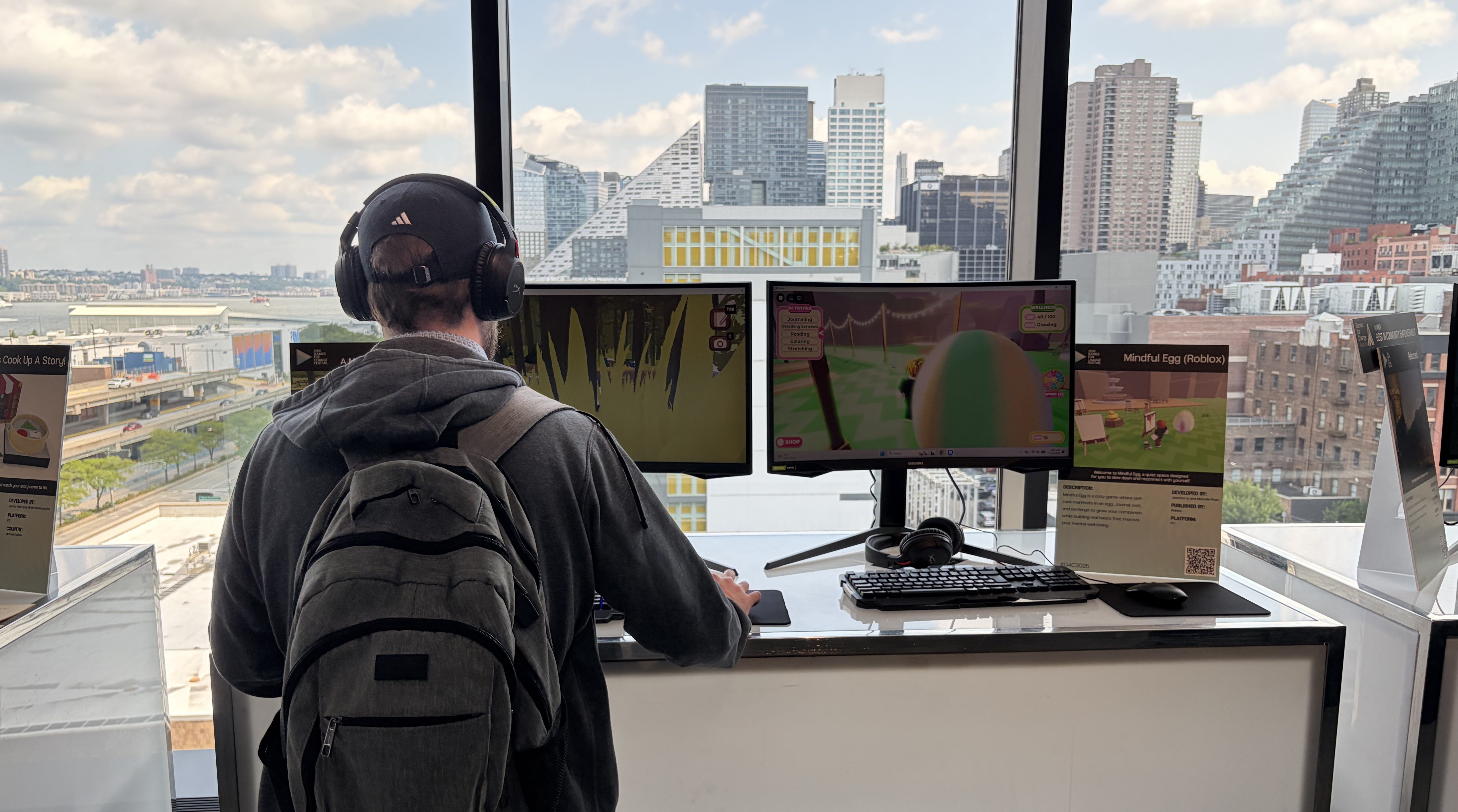
Robloxing clever: The playable games stretched out across the festival’s arcade area showed that there is a cross-section of game-changing creators across the games community. PlayStation’s Climate Station was sat on the show floor, allowing players to model the impact of climate change with a little help from a PS5 controller and leading climate science. South of Midnight by Compulsion Games was in the arcade and awarded game of the year, just weeks after regaining its independence from Microsoft. Interestingly, games on the arcade floor like Planet Planners (an immersive simulation game made for BBC Bitesize about geographical themes) and Gather-2-Gether (a cosy co-op game designed to encourage parents and children to play together) ran on Roblox. Minecraft’s reputation as the place where grassroots creators can make impactful, educational experiences looks under threat.
Overcoming parental panics: Gather-2-Gether’s parent focus premise leant into something else that I felt at the conference, which was intense discussion about how to lean into play to engage communities. For parents and carers, the launch of a new white paper written by Dr Rachel Kowert as part of the Tencent-backed Raising Good Gamers initiative sought to shift the conversation about games from irrational ‘panic’ towards a more grounded discussion about how families can make space for play. The eye-catching headline for me is that parents are five times as likely to see a negative news story about games, despite overall media coverage of the medium trending surprisingly neutrally – a useful opportunity to gently remind the industry of the importance of telling its story proactively.
Breaking down barriers: Beyond the focus on parenting, the community-led session that really stuck with me was Constance Steinkuehler’s research into the role that games can play in rehabilitating prisoners. Steinkuehler, a Professor of Informatics at UC Irvine, had almost entirely walked away from examining the value of play to communities after a depressing stint researching hate in online game communities. But in July 2024, she researched how games could reduce recidivism at San Quentin Rehabilitation Center in San Francisco after a group of prisoners who ran an internal ‘skunkworks’ to test ways to reduce reoffending experimented with playing Dungeons and Dragons together. Her research found that tabletop games cut across usual prison lines. Where groups would typically segregate themselves spatially and racially within the prison – sometimes leading to violence – games allowed prisoners to abandon division in favour of playing together around a shared table. The findings inspired further research, reinvigorating Steinkuehler’s faith in the power of play to bring communities together.
Setting standards: What was refreshing is that there was an opportunity to talk frankly about how to address some of the hateful behaviours that Steinkuehler had seen in video games. I was able to sit in on a topic table hosted by GamerSafer, who led a structured conversation improving player safety through our communities. Although I can’t report who was at the table, there was a welcome willingness from representatives of major game companies to suggest that we need to go beyond tools to keep players safe, that policies which tackle hate only work when they’re truly visible and that contesting hateful ideas is about assertively stating what you stand for (and what your community won’t tolerate). Being brave enough to stand up to hate on behalf of your community, to protect them from harm and to expect your participants to share those values wherever they are – whether in a game, in social media, or in the physical world – matters.
Change for Games
Networking opportunities: Games for Change works because it has created such a collegiate community that you can literally bump into people who can turn a neat idea into something genuinely transformative. I watched an expert in the use of video games in urban planning introduce themselves to a game jam organiser literally moments after saying they wanted to host a jam. I saw Robert Steen, founder of the Ibelin Award, meet a not-for-profit that I knew shared his perspective about the importance of curating prosocial game communities. I even had a similar moment myself when I met a researcher who has successfully convened a working group of industry stakeholders and regulators, who shared my opinion that games companies can run successful commercial businesses while maintaining the highest commitment to freedom of expression and assembly within their communities.
Money, money, money: It also works for another reason: money. I spoke to a British not-for-profit who was attending the event. Even in the current American political landscape where federal funding for an enormous range of initiatives has dried up, they noted that the amount of cash available through philanthropic means in the US – including the surprising amount of institutional capital available in places like museums, not-for-profits and cultural foundations – is enormous compared to what’s available back home. Games for Change has the necessary scale to plug game creators into sources of meaningful cash, providing much more capital to work with (even if it isn’t enough to fund every well-intentioned project).
Surprising constraints: Ironically, the only real complaint I heard from attendees was a lack of, or slightly unenthusiastic, games industry backing for the kind of games that could meaningfully change the perception of the medium. Several attendees told me that job and funding cuts across the industry had further eroded the sector’s already comparatively thin corporate social responsibility layer, meaning that support from businesses like Tencent, Lego and Roblox feels exceptional in the current landscape. Two other conference goers also raised a question of whether getting funding from the sector was a hindrance because of its caution, with creators theorising that taking smaller pots of cash from not-for-profits, social impact investors or public funding calls was a better option than “driving a car with a full tank of gas that is only allowed to go at 25.” Hearing this just days after I had written about how the UK industry’s cautious approach to building cultural capital harms its ability to influence felt apposite.
Time to mature: In contrast to the story that the sector tells itself, Games for Change shows that the transformative power of video games is widely understood. Game developers at all levels of the industry are motivated to create games with the power to change society. Civil society actors actively support and fund efforts to use play to tell stories, reach communities and change behaviour. Even political leaders realise that, to riff on Fortugno’s talk, “mirth and fun” hold genuine power. The question is whether games businesses can match the change with the energy, investment and openness capable of turning an economically mature sector into a culturally mature one too.

News in brief
Digital returns: Andy Burnham, the latest person to ride the bucking bronco known as being the Prime Minister of the United Kingdom, has put the digital back into the Department of Culture, Media and Sport (DCMS). The new PM has returned some digital responsibilities to Lisa Nandy’s department following the abolition of the Department of Science, Innovation and Technology. What we don’t entirely know is what exactly has moved back there. We do know that artificial intelligence has moved into the Cabinet Office under newly appointed AI Minister Kanishka Narayan, Science has moved to the business department headed up by Football Manager fan Jonny Reynolds and that online safety looks to have landed back with Handy Nandy. But we’ll discover more specifics as the reorganisation beds in.
Fight, fight, fight: Nintendo has asked a court to dismiss a class action lawsuit that says it should pass on a recent refund on tariffs from the US government to consumers. Nintendo said that consumers received what they “bargained and paid for” when its consoles were subjected to tariffs. But the plaintiffs argue that the company received a double benefit from the refund, charging consumers more while receiving cash back when the Trump administration was forced to refund tariffed businesses.
Pre-order madness: Grand Theft Auto VI has generated $180m of digital pre-orders, according to analyst firm Newzoo. While the firm branded reports that the game had generated a billion dollars worth of up-front purchases as ‘absurd’, it has forecast that the game is likely to generate between $3.3bn and $5.2bn during launch week.
Don’t call it a census: 22% of the UK video games industry workforce has experienced a job loss, studio closure, or end of a fixed-term contract in the past three years, according to Ukie’s Games Industry Workforce Demographic Survey. The report found that women and non-binary workers were more likely to experience the loss of a role than men, with writers and artists bearing the brunt of job losses.
Third-party app store hard: Google Play has opened up to third-party app stores this week. Google and Epic Games had sought to adjust an order from Californian District Judge James Donato, which told Google to allow the introduction of rival stores on the Play Store via a ‘Registered App Store’ scheme. But both parties eventually agreed it was easier to go with the Judge’s original order rather than hashing out an alternative - leading to third-party stores arriving on Google Play in the US yesterday.
Moving on
Jonnie Bryant has joined Team 17 as Communications Director…Charlotte Willis is the new PR and Influencer Manager at Yogscast Games…Dan Hawkins has signed on as the Principal Talent Acquisition Partner and HR Operations at Build A Rocket Boy…Molly Shepherd-Boden is the new Technical Talent Acquisition Specialist at Side…And as reported in The Game Business, Glen Schofield, the creator of Dead Space, is retiring from the biz…
Jobs ahoy
Netflix is hiring a Principal Product Manager in its games and social team…Hasbro needs an Associate Producer to work in Renton…The Pokémon Company is hunting a Licensing Coordinator…King’s looking for a Game Designer to work out of its Stockholm office…And Ubisoft needs a Legal Counsel in its Montreal studio…
Events and conferences
ChinaJoy, Shanghai - 31st July-3rd August
Serious Play, North Carolina - 5th-7th August
gamescom, Cologne - 26th-30th August
Power Play book tour, Multiple Locations - Remainder of year
Games of the week
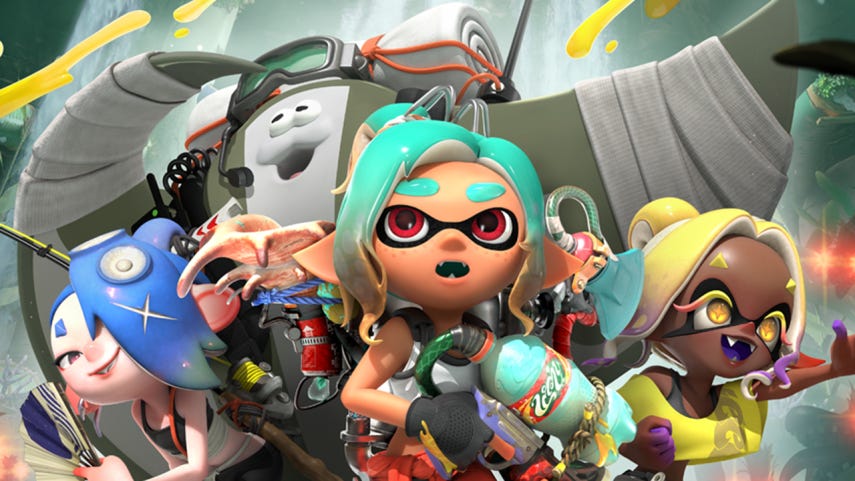
Splatoon Raiders - Single-player spin-off of Nintendo’s splat-tastic multiplayer octopus-based shooter drops on Switch 2.
The Planet Crafter - Popular open-world survival sim set on an inhospitable planet ports its way to Xbox and PS5 after Steam success.
Avatar Legends: The Fighting Game - Exceedingly mid-looking fighting game set in the Avatar universe reminds us all that we’re all about to enter the summer game drought.
Before you go…
Remember at the start of the World Cup when we said that Electronic Arts was looking to extend its 16-year streak of forecasting the winner of the tournament just before the competition got underway?
Well, the run continues.
The company successfully predicted that Spain would win this year’s World Cup via an EA Sports FC 26 simulation - earning it at least 20 years of predictive glory ahead of the 2030 tournament.
Keep up with VGIM: | Linkedin | Bluesky | Email | Power Play |