

Roblox’s Age-Based Accounting, 23/04/2026
We talk Roblox’s new kid friendly accounts with its policy peeps

Age assurance innovation, tech improvements and regulatory pressure behind new Roblox Age-Based Accounts.
Xbox drops day one Call of Duty from Game Pass to plug a $300m hole
Causal Loop offers up time echo-y puzzling thrills in the week’s releases
Hello VGIM-ers,
I’ve been in a studio all week reading the audiobook version of Power Play.
It’s mostly been fun. It’s sometimes felt tiring. And it only occasionally felt like a form of cruel and unusual torture. But overall, I think it has come out pretty well.
Make my pain worthwhile by pre-saving it on Audible, Spotify or your favourite indie audiobook outlet now.
I also got to present my book at a special swanky book showcase hosted by my publisher on Monday evening this week.
Booksellers from across the land grabbed all of the copies of the uncorrected proofs that were laid out there, which was lovely to say.
And one British comedian who is firmly in ‘national territory’ treasure told me that they were looking forward to reading it. Swanky.
But enough of the relentless self-promotion. Here’s the big read.
The big read - Roblox’s Age-Based Accounting
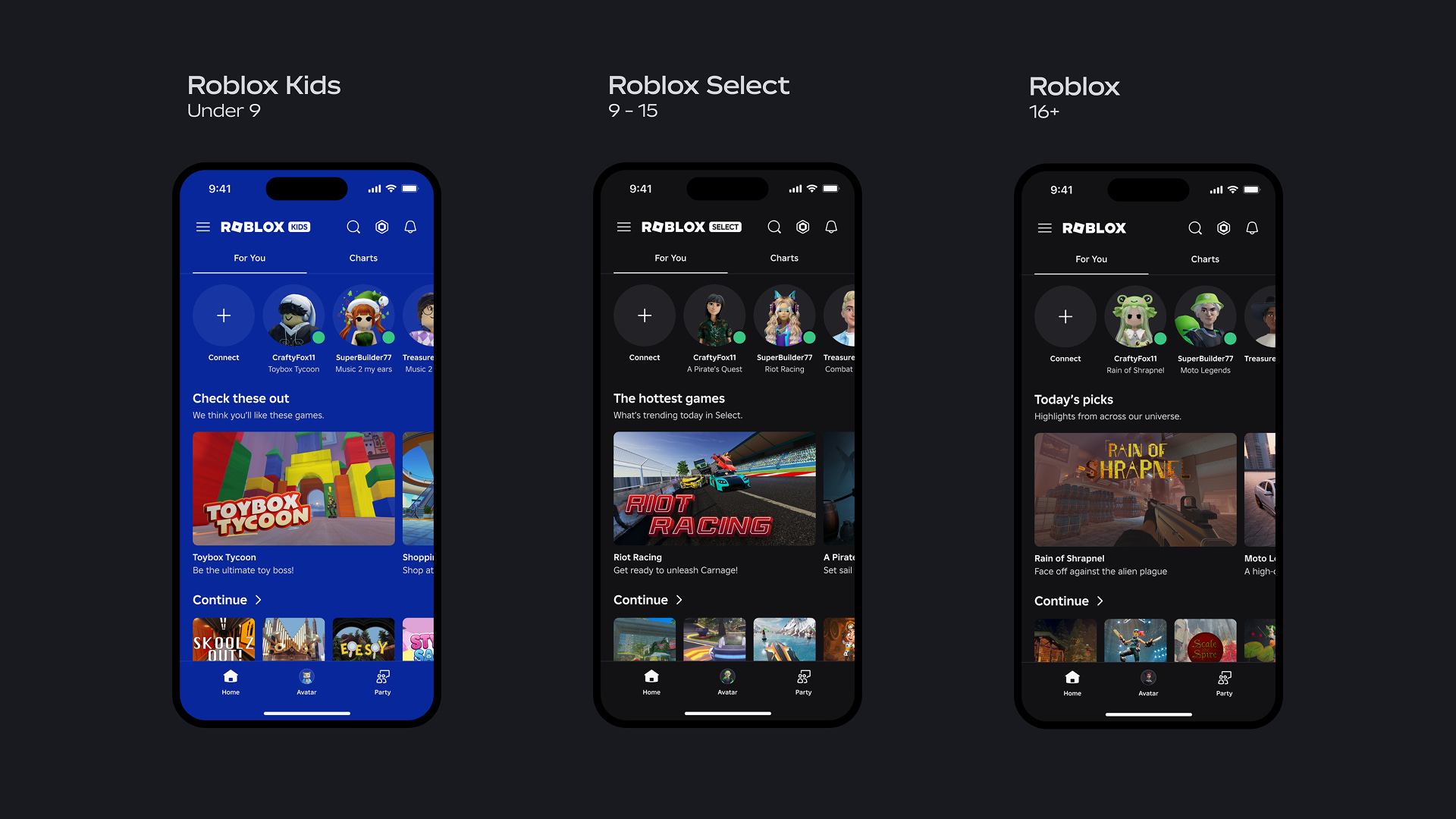
Accounting for everyone: Last week, Roblox announced a fundamental change to the way its platform functions for under-16s. It revealed Age-Based Accounts, a dual-tier system that sifts 5-8 year olds and 9-15 year olds into versions of the platform that limit access to communication features, certain content, and strengthen parental controls.
Under pressure: The rollout of Roblox Kids and Roblox Select comes after the platform has come under big regulatory and legal pressure. The platform has been subject to bans in countries such as Algeria, Egypt and everyone’s favourite Gulf oil power, Iran, on child safety grounds. It has been subject to numerous lawsuits across the world, including a high-profile ding-dong with the Attorney General of Texas for allegedly putting “paedophiles over profits”. It’s also come under scrutiny in Australia following its social media ban in a manner that is arguably a touch unfair, after it was broadly okayed by its eSafety Commissioner last year.
Great Scott: Does the introduction of the new two-tier system meaningfully change the experience of accessing Roblox for kids? Is it proactive leadership from the platform, or a reaction to wider circumstances? And will it meaningfully change the regulatory conversation around Roblox and the games biz more widely? I hopped on a Zoom call with Tim Scott, Senior Director of Public Policy EMEA at the company, to find out.
Select Your Roblox Player
Calling Dr Langdon: Roblox’s new Age-Based Accounts work through a simple triaging system. When a user enters the platform, they are asked to verify their age. If they’re above 18, they’re given access to full-fat Roblox. If they’re above 16, they’ll be handed keys to most of the platform apart from 18+ content. Parents will also be able to check who 16 and 17-year-olds are friends with, how much time they’re on the platform and what they’re spending until they hit adulthood.
Criteria explained: If you’re under 16, though, you’ll be sorted into one of two account categories. Roblox Kids is reserved for the wee kiddiwinks aged between five and eight. The account limits them to content rated Minimal or Mild by the platform. It hands parents an expanded suite of parental controls to manage their account. It also turns off chat by default, unless a parent or caregiver provides permission. Anyone who refuses to age-verify is put in ‘no chat prison’ too, until they prove how old they are. There is definitely no chance that’ll backfire.
Taking the biscuit: Roblox Select (which definitely sounds like a Marks & Spencer Christmas biscuit tin) expands content and chat access for older players. Anyone aged between 9 and 15 gets access to Moderate experiences and safeguarded chat, depending on regional rules. Parental controls, meanwhile, gradually loosen after the age of 12 to align with developing data rights. Users will also automatically graduate from category to category, meaning that an eight-year-old would move from Kids to Select on their ninth birthday.
Feeling content: The platform is also strengthening its content rules to try to keep age-appropriate content in each bucket. Experiences will only be included in Kids or Select once a developer has verified their identity via the Roblox Plus subscription system, once it has been tested in real-time by a group of 16+ users and once it has been assigned a rating in line with the company’s moderation system. A forthcoming partnership with the International Age Rating Coalition (IARC) will transform those labels into a relevant local content rating, like PEGI or ESRB.
Assuming direct parental controls: Finally, the rollout also coincides with a strengthening of parental controls. Parents can manage access to chat and to specific experiences until a user’s 16th birthday. It also, interestingly, gives parents the ability to allow children to access certain content that otherwise wouldn’t be available to their age category. This is similar to the law around physical game retail in the UK, which stops kids from buying games they’re not old enough for but allows parents to do so on their behalf. Sometimes, this is feckless parenting. Other times, it’s pretty reasonable (e.g. buying a 15-year-old who has an 18-year-old sibling a 16-rated game).
Highly effective age assurance policies?
Cabined if they would: The measures are comprehensive. They bear a strong resemblance to Epic’s Cabined Accounts, which limit access to the platform’s features to under-13s until a verification process has been passed. However, the combination of verification, multiple account tiers and a strengthening of the ecosystem means that Roblox’s approach has arguably surpassed Epic’s previously best-in-class approach. So, the obvious question: why now?
Gotta have faith: Confidence in the effectiveness of age assurance technology has helped Roblox push the policy change. “Technology is enabling it,” says Scott. “When the Online Safety Act was first talking about the need for highly effective age assurance, companies were trying to build it behind closed doors and saying the tech isn’t there yet, and the privacy isn’t up to scratch until now. But actually, we now have good faith in the reliability and accuracy of the technology for chat verification. This gives us the confidence we can do it for content.”
Estimation gains: That confidence has grown as it has rolled out age verification across the world. According to Scott, more than 50% of Roblox users have completed an age check since it became platform policy. The accuracy range for an under-18 user is now “roughly 1.4 years.” That’s obviously not perfect. But it is more accurate than for adults, where estimating a range is harder. The figures are also improving as systems evolve, suggesting the range will shut more closely.
A bigger vision: Roblox argues that age assurance is only one part of the picture. Another source in its trust and safety team has repeatedly told me of their frustration with accusations that measures like this are ad hoc rollouts bodged together by engineering in response to headlines. They argue that wider work in the business continues to make the platform safer, including long-term efforts to build parental controls and roll out measures to limit chat to younger users; the implementation of AI-powered content moderation systems to catch inappropriate experiences; formation of advisory groups, like its recently announced global Parent Council, to advise its work. Having seen Roblox’s trust and safety team grow from one person half a decade ago to a sprawling team of global experts, its investment in safety is sincere.
Answering the question: For Scott, the rollout of age-based accounts is part of a wider move by the company to embrace its unique position in the games landscape. “We’re in an odd position,” he explains. “We sit in the weird world of being a user-generated content platform, being on mobile, on Xbox and PlayStation. So, who is the gatekeeper? This is our answer.”
Honest opinion: But while I do think the business is much more sincere about safety than generally credited, it doesn’t mean that the ongoing legal, media and reputational firestorm dogging the business isn’t front of mind. “I’d be disingenuous if I didn’t say policy mattered,” Scott said when I asked him if legal and regulatory battles were forcing the company’s hand. “But the industry has always had age ratings, parental controls and other ways to keep players safe. We’re keeping in line with the safety piece that games companies have taken more seriously [than other social media platforms].
Examining the layers: And when you cut through the announcement, you can see the layers of the policy cake that have shaped Roblox’s approach. The content rating approach broadly lines up with self-regulatory content systems like PEGI, with arguably only the 7+ rating fitting a little squiffliy in the Kids and Select categories. The gradual weakening of parental oversight after the age of 12 clearly aligns with the cutoff for COPPA, the US child online safety law, which protects children under the age of 13. Roblox Select’s cut-off for 16-year-olds also clearly aligns with the preferred age for most mooted social media bans. The platform may well be doing a lot on its own initiative. But when the announcement came just shortly before the platform cut a deal with the state of Nevada to get out of legal hot water, no one benefits from pretending that legal pressure isn’t driving the agenda.
Looking ahead
We’ll be back after this short break: So, does this mean Roblox’s problems are solved forevermore? Not really. I asked Tim when the two-tier account system was being rolled out. The answer was ‘soon’, which turned out to be June 2026. It’ll take some time to see whether Kids and Select do make a meaningful difference to how Roblox works for young ‘uns (and which hacks and workarounds people inevitably discover to get around the system).
Meandering thoughts: For me, Roblox’s move brings up three big thoughts about the direction of tech policy. The first is that complying with global tech policy increasingly looks like matching up platform rules with the ‘gold standard’ set by one country (e.g. Australia and 16 as the social media cut off) and assuming that’ll carry everywhere else. The next is that there is a meaningful intersection between approaches to age assurance and rating game content, justifying PEGI’s move to follow the German age body USK in rating ‘contextual’ mechanics in games. Roblox’s announcement should also encourage policymakers that they can meaningfully drive innovation by regulating. Whether they can do so strategically, rather than by throwing a 300-page-long act into the faces of companies and hoping one of the provisions in there sparks a race-to-the-top, is a different question.
Define ‘good’: It also raises the question of what ‘good enough’ looks like to regulators governing online spaces. Whatever Roblox’s precise motivation – which clearly is a mix of a desire to do good by their users and an attempt to thwack away scrutiny that’s damaging the business’s growth prospects – I can’t think of a game business dealing with the issue of child safety with greater seriousness. I’m just not sure whether it can ever satisfy safety regulators with its work, when much of online safety policy has – with the best of intentions – succumbed to Helen Lovejoyism.
Setting standards: For now, I don’t predict that this change will suddenly wash away Roblox’s problems. But if the ‘worst’ platform in games for child safety is doing this kind of stuff, the rest of the industry will pay close attention – especially if it is expected to follow suit in the years to come.

News in brief
Do not Game Pass go: Microsoft has confirmed that it is yanking Call of Duty from releasing on Day 1 on its Game Pass subscription service. Cecilia D’Anastasio confirmed the decision in Bloomberg, after previously reporting that the decision to put the immensely popular multiplayer shooter on the service from launch cost the business a cool $300m. Ouch.
Compliance or die: BAFTA has claimed that a last-minute decision to pull a video game trailer from last Friday’s BAFTA Game Awards was a “compliance decision.” Alyx Jones, developer of The Quiet Things, posted on LinkedIn that her game, which features themes of self-harm and sexual abuse, was removed from the showcase by the organisation while on her way to a nominee’s party last Thursday. BAFTA said they removed it because they couldn’t provide appropriate trigger warnings before the awards. Considering the game has long listed its content prominently on its storefront and BAFTA has long allowed challenging content within its wider award programme, this decision looks more like a knee-jerk reaction aimed at avoiding the kind of debacle that engulfed this year’s film awards — rather than a reasonable creative choice.
To the Moonton and back: Boffins at Drake Star Partners have reported that mergers and acquisitions in the games business reached a 15-month high in the first quarter of 2026. The firm reported $100bn of activity, highlighting Savvy Games’s acquisition of Mobile Legends maker Moonton as the biggest dedicated video game deal. That said, its inclusion of Paramount’s acquisition of Warner Bros in its list of games deals is ever so slightly wonky, given how little video games featured in the discussion around the acquisition.
BARBed Wired Employees?: Build A Rocket Boy has found itself in hot water again as it faces accusations of deploying surveillance software against its own staff. The video game union, the IWGB, is taking legal action against the company, alleging that it smuggled a tool called Teramind onto employees’ computers earlier this year without their consent or knowledge. The company reportedly installed the software after accusations that ‘saboteurs’ had undermined the launch of its game Mind’s Eye and announced it’d be removed months later, only after employees had discovered it on their devices. BARB hasn’t responded to the allegations at the time of writing.
Crashier number 1983, please: Doom creators Brenda and John Romero recently said that the crisis that has swept the games industry is “definitely crashier” than 1983. But are they right? Joost van Dreunen argues compellingly that it isn’t, suggesting that what we’re experiencing isn’t a crash in demand. Instead, it’s a business model that’s completely failing to supply players with what it wants in a business-savvy way.
Moving on
Roblox has hired Joost Hagesteijn as its new General Manager for Europe, the first person to head up business operations for the company in the region…Leading industry egghead Piers Harding-Rolls has been promoted to Head of Games Research, Senior Research Director at Ampere Analysis…Kirsty Gibson is now Director of Engagement at UK Games Talent and Finance…Lauren Kaye has been hired as an Account Manager (Creators) at Swipe Right PR…Oh, and a little-known company called Apple has announced that John Ternus will replace Tim Cook as Chief Executive in September…
Jobs ahoy
Bethesda Game Studios has a Live Producer post in Austin for any fans of RPGs and breakfast tacos…Rockstar Games is looking for a Principal Investigations Analyst…In a full circle moment, Google is hiring a Game Designer, Games to work with the DeepMind team…Deck 13 Interactive is recruiting a Lead Game Programmer…And EA has a role open for a Cinematic Animator in Stockholm…
Events and conferences
gamescom Latam, São Paulo, 29th April - 3rd May
Gamesbeat Summit, Los Angeles - 18th-19th May
BitSummit, Tokyo - 22nd-24th May
Nordic Game, Malmö - 26th-29th May
Summer Games Fest, Los Angeles - 5th-8th June
Games of the week
Causal Loop - Echo-powered sci-fi puzzler featured in last week’s Galaxies showcase lands on Steam this week.
Jay and Silent Bob: Chronic Blunt Punch - Side-scrolling brawler channels Streets of Rage, Scott Pilgrim and the awesome power of 90s nostalgia.
Masters of Albion - 22cans returns for one final roll of the God game dice, flipping between city building and tower defence-y stuff.
Before you go…
Police in Westlake, Ohio, feared the worst last week, when they were called to check on a 91-year old woman who failed to respond to calls from family and a local elderly support program designed to check in on frail individuals.
Turns out, they had nothing to fear. The woman had not suffered a fall or, lord forbid, died. She’d instead been so engrossed in beating a high score in a bubble shooting game that she forgot to answer the phone.
VGIM, and its thousands of readers, salute you.
Keep up with VGIM: | Linkedin | Bluesky | Email | Power Play |
This was really useful, thanks for covering this.
Roblox is under a lot of pressure in Australia over child protections, several warnings and now a legal note issued within months.