

Saudi Arabia, EA and digital sport's soft power, 30/07/2026
Can't buy up sport for soft power purposes? Buy its digital recreation instead ⚽ 🏈🏎️

PIF’s acquisition of EA nears completion, raising questions about what comes next
Latvia bans Russian video games over propaganda fears
Halo Campaign Evolved shoots its way onto devices in the week’s releases
Hello VGIM-ers,
Let’s start the newsletter with the most important news first.
There’s no VGIM next week because I’m on holiday. If you catch me writing a newsletter, checking my email, or doing any client work, you have permission to (gently) punch me in the head.
In a return to relentless self-promotion of my work, I was very happy to hear Craig Mazin of The Last of Us showrunning fame tip VGIM and Out Making Games’s Trapped in the Network report on his podcast. Listen to the relevant episode of Scriptnotes here.
I joined Myriam Francois on The Tea to talk about Power Play. If you’ve ever thought you’ve needed to watch a video where I’m described as a whistleblower and my knees are visible in multiple shots, watch it here.
I also made my first appearance in a Finnish media site. Uusi Juutu’s Matti Koskinen grabbed me for a chat about the book and what it tells us about the state of liberal democracy. You can read it behind a paywall here.
Andddd finally, I’ve got two more tour dates to tout. Join me in Battersea on Wednesday 12th August at Waterstones here, or come and see me speak at the Edinburgh Literature Festival on Monday 17th August by buying your ticket at this link.
The big read - Saudi Arabia, EA and digital sport’s soft power
Someone call Fabrizio Romano: The Public Investment Fund’s (PIF) acquisition of Electronic Arts is practically complete. The $55bn deal, which will see the PIF acquire 93.4% of the business alongside co-investors Silver Lake and Affinity Partners, passed regulatory scrutiny from the European Commission last week. The bloc cleared the deal of potential competition concerns under its Foreign Subsidies Regulation – removing the final regulatory hurdle likely to trip up the deal.
What comes next: Barring something utterly unforeseen, the PIF will own EA before the end of the year. But what will it do to the company? How does it fit into the country’s games strategy? And what does it say about Saudi Arabia’s soft power strategy in both our community and the sporting world? Some thoughts below.
Streamlining around the three ‘S’es
Record-breaking businesses: Much of the industry’s interest in the deal has focused on its status as the largest leveraged buyout in business history. The PIF needed $20bn of debt financing from J.P. Morgan to get the deal over the line, despite finding $30bn down the back of its metaphorical sofa to get the deal moving. At some point, the debt will need to be serviced. And Electronic Arts will be responsible for servicing it.
Ouch: The way EA is most likely to pay its dues is by restructuring its business. Bloomberg’s Jason Schreier said in September 2025 that the company could consider “mass layoffs, more aggressive monetisation, and other big cost-cutting measures” to tackle its mountain of debt. Investor and board director Nick Button-Brown told GI Biz earlier this year that he believed a leveraged buyout would force it to funnel profits towards repaying its debts – reducing investment into its games in the process.
The three ‘S’es: To mitigate the effect of the debt on the company, we can assume that EA is likely to streamline its business to focus on the three ‘S’es capable of reaching big audiences in a repeatably sellable fashion. Sports will remain the heart of EA’s business, with money-spinners like EA Sports FC, Madden NFL and College Football likely to be less affected by restructuring. Service-based shooters like Battlefield 6 and Apex Legends will remain an important part of the business, especially if the former can continue its strong performance since launch last year. The Sims is the final ‘S’ that is likely to remain an important part of EA’s business, given its ability to reach audiences who may not be entirely into sports or shooters.
IP freely (sold off): That means that the most likely place where the axe will fall is in EA’s wider portfolio of intellectual property. The company has long resisted selling dormant or underused IP. Being told to deal with $20bn of debt could make it easier for the company to entertain offers to acquire properties such as Mirror’s Edge, Dead Space or Titanfall (or give its blessing to external development partners to bring new entries to life on a budget). BioWare’s position looks risky, with the value of IP like Dragon Age and Mass Effect set against the studio’s costly struggles over the past decade. EA’s acquisition by the PIF may have a knock-on effect on the publishing side of the business. EA Originals was able to pick up plucky independent success stories like Hazelight Studios – the creator of couch co-op games such as It Takes Two and Split Fiction – when it was publicly traded. Securing those deals when owned by a sovereign wealth fund representing an authoritarian state may be trickier in the future.
Demonstrating economic impact
Why, not what: The focus on what a leveraged buyout means for EA is understandable given the lay-offs, restructurings and closures that have blighted the industry. It has, however, obscured why the parties involved have pursued a leveraged buyout. J.P. Morgan is not in the habit of scurrying around to provide $20bn of debt financing. The trillion-dollar PIF has previously not had to ask for help to complete deals, something it has only recently started doing due to wild overspending on the NEOM line city project.
Long-term ROI: Unsurprisingly, one big reason for the deal is the likelihood that investors will get a return on investment. EA has recorded gross profits of $5.92bn and $5.94bn in its last two fiscal years. Obviously, tens of billions of debt is a lot for even the most successful business to eat. But the longevity of the business (it opened in 1982) and the success of its seemingly evergreen service games make EA one of the few companies likely to be able to wear it. This makes the deal appealing to the PIF, its investors and its bankers, all of whom are happier to wait for returns than jumpier public markets.
Strategic games: The acquisition also makes sound strategic sense in the context of Saudi Arabia’s Mohammed bin Salman-approved video game strategy. The strategy aims to generate £10bn in economic value for the Saudi economy, support 39,000 jobs, lead to the creation of 30 globally recognised games and see the country rank in the top three for the number of professional esports athletes in the territory. Saudi Arabia has already done extensive work on this front via Savvy Games already (see Power Play for more details). Acquiring EA brings a publisher that already supports 15,000 jobs, has major games in its portfolio and strong esports credentials via its sports titles; giving Saudi Arabia’s national strategy a major boost in the process.
Opportunity knocks: The deal also makes sense because opportunism is sometimes the right strategy in the business world. It’s unlikely that EA would have been available to purchase if Jared Kushner, who founded Affinity Partners with cash from the PIF, hadn’t allegedly brokered the deal on Saudi Arabia’s behalf. In true ‘hate the game, not the player’ style, it’s reasonable to guess that a sale of a major American video game power to a Gulf state would be hard, if not impossible, under a President whose surname wasn’t Trump. Aiming to close the deal in September 2026 before the mid-terms suggests that everyone knows that a chance like this doesn’t come around too often.
A new sporting soft-power strategy
A change of emphasis: The political dimension to the deal is very much a feature of this acquisition, rather than a bug. What’s interesting is that the context of the deal has changed. When I wrote about it in Power Play last year, I said the video game strategy supplemented the country’s investment into sport. A year later, it’s become clear that I had it the wrong way round.
Snookered: Earlier this year, the PIF and the Saudi state retreated from several sporting investments. It ended its financial backing for breakaway golf league LIV Golf. It abandoned plans to host the Rugby World Cup. Toughest of all, it cancelled the Saudi Arabian Snooker Masters (sobs). The country’s support for football has also waned. It retained its sponsorship of the FIFA World Cup and funding for the recently introduced Club World Cup tournament. But its backing for football teams has reduced. PIF-owned Premier League club Newcastle United has seen its financial support reduce. The sovereign wealth fund has also sold a stake in Saudi Pro League club Al-Hilal, which it nationalised in 2023.
Qatar’s heroes: The sports strategy has been affected by the PIF’s aforementioned financial problems, reducing the state’s ability to fund unprofitable flights of sporting fancy. But there are other forces at play. In his book More than a Shirt, football journalist Joey D’Urso writes about the experience of another Gulf state shaping its reputation through sport. Qatar thought that hosting the 2022 World Cup would let it tell its story to the world. Instead, it realised that co-opting football’s biggest tournament invited enormous scrutiny of the country’s political system. By contrast, buying up Paris St-Germain and putting state-backed airline Qatar Airways on the shirt of the now Champions League-winning side has been seen by billions of people in sports stadia, on television and via social media. The value of soft power isn’t realised directly through the sport; it’s achieved by projecting into the information ecosystem that surrounds it.
Strengthening in esports: The PIF’s acquisition of EA allows it to project influence into two information ecosystems where sports and video games intersect. The first is esports. The country already has a formidable presence in the space. Saudi-backed Savvy Games owns tournament organisers ESL/Face-It. The Esports World Cup has become the de facto biggest esports competition in the world. Over half a billion people are already viewing content from Saudi-backed esports contests. Folding EA and its portfolio of esports-friendly shooter and sports games into its portfolio further strengthens the country’s reach in the space, helping it communicate with audiences for F1’s official sim racing tournament, the Apex Legends Global Series, or EA FC’s Pro tournaments.
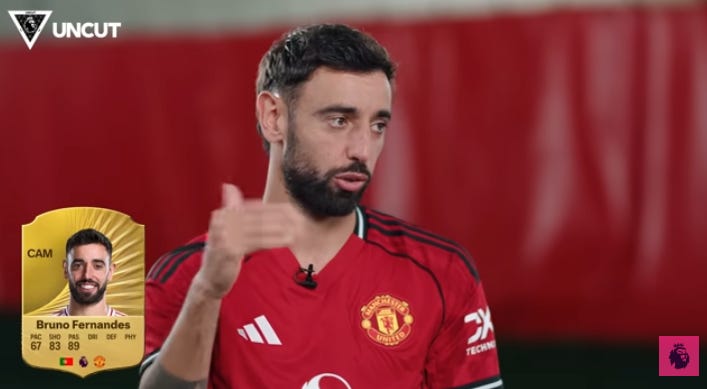
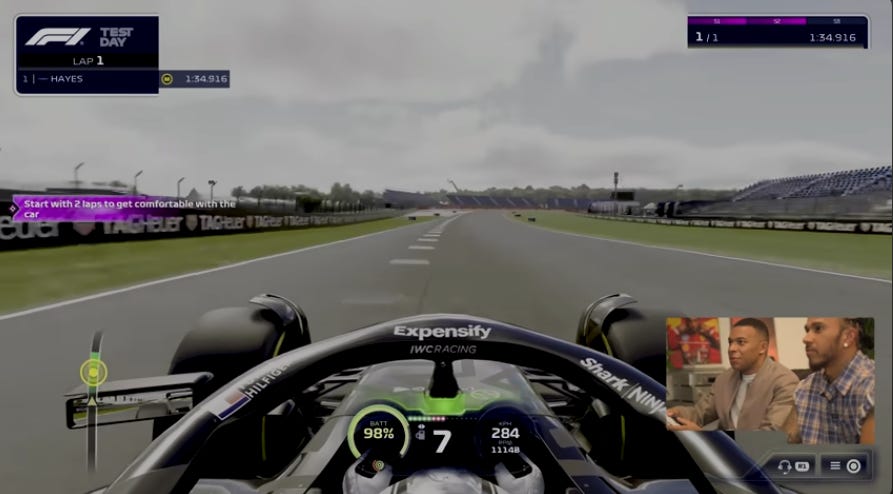
Content driver: Importantly, there is another ecosystem that EA’s games influence: the sporting world. Saudi Arabia’s sporting ambitions slowed as the challenges of influencing entrenched sporting institutions became more obvious. But the one thing that the fans, teams and governing bodies behind popular sports do engage with is the video game based on the sport they love. A Premier League YouTube puff piece asking Manchester United captain Bruno Fernandes about his EA FC ratings reached nearly 2.8 million people last summer. A promotional clip for last year’s F1 game, which saw Lewis Hamilton teach French footballer Kylian M’Bappe how to drive a virtual racing car, received tens of thousands of likes on an unofficial TikTok cutdown from a racing fan account. The inclusion of Texas Tech’s Masked Rider mascot in EA’s College Football game was covered by news outlet ESPN and celebrated by the team via its official X account. There’s even a partnership between EA Sports and sports site The Athletic to include the latter’s content within a companion app for its games.
That’s the ball game: So when we return to the ‘why’ behind the deal, EA’s value to the PIF is not purely economic nor solely about delivering its video game strategy. It’s about owning a soft power asset that is quietly entrenched in the sporting community in a way that Saudi Arabia simply isn’t. If the PIF’s football strategy limited them to ownership of Newcastle United and some Saudi Pro League teams, owning EA hands them a relationship with the 20,000 players, 750 clubs and 35 leagues at the top of the professional game. And if those players, clubs, leagues and fandoms are playing the game, talking about it with friends and posting online to likely billions of fans, the Saudi project has the potential to reach more deeply into the world of football than ever before. Repeat this across other sports that EA also has a strong footprint in – NFL, NHL, F1 – and the reach grows ever bigger.
Reaching for glory: So, should we expect to see the Crown Prince on the front of EA Sports FC next year? Obviously not. The value of a soft power asset is in subtle attraction, not brute force – especially if the brutality damages an economically valuable asset that needs to rid itself of a whopping debt. What is clear is that a state seeking to shape perceptions now owns an asset with proven reach to billions of people. How it uses it in the years to come is something we should watch closely.

News in brief
Propaganda game over: Latvian lawmakers have banned the import of video games from Russia and Belarus as part of efforts to fight propaganda. The state has barred the sale of Russian-made games, books, newspapers and films over concerns that they have been weaponised to spread disinformation in the Baltic State.
Reporting for duty: Trust and Safety expert Rachel Kowert has done it again. This time, she’s written an extensive and fascinating newsletter about how inconsistent definitions of ‘harms’ in community standards governing games affect communities and what game companies need to do to develop effective standards, reporting flows and community norms.
More Xbox bad news: Xbox has apologised after an hours-long service outage on Monday. GI Biz reports that company CTO Scott Van Vliet said that the failure of an internal licensing service used across Microsoft had prevented players from launching games and wreaked havoc on publishing partners.
Luck of the Irish games industry: The EU has approved an expansion of Ireland’s video game tax credit. The Digital Game Tax Credit did not initially allow developers to claim relief for post-release content, worth up to 32% per qualifying game. But earlier this week, the European Commission approved a request from the Irish government to expand the release – meaning post-launch work will qualify for relief.
Ok then…: Finally, Atari has announced that it has signed a deal with Universal to allow it to develop movies based on ten of its intellectual properties. Deadline reports that Universal has already acquired one movie from the partnership, which allows it to develop films based on games such as Pong, Asteroids and Missile Command. I’ve yet to see anyone think this is a good idea, but I was wrong about the Minecraft movie, so…
Moving on
Lots of outs this week, kicking off with Xbox’s VP of Engineering Jared Palmer, who has left to work for Cognition AI… Ben Board is leaving his role at Unreal Engine after years of fantastic work heading up the engine’s biz dev team in Europe…John Hight is stepping down as President of Wizards of the Coast…Turning to some promotions and ins, Rob Leane’s been promoted to Head of Gaming at Radio Times…And Stephen Quinney has been appointed as Art Director at Playdemic…
Jobs ahoy
Epic Games is hiring a Partnerships Director - Talent in the States…Jagex has a post open for a Producer to support the Old School Runescape team…Criterion needs an Associate Games Designer…Virtous has a Head of Product, AI post open in Singapore…And IO Interactive has a Marketing Internship open in Malmo…
Events and conferences
ChinaJoy, Shanghai - 31st July-3rd August
Serious Play, North Carolina - 5th-7th August
gamescom, Cologne - 26th-30th August
Power Play book tour, Multiple Locations - Remainder of year
Games of the week
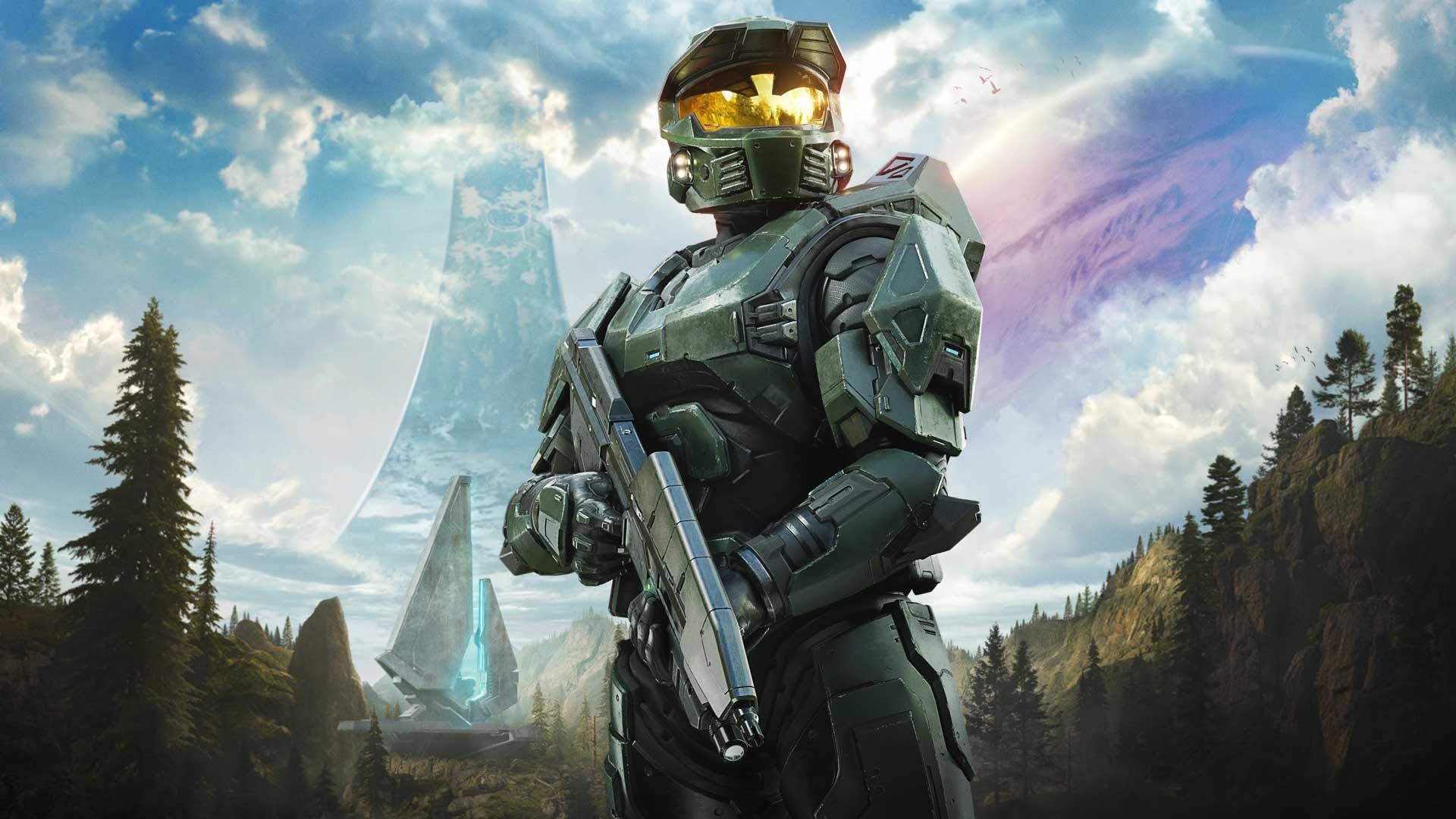
Halo: Campaign Evolved - Remake of the classic Combat Evolved campaign landed on Xbox and PC earlier this week.
Company of Heroes 3: Final Stand - Standalone wave defence edition of Relic’s WWII military strategy game lands on Steam.
Xenoblade Chronicles 2 - Upgraded version of a classic Nintendo Switch RPG arrives on the Switch 2.
Before you go…
Can’t get tickets to see The Odyssey in IMAX and need something to fill your time while you wait?
Barry O’Rourke of RTE has pulled together a list of games capable of fulfilling epic adventuring needs while you wait for the excitement around Christopher Nolan’s latest film to dissipate.
Keep up with VGIM: | Linkedin | Bluesky | Email | Power Play |