

The European games biz goes lobbying, 04/06/2026
Riding a regulatory wave in Brussels 🏄

This week’s Video Games Industry Memo is sponsored by First Playable

The gateway to the Italian video game industry.
Europe’s games industry tries to strike a balance in Brussels
UK online safety minister suggests games should be included in social media ban
We tip our hat to three video game showcases for Summer Game Fest week
Hello VGIM-ers,
Tick tock, it’s book tour o’clock.
After kickstarting the Power Play book tour last week, I’m very pleased to announce a swathe of dates in the UK and beyond.
You can see me discuss the book in the following places:
First Playable, Florence: Wednesday 12th June
Backstory, Balham: Tuesday 16th June
Bradford Literature Festival, Bradford: Saturday 4th July
A soon-to-be-announced event, London: Sunday 5th July
Waterstones Norwich: Wednesday 8th July
Waterstones Cambridge: Thursday 9th July
Waterstones Hitchin (morning book signing): Saturday 11th July
Games for Change Festival, New York: Tuesday 21st July
I’ve added links to all the currently online ticketed events on the Power Play Linktree. Hit this link to access it.
And if you’d like me to come to your town, city or event to talk about the book, get in touch. We’re taking bookings through to the Autumn.
P.S. Power Play releases two weeks today. Pre-order it here.
The big read - The European games biz goes lobbying
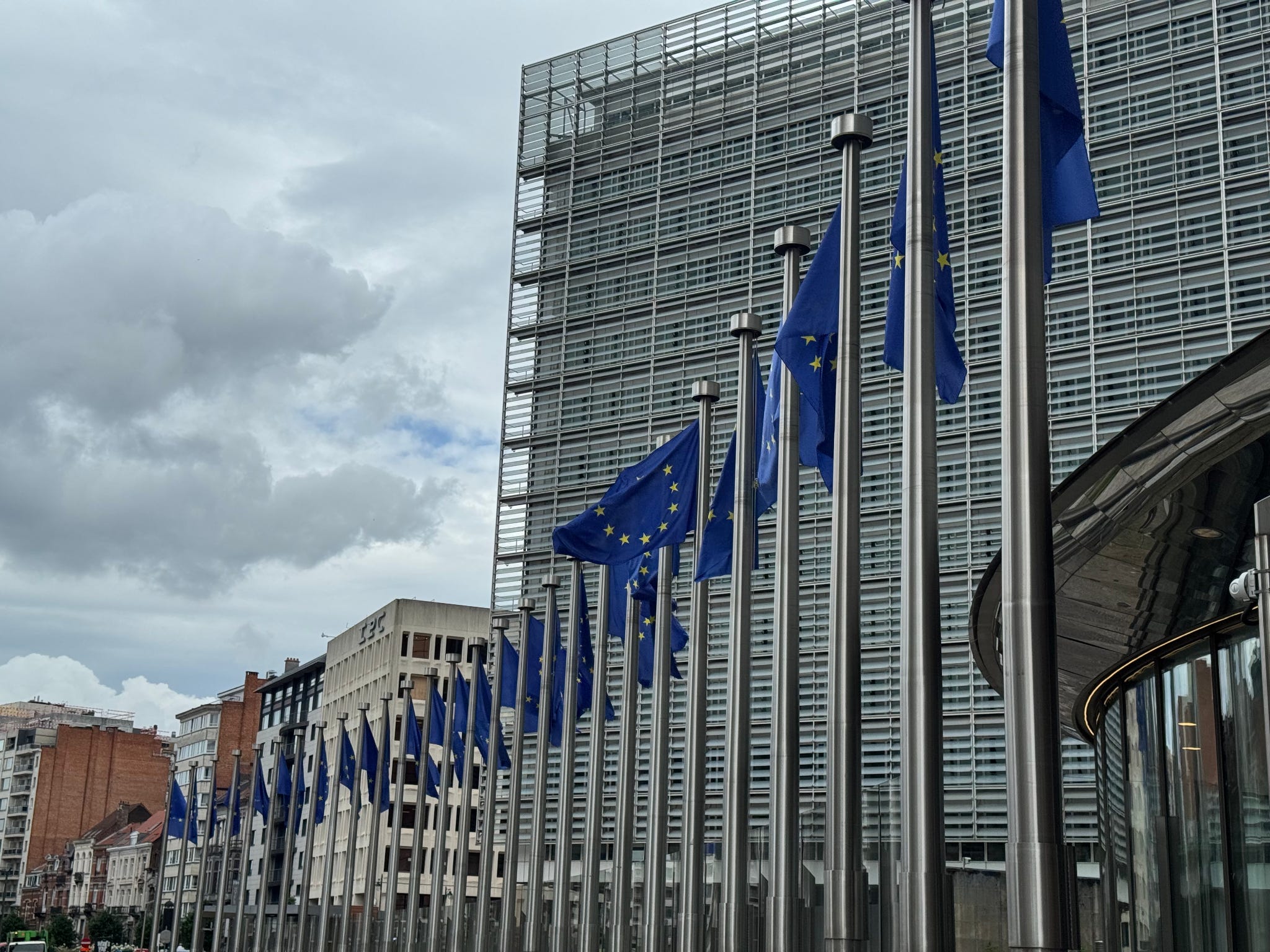
Not quite as sunny: It’s that time of year. Games journalists and influencers from across the world have clambered into trains, planes and automobiles to attend the hottest video game event of the year. But whereas the vast majority of the video game media ended up in Los Angeles for Summer Game Fest, I travelled to Brussels – a city just about as glamorous as LA – to attend an event with distinctly fewer must-see video game trailers on show.
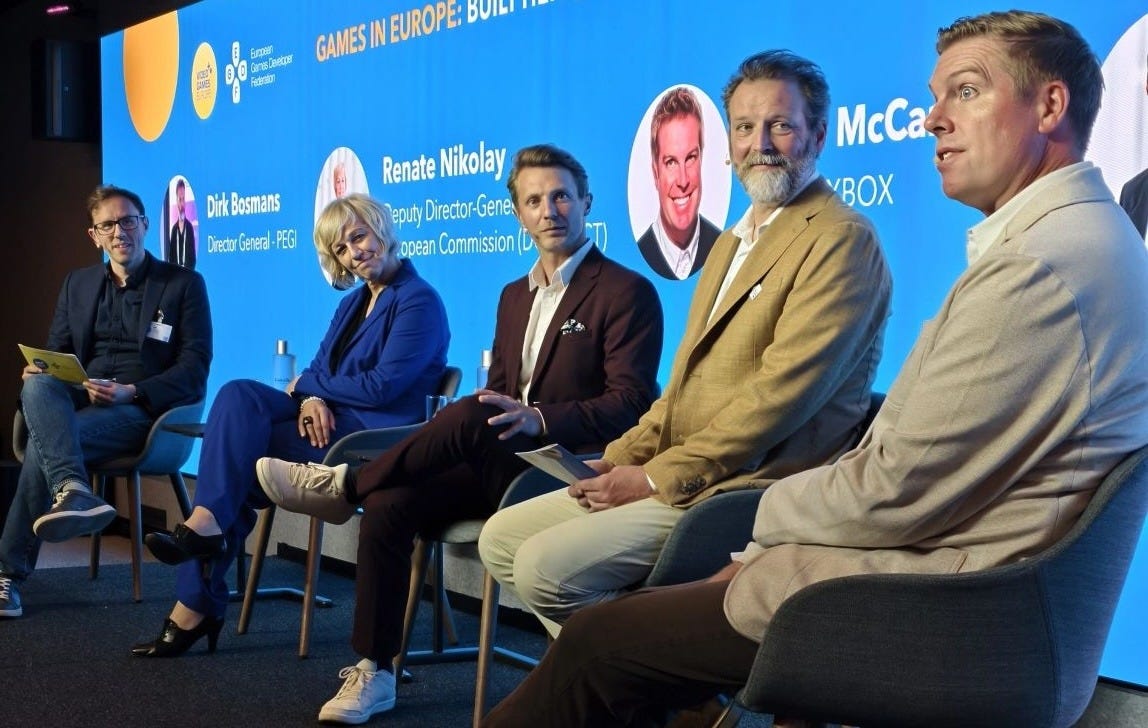
High stakes lobbying: Video Games Europe (VGE) and the European Games Developer Federation (EGDF) host an annual event to bring together the games business with EU policymakers and officials to talk shop. These mini-conferences are an important opportunity for the European industry to talk to a crowd of Brussels bigwigs about what it’s up to. But this year’s event is particularly high stakes. The forthcoming Digital Fairness Act (DFA), the ongoing controversy over the Consumer Protection Cooperation Network’s in-game currencies principles, the persistence of Stop Killing Games and worldwide moves to ban social media have put the industry under genuine pressure to tell its story – or be hit by a powerful regulatory wave.
Regulatory surf’s up: VGE’s event was a rare opportunity for the industry to share its side of the story with members of the regulatory elite. And somewhat interestingly, the story that emerged was not one of a sector swimming into a wave. Instead, the games sector is trying to find its balance so it can ride the incoming wave as effectively as possible; a strategy that makes a lot of sense, but one that feels fraught with risk given some obvious scepticism from the bloc’s regulators.
It’s the mobile game economy, stupid
Euros and cents: Before the event started, King fired the first salvo on behalf of the European industry. The mobile game giant responsible for Candy Crush Saga released a new report called Mobile Matters: The Impact of Mobile Games on Europe that made one strident argument to policymakers not to over-regulate the sector: it’s gonna cost you.
Don’t mention the B word: Drawing on research from Nordicity, considered to be the gold standard of industry economic reporting within government circles, the report found that the European mobile games biz contributes €5.89bn in gross value-add to the continent’s economy and supports over 63,000 jobs across the region. Within the EU, the sector has provided a particular boost to Finland, Sweden, Spain and Ireland. But across the continent as a whole, King’s paper found that mobile has also supported growth in non-EU states such as Serbia, Ukraine and the United Kingdom *sobs gently*.
Mobile first: The report is well worth a read on its own terms because it offers a rare insight into the specific impact of mobile games on economic growth. Most of the research about the economic impact of games has either assessed the value of the whole sector on a country or region (e.g. BFI Screen Business Report) or on a single game (e.g. Roblox and the US). Taking a deep dive into a sector that has typically been ignored outside of mobile-first territories is exciting stuff for nerdy industry watchers like me (if not for anybody else).
Reading the subtext: Launching a document like this just before a big lobbying event means that it, inevitably, has a subtext. In this case, the argument is a very friendly exhortation to regulators to tread carefully when writing rules for the games business. In the introductory spiel from King bigwig Todd Green, the report notes that “China and Turkey are building highly competitive and technology-driven mobile games ecosystems and competing for talent, investment and audiences.” This, he continues, means that policymakers who are thinking about digital regulation in Europe have “an opportunity to support one of the region’s most dynamic creative and digital sectors”. He goes on to say that “getting the balance right” on regulation will be key to maintaining the industry’s strength.
Avoiding damage: Green’s introduction is diplomatically written, but the message rings out when set alongside the wider regulatory chat in Europe. The CPC Principles jabbing at in-game purchases and the DFA’s ambition to target loosely defined dark patterns in video games may be well-intentioned, but they will almost inevitably hit a sector contributing high-value jobs across the bloc. And with economic growth in Europe overall struggling to breach 1.5% per year as inflation bites due to Trump’s misadventure in the Straits of Hormuz, the industry is trying to politely say that it might be a mistake to go too hard right now.
A message from our sponsor, First Playable: First Playable is the main meeting point for those looking to connect with Italy’s video game industry. Organised by IIDEA, the Italian trade association, the event brings together studios, publishers and investors from all over the world, offering an insight into the growing and increasingly competitive Italian ecosystem.
Taking place from 10 to 12 June in Florence, First Playable is expected to welcome over 50 international publishers and investors, as well as more than 500 attendees, for business meetings and networking. Alongside pitching sessions, the programme features a conference, workshops, roundtables, and the Italian Video Game Awards ceremony to celebrate excellence in Italian video game production and the country’s creative ambition.
Discover First Playable 2026 at www.firstplayable.it
Minor protection argument
More valuable than money: However, the argument of “don’t regulate us because it might cost you money” can’t work by itself. Games, whether fairly or not, have been lumped in with Big Tech’s social media platforms as a potential source of harm online. Arguing against regulation solely on economic terms won’t wash in a world where politicians, officials and the public are justifiably i) concerned and ii) pissed off by platforms that they believe are causing social harm.
F*** those guys: This is why the industry is intensifying its efforts to draw a dividing line between itself and social media, particularly when it comes to protecting youngsters who play video games. I chaired a panel at the event about minor protection featuring reps from age-rating bodies, a major Triple A game publisher and a senior figure at the directorate general overseeing the game biz, where the main aim of the game (ha!) was to clarify the difference between the two.
Good news: The event was hosted under the Chatham House rule, so I can’t report exactly what was said. What I can say is that efforts to build a firewall between video games and social media didn’t exactly go to plan. The conversation did recognise differences between the two. It noted that games do function meaningfully differently to social media platforms. It suggested that the industry’s self-regulatory framework and co-regulatory approach have broadly worked. Efforts to strengthen that framework further through changes to age rating systems, which now recognise in-game spend and communication features as something that could bump up the rating of a game, and by boosting technological features like parental controls were welcomed.
Ratings regulation incoming?: But while the industry mostly won the meat of the argument on social media, it was dead clear that there is appetite for strengthening regulation further. This included a pretty punchy chat about the importance of bringing self-regulatory work through age ratings systems into the formal regulatory tent to show that the sector really does approach things differently to social media. For an industry looking to steer policymakers away from hammering it too hard with the incoming Digital Fairness Act, suggesting that age ratings should be a legal requirement across the EU — rather than a nice-to-have self-regulatory extra — might be a necessary concession.
There may be troubles ahead
More contentious: The rest of the event offered variations on the themes above. The standout moment was a disagreement between industry reps and officials over the possible impact of the much-mentioned CPC principles on games. Designers argued that implementing the CPC’s rules would lead to players being interrupted by approximately 30 pop-up messages during a short mobile game session, with players constantly disrupted with messages reminding them of their consumer rights to meet the CPC’s recommendations. Without wanting to oversimplify too much, the official response was to say that the sector was wrong. Okey-dokey.
Less contentious: The final session about the potential of games as a source of growth and innovation in Europe took a primarily positive position on the full value of the sector across supply chains, including through multi-purpose technologies like game engines. It also noted rising global competition from countries like China was eating the EU’s lunch and that a lack of a continent-wide strategy for games was holding the bloc back from competing.
Difficult circumstances: Did the event show that the industry in Europe is successfully riding the regulatory wave? The answer isn’t clear. The tone of the event was polite, cordial and constructive. But the reality is that the regulatory environment feels fraught and unpredictable. Even in a setting where game developers had a chance to shape the message, the pushback against Big Tech, social media and historic negative perceptions of games feels like the public policy equivalent of wandering into a riptide. Everything increases the risk of the business getting pulled under the water.
Mature expectations: So, we’re in a curious place. The industry is telling its wider story more effectively than ever before. It has deeper engagement with political officials and elected representatives, allowing it to reach the people who matter with those messages. But with the industry maturing socially, culturally and economically, it’s clear that in Europe there is an expectation that it must demonstrate that its maturity strengthens – rather than weakens – rights and opportunities across the EU. And while it feels like the sector has successfully pulled itself upright and is currently riding the European regulatory surf, don’t be surprised if a crashing wave rises up and knocks us off the board at some point soon.

News in brief
Won’t somebody please think of the children, latest: Speaking of lobbying, UK video games trade body Ukie said in its response to the social media ban consultation last week that video games shouldn’t be treated similarly to social media. This week, The Sunday Times reports that Kanishka Narayan, the online safety minister, and Dame Rachel De Souza, the Children’s Commissioner, have both called for young people’s access to online games to be restricted – citing fears over stranger pairing (i.e. all multiplayer matchmaking) and the fact that boys spend a lot of time playing video games. Delightful news for all, I’m sure.
Hasan’s trip is sPiker-ed: Political commentator and video game streamer Hasan Piker, known as HasanAbi on Twitch, has been banned from entering the UK because his “presence in the UK is not considered to be conducive to the public good.” Piker was due to appear at SXSW London and make a series of appearances with left-wing political figures like former Labour leader Jeremy Corbyn, but was denied access to the country seemingly due to public support for Hamas. Lewis Goodall, co-host of the popular News Agents podcast, warned that the ban on Piker, and left-wing commentator Cenk Uygur, was “counterproductive, authoritarian and chilling” on free speech grounds. Commentator James Austin believes that it is justified based on the supportive comments he made for proscribed terror organisations.
Not stopping Stop Killing Games: Stop Killing Games has scored a first victory of sorts in the US. California’s State Assembly passed a vote on the Protect Our Games Act, which would require game developers to provide 60 days’ notice of video game shutdowns in the state and offer access to content offline if it did (or provide a refund to players). Despite major questions about the act remaining (why aren’t free-to-play games included, what happens if a game flops straight out of the gate, would refunds apply for titles players had happily enjoyed for years, etc), the bill received enough votes to pass to the Senate. It is due to be debated further next month, with the campaign hoping to pass it in time for January 2027.
Ever Greater Unions: In the biggest “what are you going to do, start your own casino” news of the week, Rockstar employees have unionised as the Rockstar Game Workers Union. Sitting within the Independent Workers’ Union of Great Britain, which is currently leading a claim against the studio for allegedly dismissing dozens of employees for union busting, its formation has certainly shown Rockstar (that at least 10% of its workforce has the appetite to join a union).
Bordering on problematic: Finally, the new Call of Duty game is courting controversy by making the central conflict of the game focus on a hot war between North and South Korea. Modern Warfare 4 will partly follow battles on the frontline between soldiers on both sides of the divide. But given that games that have depicted war between the two countries have previously been banned in the country and the South Korean state has rules against games that might damage the reputation of the republic, Activision really needs to handle this with care.
Moving on
Tekken 8’s director Kohei Ikeda has left Bandai Namco…Lauren Roberts has been promoted to Director at PR firm Premier…Dr Dylan Poulus has become the Global Lead, Esports and Gaming at Movember…Cassandra Villareal has been hired by Supercell to become its Senior Corporate Brand and Communications Manager…Mariam Ahmad is the new Editorial Director - Events for Pocket Gamer Connects…And friend-of-VGIM Lucy James has departed GameSpot to launch Looking For Game, a weekly PC game discovery newsletter backed by Big Geoff Keighley…
Jobs ahoy
Sega Europe wants a ship-sharp Copywriter in London…Cloud Imperium is hunting down a Senior Producer…TripleDot is looking for a Creative Producer down under…Flavour of the month IO Interactive wants you to join its team in Malmo as Platform Development Manager…Nintendo is hiring an Influencer Marketing Manager in Redmond…And Newzoo is hiring an Editorial and Publishing Specialist based out of its Amsterdam HQ…
Events and conferences
Summer Game Fest, Los Angeles - 5th-8th June
First Playable, Florence - 10th-12th June
Power Play in conversation with Keith Stuart, London - 16th June
Develop, Brighton - 14th-16th July
VGIM Business Breakfast, Brighton - 15th July

Games of the week - Summer Game Fest showcases edition
There’s the sum total of bugger all releasing this week due to Summer Game Fest. So, here are three virtual events for you to check out instead.
Summer Game Fest - The headline showcase for the industry’s forthcoming relentless promotion of itself kicks off on Friday with Geoff Keighley and Lucy James (of the jobs section fame) on hosting duties.
The PC Gaming Show - The PC games showcase from, erm, PC Gamer hits virtual screens on Sunday 7th June, with a sneak peek at the Warhammer 40k version of Total War.
The XBOX Games Showcase - And finally, it’s probably worth tuning into the Xbox (sorry *inhales and shouts* XBOX) Games Showcase on the same day to see what the heck is going on over there given everything that’s been happening with it over the past year.
Before you go…
Don’t forget: I’ve got two signed copies of Power Play up for grabs in the first ever Video Games Industry Memo reader competition.
Everyone who is subscribed to the newsletter by Wednesday 10th June will be entered into a draw to win one copy.
And every VGIM Insider will be eligible to take part in a separate additional competition, running alongside the free-to-enter contest.
Want to join the contest? Sign up as a VGIM subscriber for free here to enter the main competition.
You can also use the code POWERPLAY to become an Insider for just £25 a year (or £3 a month) to secure entry into the second contest.
Keep up with VGIM: | Linkedin | Bluesky | Email | Power Play |
Great piece, George. This event went oddly under the radar given how important the people in attendance were, but that might've been by design?