


White House’s video game memes perform twice as well on social as its usual content does, according to VGIM boffins
Apple pulls billing from Russia after breaking sanctions rules with payout
Pokémon Champions battles its way to the top of our release round-up
Hello VGIM-ers,
Welcome back to the latest edition of the newsletter. There are two things to tell you about before we get on with the Big Read.
Tickets for Games for Change London are close to selling out, which means you’ll really need to get a move on to grab a pass.
If you want to get your place at next Wednesday’s conference alongside the likes of LEGO, Jagex, Tencent, Ubisoft, Roblox, UNICEF, Great Ormond Street Hospital, Tiltify, The Christchurch Call, and many more, buy a ticket here.
I’m also pleased to say that the North American version of Power Play has gone to print. Its front cover is delightful, and its words are mighty.
If you want to buy a copy, you can pre-order it ahead of its 21st July launch here. And if you want me to speak in your city or state when I confirm my touring plans later this year, hit me up at george@videogamesindustrymemo.com.
The big read - War (Meme) Games
Yes, this really happened: The White House’s use of video game memes to promote its pointless, idiotic, and ruinous war in Iran grabbed news headlines last month. Footage from games like Grand Theft Auto, Call of Duty, and *checks notes with an exasperated look on his face* Wii Sports Resort was cut together with footage of combat operations from the Middle East, sparking consternation and column inches in outlets such as The Guardian in the process.
Super effective: But how effective are video game memes in promoting the perspective of the Trump administration? The answer is surprisingly so. VGIM analysis of the output of the White House’s Instagram account has found that video game memes which feature titles that closely align with the interests of male MAGA fans perform approximately twice as well as the administration’s usual output.
Emboldened to act: And while there are limitations to the effectiveness of such content, our investigation suggests that the administration will likely be emboldened to keep using game content to reach its audiences – necessitating a response from industry in the process.
Numbers video games
Sampling its content: Earlier this week, I analysed the view count from a sample of 60 posts from the White House’s Instagram Reels account over the past month and produced the mean average views from that sample. We then removed the top and bottom five posts from the sample to create an average based on the performance of 50 posts within that range. On average, the White House generated approximately 1.9 million views per reel across the original sample of 60 videos. However, that average dropped to approximately 1.57 million views when content at the upper and lower ends of the range was removed.
Popular cultural appropriation: We then examined the average performance of content posted by the White House, which appropriated content from wider popular culture to spread its messages. We identified five videos that met that criteria, including a Seinfeld meme featuring Marco Rubio and a clip of a fake bowling alley strike animation referencing war messaging. Albeit with a notably smaller sample size, the average views on such content were a million views higher than the baseline average at 2.56 million views.
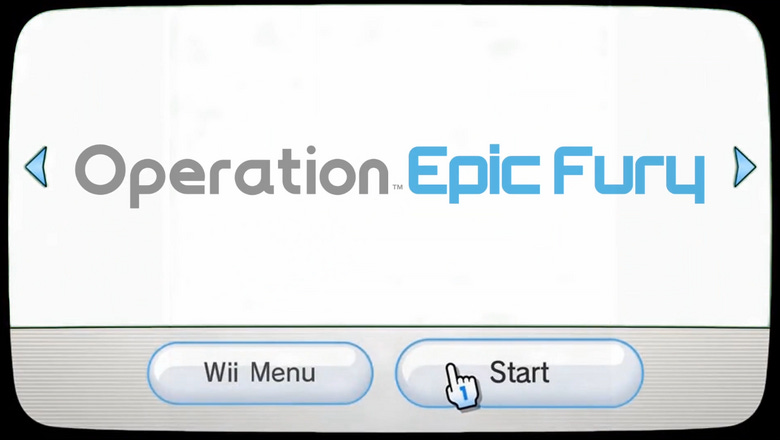
Games on: Finally, we looked at five video clips which referenced video game content directly: a Call of Duty killstreak inspired reel, a GTA: San Andreas meme, a Wii Sports-inspired version of Operation Epic Fury, a supercut of creative content featuring Master Chief and Mortal Kombat voiceover lines (e.g. the use of the phrase “fatality”, and a clip of Donald Trump as an Animal Crossing character for agriculture week.
Ahead of the competition: On average, video game-inspired content attracted 3.4 million views. This is more than twice the baseline average for content posted across the account generally, and over 800,000 more views than creative content in general. And while none of the video game posts accounted for the most viewed content across the period analysed, the Wii Sports clip (4.8 million views), the Call of Duty content (4.5 million views), and the GTA reel (3.1 million views) outperformed the majority of videos glamorising the content. Only a handful of clips, including one of a bomber taking flight to the tune of the Macarena, generated more views.
Gamer-fication of propaganda
General principles: It is undoubtedly weird as hell to see the White House’s comms pivot from fuddy-duddy top-down institutional content to indulging in what is best described as shit posting. But why do this? Well, at its most basic level, the content works because it does what a lot of good social content does. It riffs on widely known popular culture to get cut through in the way many popular memes do. It has a chaotic, anarchic tone which suits the channel it’s in. It is transgressive in a way that delights the administration’s supporters and infuriates its rivals. And it feels all the more edgy because the formerly stuffy White House social channels have been turned into a place where this kind of stuff circulates freely.
All of your electoral base are belong to us: This partly explains why video game content is being riffed on by the White House. But there’s more to it than that. A big reason why this is happening is that Trump’s online base is deeply embedded in ‘gamer’ culture. As I’ve written about in one of the chapters of Power Play, a big chunk of the modern political right in America emerged from Gamergate. The hate movement was brought into the political fold by Steve Bannon and Breitbart after it showed how it is possible to wash extreme talking points into the mainstream political environment. Its members became online ‘shock troopers’ for Trump, as well as becoming foundational figures in the alt-right and nuttier fringes like QAnon. And as they’ve grown up, the almost entirely young men who made waves back in 2014 are now in positions of power on the right. This allows them to shape the online narrative, encouraging them to reach a fresh generation of men through an increasingly fragmented social media ecosystem that allows transgressive macho ‘manosphere’ content to trend.
What happens when you read the comments: The use of video game imagery and aesthetics to promote the Iranian War demonstrates the symbiotic relationship between the current administration and those closed, predominantly young male-only communities who respond to this ‘gamer-fication’ of communication. The top comments on the Call of Duty kill streak clip are sarcastic wry remarks like “even the white house knows old COD was peak” (5000+ likes) and “we got Call Of Duty reel on WH page before GTA 6😭” (over 25,000+ likes). The discussion underneath the GTA meme, which flashes up the phrase Wasted over a clip of the sinking of the Iranian warship the IRIS Dena, features prominent remarks like “I’m pretty sure this social media manager is my soulmate” (3500+ likes). And the non-Iran war-related Animal Crossing meme’s most liked comment reads “Illegal crossing ❌ Animal Crossing ✅” (6000+ likes). The administration’s authoritarian immigration policy is therefore being promoted to millions of viewers by Trump’s grassroots supporters, whether that wider audience likes it or not.
Rage bait: Video game content gets a lot of traction amongst Trump’s domestic and international support base because it’s part of the culture of the ‘in-group.’ But it also gets traction precisely because it attracts the attention of everyone else as well. The popularity and cultural significance of games within the wider online world draw plenty of Trump’s critics to the pages as well. On the Wii Sports Operation Epic Fury parody page, the most liked comment appears to be “this is extremely unprofessional, war is not a game” (7,300+ likes). Even if the posts are disliked, they’re attracting plenty of attention.
Media multiplied: And this comes down to the other big reason why these posts work so well for the regime: the content is then multiplied to millions more people by the media. While all of the White House videos which plunder cultural content for political gain tend to be referenced within the media, the use of video game content is particularly juicy for outlets looking for another ‘shocking’ angle on the administration’s comms. And as with Gamergate, the effect of the likes of the BBC picking up such content is to wash a clip that might have been sealed off within social media to millions more people worldwide. This allows the administration’s talking points to spread, achieving much greater reach than conventional comms would.
Taking action
Limitations aplenty: The White House is proactively using video game imagery, aesthetics, and community channels to promote its messaging. But there are limits to its effectiveness. The most obvious is how repeatable it all is. The sample of video game-flavoured content we found is small, amounting to a fraction of the administration’s overall output. Putting more game-themed propaganda into the world would likely diminish its effectiveness overall. Content that riffs on games that don’t align with the community of MAGA male gamers aligned to Trump looks like it may perform poorly, as seen with the comparatively low 1.7 million view count on the administration’s Animal Crossing clip. It’s also worth noting that the most viewed videos were for clips that were more archetypally Presidential, such as a clip of a chat between the President and the crew of Artemis II (11m+ views). Positive, friendly comms clearly still have their place.
Battling back: Game companies can blunt the effectiveness of such propaganda by drawing a clear line between their titles and the actions of the administration. The Pokémon Company did this effectively, releasing a public statement which was critical of the White House’s use of Pokopia fonts to promote Make America Great Again via its X account. Other game companies affected need to follow suit, both to protect their IP and communicate to their communities that promoting war via video game aesthetics isn’t great.
Know the enemy: And we can collectively limit its effectiveness by understanding why the administration is creating this content, what it is aiming to achieve with it, and how to prevent it from spreading further. There is an irony in writing this piece in the knowledge that it will push the regime’s clips to thousands of other people. But the more we understand that clips like this aim to appeal to an in-group, goad rivals, and attract attention, it becomes easier for us to counter. The more we understand the aim of these antics, deny it breathing space and find ways to promote less maliciously aggressive narratives to our audiences, the better off we’ll be in the long term.
Counter offensive: The White House’s use of video game aesthetics within its war communications is the surest sign yet that video games have achieved impactful cultural cut-through, both online and off. It’s down to us to make sure that the warmongering narratives being promoted on the back of our medium are countered in the strongest possible ways.

News in brief
Bitten off more than it can chew: Apple has pulled App Store billing in Russia, preventing consumers in the market from paying for in-app purchases or subscriptions. Craig Chapple from PG Biz reports that the move came after the company’s UK and Ireland subsidiary was fined £390,000 on Monday 30th March for making a £635,000 payout to a sanctions-breaching streaming service called Okko. Merely hours later, Ukrainian news outlet UNITED 24 noted that Russian officials had ordered mobile operators to stop customers from topping up their Apple ID accounts using phone balances. In the words of a former State Department official whom I spoke to for Power Play, there’s no such thing as a coincidence when it comes to the Kremlin.
Taken-Two out back: The head of Take-Two’s AI team has been laid off, alongside an unconfirmed number of colleagues. Luke Dicken, the company’s AI lead who joined the business from subsidiary Zynga, announced that his and his team’s time at the business “has come to an end”. But as Tommy Thompson writes at AI and Games, there’s much more hot air about generative AI than actual analysis of the restructure within the majority of the games media.
I drink your video game! I drink it up!: Papers Please creator Lukas Pope has said that he’s stopped posting about the video games he is working on to make sure his work isn’t “slurped up by AI”. Pope told Mike Rose and Rami Ismail from, erm, the Mike & Rami Are Still Here podcast that he no longer feels comfortable about posting updates, just in case someone (or some large language model) is pinching his ideas.
Meanwhile, in Jakarta: Roblox has committed to rolling out Indonesia’s imaginatively named Indonesian Game Rating System (IGRS) as regulator pressure increases on the platform worldwide. Experiences will feature both an age rating from the IGRS (e.g. a 13+ or 15+) and a Content Maturity Label (e.g. Mild or Restricted) from the platform itself. But the IGRS ratings have come under fire due to significant inconsistencies, something that’s covered in detail by the fine folks at Niko Partners.
Gold coins everywhere: Remember last week when we said that the critical panning for the Super Mario Galaxy movie wouldn’t make a blind bit of difference to its box office performance? Turns out we, and the rest of the world, were right. The film made $375.2m globally on its opening weekend. That’s slightly down on the original’s performance, but still means it was good enough to i) return its budget three times over and ii) become the biggest animated launch since last year’s bafflingly popular Avatar: Fire and Ash.
Moving on
Rukshana Pervin Hoque has been appointed Regulatory Counsel at Tripledot Studios…Lana Zgombić has popped up as Senior Production Coordinator: Technology at Rockstar London…Andrew Sinclair has been promoted to Senior PR & Product Executive at Sports Interactive…Tom Goldberger has been appointed the new Vice President, Gaming at creative agency DDA…And one we missed from last week: Clemens Mayer-Wegelin is now Chair of Video Games Europe…
Jobs ahoy
Take-Two Interactive has an opening for a Director, Global Affairs (Europe)...Discord is recruiting for a Senior Public Policy Advisor (APAC) in Australia…Turtle Rock Studios is hiring a Narrative Lead…Knock it out of the park as the Senior Director, Business Development, Gaming and VR at Major League Baseball…And Tencent has a post open for a Senior Communications Manager, Southeast Asia in Singapore…
Events and conferences
London Games Festival, London - 13th-19th April
Games for Change Summit, London - 15th April
BAFTA Games Awards, London - 17th April
gamescom Latam, São Paulo, 29th April - 3rd May
Summer Games Fest, Los Angeles - 5th-8th June
Games of the week
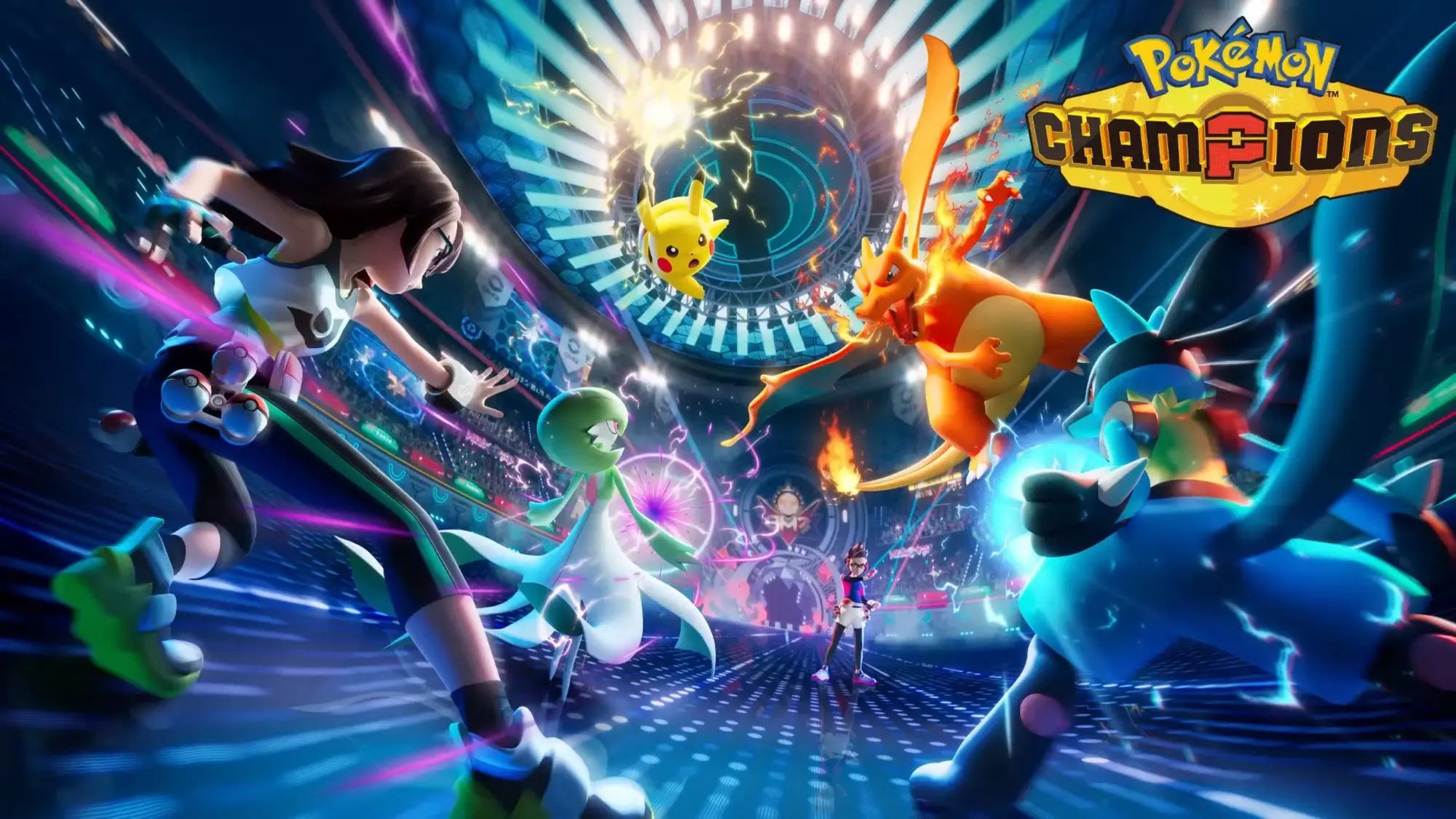
Pokémon Champions - Free-to-play spiritual successor to Pokémon Stadium that appears to be perfectly optimised for eSports, is waiting for you on Switch 2.
Starfield - Channel your inner Artemis II by playing Bethesda’s alright-after-you ’ve-put-ten-hours-into-it space-faring RPG on PlayStation 5.
Beyond Words - Word-based rogue-like from that guy you shot in the face hundreds of times while playing GoldenEye drops on Steam.
Before you go…
I enjoyed two helpings of ‘unexpected references to top video games in other forms of culture’ over the past week.
The Rest is History chose to open their latest series about the samurai with a reasonably deep chat about Ghost of Tsushima.
And beloved British comedian Bob Mortimer revealed that he used to play the Resident Evil games in a chat with comedians Sam Campbell and Romesh Ranganathan during the second series of the UK’s Last One Laughing.
Great references to popular video games that aren’t coming from the White House?
Keep up with VGIM: | Linkedin | Bluesky | Email | Power Play |