

Why Nintendo is Super, 12/02/2026
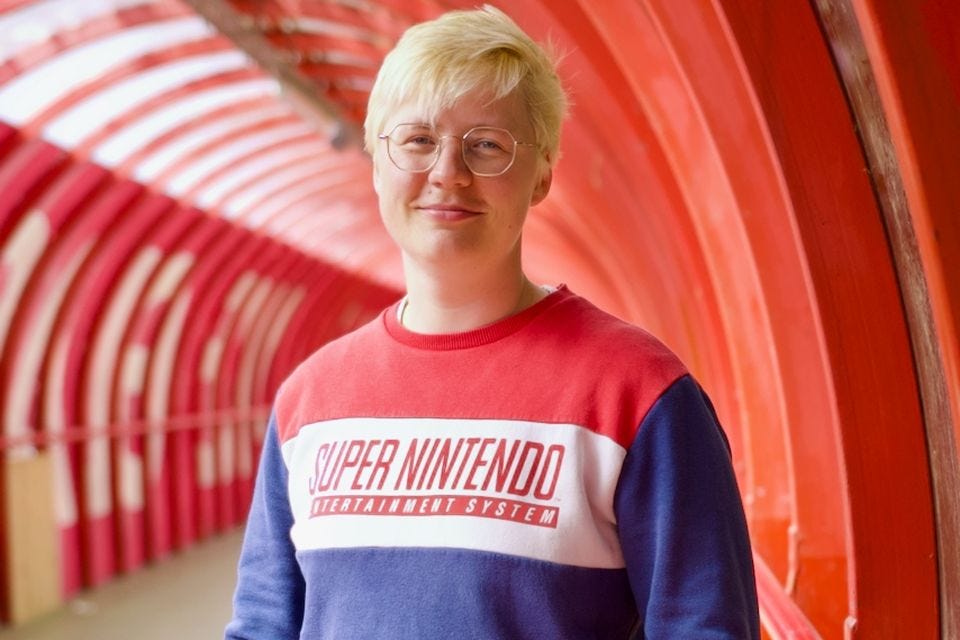
Keza MacDonald discusses her new book and the magic of Nintendo 📖

Video Games Industry Memo is sponsored by k-ID

The compliance infrastructure empowering platforms to build for everyone, everywhere.
Nintendo’s intergenerational genius is crucial to its success, says Kez
Clair Obscur 33 devs knighted by the French Government for services to J’ai-RPGS
Mario Tennis Fever serves up chaotic sporting fun in the week’s releases
Hello VGIM-ers,
I’m landing in your inboxes with a shorter newsletter than usual because jury duty has swallowed up a big chunk of my time this week. But I’ve got a few quick things to let you know about before I head back to my civic duty.
We’ll be unveiling the first speakers for Games for Change London in a couple of weeks. If you’d like a chance to appear on stage at the inaugural summit, submit your idea for a talk, panel, or roundtable here.
Next, we’ve got an edition of Playing Politics landing for VGIM Insiders tomorrow. If you’d like to read the newsletter, sign up as a paid supporter of the newsletter here.
And finally, I’m going to be speaking at London’s Good Game Dev Club at Loading Bar on Thursday 5th March. Make sure you follow their LinkedIn page so you can grab a ticket when they go live.
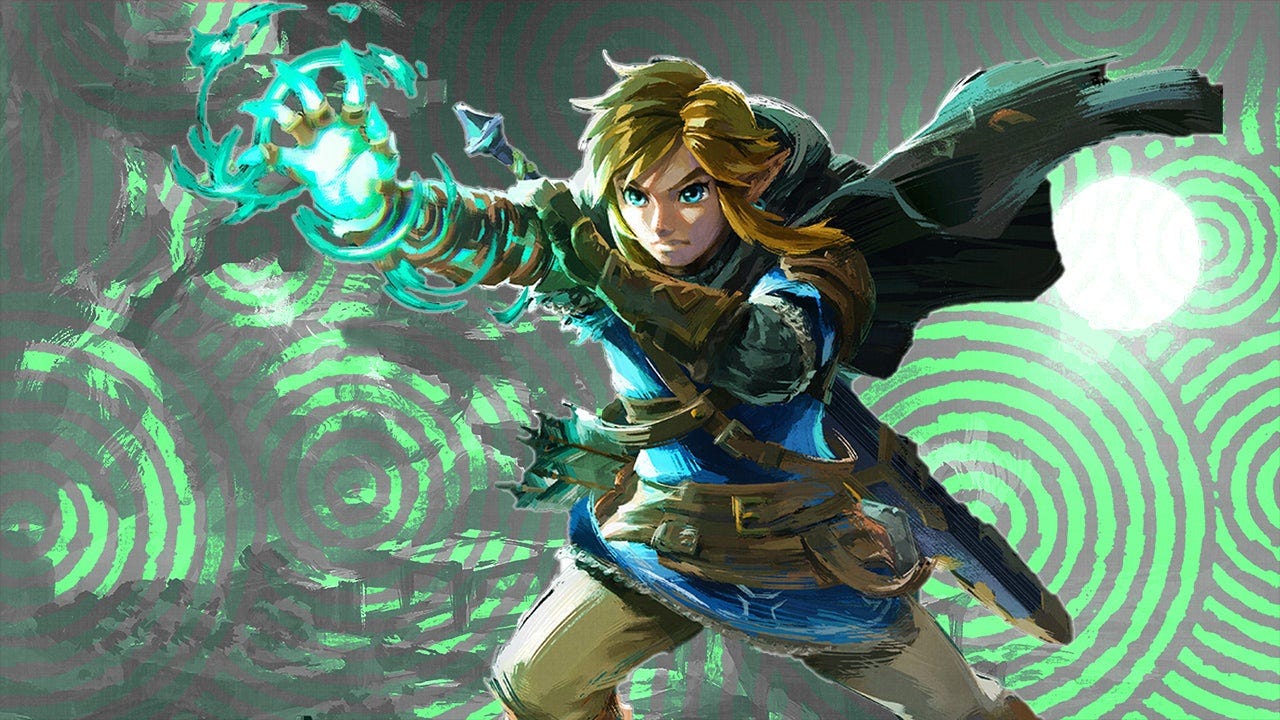
The big read - Why Nintendo is Super
Sounds like someone’s a Nintendo nerd: There is no Video Games Industry Memo without Nintendo. The company is arguably the biggest reason I am in this industry, doing the work I do, and writing the piece you’re reading now. Super Mario World on the SNES was the first game I played. Mario Kart 64 was the game that brought my siblings together. The Legend of Zelda: Breath of the Wild reinvigorated my lifelong fascination with the series when the Switch launched. And watching my nieces fall head over heels for Super Mario Odyssey felt like passing a personal passion on to the next generation.
A bit mysterious: But Nintendo itself remains something of a mystery. The 137 year-old company’s games, hardware, and creative creations are among the most recognisable in the entertainment world. Yet at the same time, the company has often been a secretive beast. It might have given the world Mario, Link, and Samus, but the method behind its creative madness has consistently been obscured.
Super scope: Fortunately, a wonderful new book has lifted the curtain on my favourite company in the video game world. Super Nintendo by Keza MacDonald tells the story of how Nintendo helped the world to have fun through the games that defined it. By drawing on her interviews with Nintendo’s senior execs, two decades of industry experience, and more desk research than a fastidious Dad updating his home office, Keza’s book reveals how Nintendo’s unique approach to making games has given it such longevity (and plenty for the rest of the industry to mull over).
A cultural history through games
Diglett for victory: Keza wrote this book for a simple reason: a lifelong obsession with the Big N. “I was 35 when I wrote the proposal for this book, and I had been writing about video games for nearly 20 years,” she said. “I had spent a lot of time thinking about why I was still interested in video games. As part of that thinking, I thought a lot about what started my interest in video games, and that was Nintendo. And I started thinking about how Nintendo has not just been present in my life, but a constant presence for 130 years plus now. I felt like if I could dig into Nintendo, I could maybe dig into why I liked games at all in the first place. And if I dug into that, I could then dig into why we all like video games.”
Dry-Dry Deserted: She decided not to write a linear history of the company. Instead, she opted to write a cultural history exploring the company’s history through the games that defined it. “I didn’t want it [the book] to feel dry,” she said. “A lot of video game history books that I’d read were very focused on technology. Obviously, that’s in our industry and the driving force for the first 30 to 40 years of our medium’s history. But technological change and creative change went hand-in-hand. So I wanted to think about what these games meant to people. I didn’t want to be like, ‘okay, so here’s a chronology of Nintendo games.’ I started thinking about how to structure the book in a way that would tell the whole story, but also avoid feeling too formulaic. So I decided to structure it around Nintendo’s games instead.”
Talking points: The result is that each chapter grounds you within the creation of each franchise through the people, philosophy, and quirks that make up Nintendo’s creative method. “Structuring it around particular games gave me an excuse to dive into stuff I really want to say about Nintendo because I find a game that’s a way in. So, Metroid became a way in to talking about how Nintendo’s games portray women in games. Pokémon ended up being not just the story of the game, but the story of how video games became more social and started to connect people together. And Nintendo Labo, if you were to name Nintendo’s top 50 best-selling games, wouldn’t be anywhere in there. But Labo was a really fantastic way to talk about Nintendo’s philosophy of making innovative things with old-fashioned technology.” It was, according to Keza, the perfect encapsulation of Gunpei Yokoi’s (the creator of the Game Boy) product development philosophy of ‘lateral thinking with withered technology.’
A message from our sponsor, k-ID

State of the Age report 2026: 2026 is the Year of Implementation.
2026 represents a turning point: the year compliance moves beyond static controls designed for an earlier era and becomes embedded directly into product architecture. From the FTC’s recent workshop to mass enforcement actions globally, age assurance is now a competitive advantage.
Join the exclusive launch of our State of the Age 2026 report to learn how platforms are operationalising compliance at scale and growing user trust.
Register for the Exclusive SotA Webinar and get a copy of the report
A lineage of success
Secret to success: Over the course of the book, we see Nintendo rise from a humble Hanufada card manufacturer into a multi-billion-dollar digital behemoth that somehow retains a uniquely playful creative spirit. But how did it do it? For Keza, Nintendo’s magic is found in a distinct blend of inventive innovation where the limits of games and hardware can be playfully pushed by multi-disciplinary teams in a secure environment.
Two-player game: “It’s the unique marriage of technical and other kinds of creative intelligence,” Keza explained. “That was really exemplified by the wonderful lifelong friendly rivalry between Shigeru Miyamoto and Satoru Iwata. You’ve got Shigeru Miyamoto [the creator of Mario], who wanted to be a comic book artist and he’s a product designer. He’s not a particularly technical guy, but he has enough of an understanding of the technical stuff to push boundaries. And then you have Satoru Iwata [Nintendo’s former CEO until he died in 2015], who was a programming genius from a young age and whose technical, programming, and business intelligence are just this perfect foil and complement to Miyamoto’s creative approach.” This combination of personalities that Keza describes in the book as ‘two different flavours of game development cleverness’ would prove so delicious that the duo would grab lunch together every Monday to talk shop.
Institutional knowledge: Dynamics like this have been strengthened because Nintendo has been able to keep its most senior staff in the business for decades, allowing up-and-coming talent to learn from it. “If you are a new Nintendo employee, you’re working on the next Zelda about four seats away from Eiji Aonuma, who worked on Ocarina of Time and Majora’s Mask,” Keza said. “And Aonuma learned from Miyamoto, who made the first game, so you have this lineage. There’s no company at which this is the case anywhere, even at Pixar or Disney, where you get that sort of level of institutional knowledge.” The benefits of this extend to Nintendo’s hardware too, with developers working on games at its Japanese HQ practically able to turn around to talk to an engineer about the device they’re creating content for if they need to.
Do be Alarmo-ed: You may reasonably think that Nintendo’s retention of senior staff is just a by-product of Japanese business culture, where it is undoubtedly harder to fire staff and much easier to be a one-company person. Keza argues that it misses an important difference between Nintendo and other businesses in the country. “You have lots of people with lots of different types of intelligences who work very collaboratively and non-hierarchically,” she said. “Everyone on a Mario team will be prototyping, having ideas, having ideas shot down, or having ideas make it into the game. It’s not necessarily that the older people at the company are in charge and that everybody does what they say. Everyone has a very collaborative way of working which crosses not just age but also disciplines.” This creates plenty of room for creativity, whether it is recognising that squids are the perfect animal for a game about splattering liquid all over the floor or making a $100 alarm clock that makes coin noises when you move your arms just because you can.
Opening the treasure chest: But the creativity is underpinned by a conservative business model that means its staff have more room than most to take risks. “Nintendo operates in a very cash-first way,” Keza told me. “Nintendo has this war chest so that if something like the Wii U happens [where the Wii’s successor simply failed to sell] or they have a few unprofitable quarters, they don’t have to fire the CEO, fire half the staff, or everybody commits ritual suicide for the shareholders to be appeased. You can just stay the course and try again.” The company’s financial security gives the business the confidence to experiment, allowing it to launch industry-defining consoles like the motion-control powered Wii that none of its rivals (and a lot of Nintendo’s own shareholders) wouldn’t back.
A Switch 2 conservatism?
Wa-hoo: Keza’s book ends up being an exhaustively entertaining romp through Nintendo history, which perfectly blends the stories of the people, the properties, and the philosophy that makes the business come to life. A chapter on Kirby transforms, somewhat ironically perhaps, into a vehicle for discussing the character’s importance as a space for safe creativity in Nintendo’s portfolio and how it kick-started Satoru Iwata’s rise in the business. Mario’s chapter talks about the character’s global popularity, but grounds it in the decades of work to make the buttery-smooth experience of controlling him central to the endlessly inventive, iterative games that have delighted millions.
Two-by-two: But due to the vagaries of the publishing world, Keza’s book had to mostly miss the latest console upon which Nintendo has cast its magic: the Switch 2. I asked her where she thought it fitted into the company’s story now that the book is out. “Nintendo tends to oscillate between releasing something completely new or releasing a follow-up,” she said. “So you get the Game Boy with the Game Boy Colour, the NES with the SNES, the Wii and the Wii U. They [its consoles] tend to come in little pairs that follow on directly from any other thing they’ve done.”
Steady as it goes: Keza believes that the decision to release a direct successor to the Switch is a sign that the company’s appetite for risk has lowered over the past decade. “I think we’re in a conservative era of Nintendo,” she said. “Satoru Iwata passing away was probably not in anyone’s business plan. And so in the years after, right after the Switch was released, I think Nintendo probably had to do a lot of behind-the-scenes reorienting.” Keza believes the company’s appointment of Shuntaro Furukawa, a mostly mysterious accountant who started his career in the company’s European office, as its sixth President in 2018 is one factor behind this. The Covid-19 pandemic, the global cost-of-living crisis, and the maturation of the games industry have also understandably shaped its attitude towards risk.
A Bananza for all: So far, the safety-first strategy has worked pretty well. The conservative decision to upgrade the Switch with a few meaningful new features and to launch it with Mario Kart World has powered it to 17.4m sales so far. Nevertheless, Keza is hopeful that we will be able to see a “bit more weird Nintendo” in the console’s line-up of games, as we did in Donkey Kong: Bananza. “Although I didn’t personally love Bananza that much, I respect it enormously. It says ‘what if we took the 3D Mario template and then made just one transformative change?’ Miyamoto loves these kinds of ideas that solve several problems at once. Bananza’s big idea is that you can smash everything, and that one idea completely transforms the whole concept of a platforming game.”
Swimming against the tide: But despite a little fear that Nintendo’s creative edge may be dulled a little, Keza’s message is clear. Although the company may at times be so opaque that we barely know who its President is, the source of its magic is pretty clear. Nintendo allows creative people from multiple disciplines and a range of experience to work together for years on games that have a defined creative philosophy. By giving those people access to deep institutional knowledge, encouraging them to push creative and technical boundaries, but anchoring their work within a secure cash-backed business model, Nintendo’s games can soar. Its approach feels antithetical to much of the modern games industry. Maybe, just maybe, it shouldn’t.
Games of the week
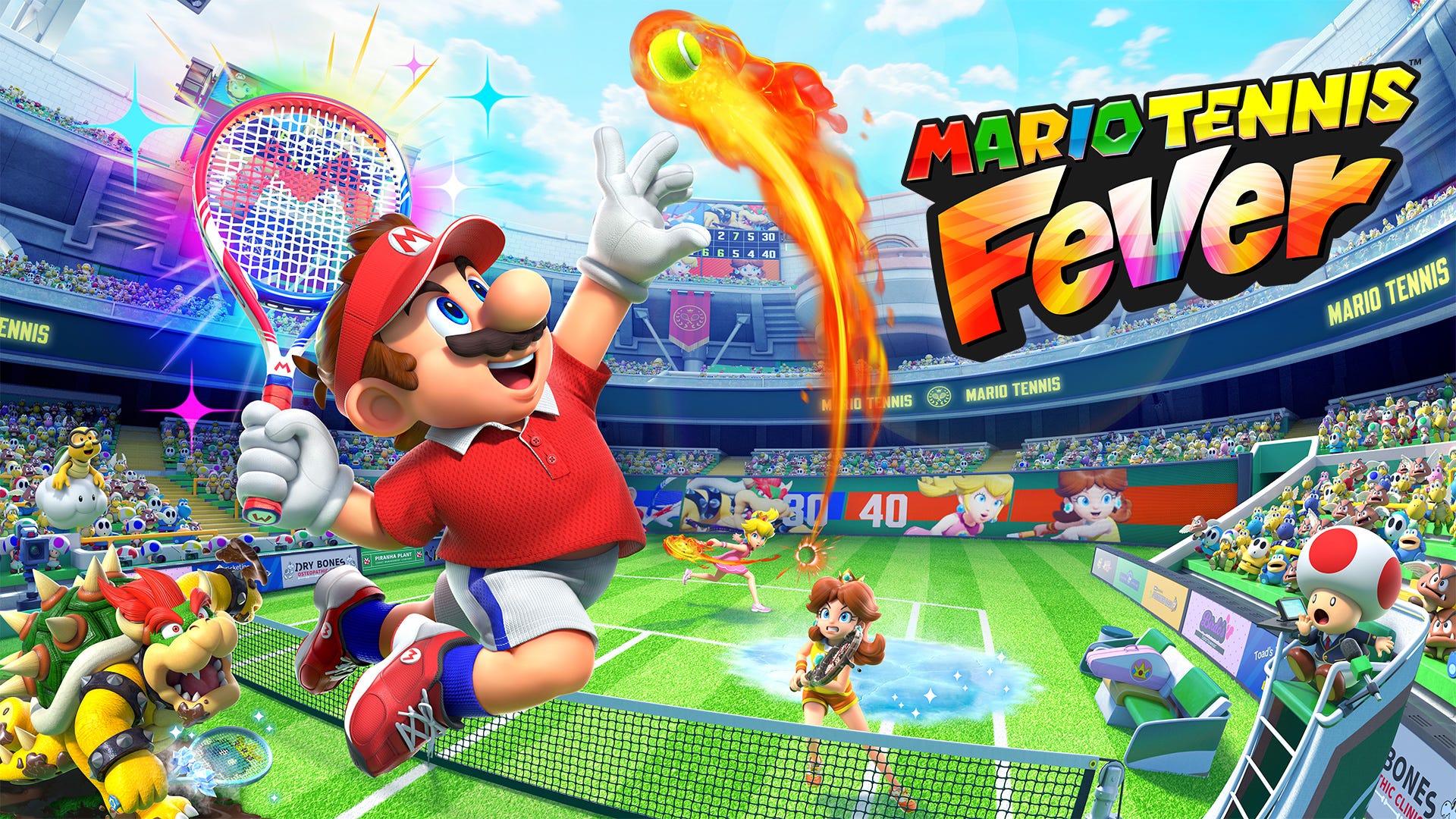
Mario Tennis Fever - Latest entry in long-running Mario-themed sports series leans much harder into Smash Bros/Mario Kart style chaos.
Mewgenics - Edmund McMullan backed turn-based strategy game about breeding a cat army lands on Steam (with great reviews behind it)
High on Life 2 - Less-funny-than-it-thinks-it-is first-person shooter series returns for its second shot at breaking the big time.
Before you go…
The success of Clair Obscur 33 has landed 28 members of Sandfall Interactive with knighthoods from the French government.
The majority of the team behind the award-winning RPG were inducted into the country’s Order of Arts and Letters (Ordre des Arts et des Lettres) because it represents “a major moment in the history of games.”
A hearty très bien to all those clever little sausages.
Keep up with VGIM: | Linkedin | Bluesky | Email | Power Play |
https://jparcvue.substack.com/p/nintendo-7974-a-cycle-analysis-of?r=8g5axd&utm_medium=ios
Always been a Sega fan (and only the most dogmatic fan would disagree that Sonic is way cooler than Mario 🦔>>👨🏻🔧) but as a company it never had any of these different bits of "Japanese magic" to make it "super"...
And we shouldn't forget how their insistence on 3rd party game standards during the Genesis/SNES era potentially saved the entire industry and made it what it is today.