

Why Tim Sweeney is wrong about X, 15/01/2026
Tackling Grok’s demonstrable harm does not equate to censorship

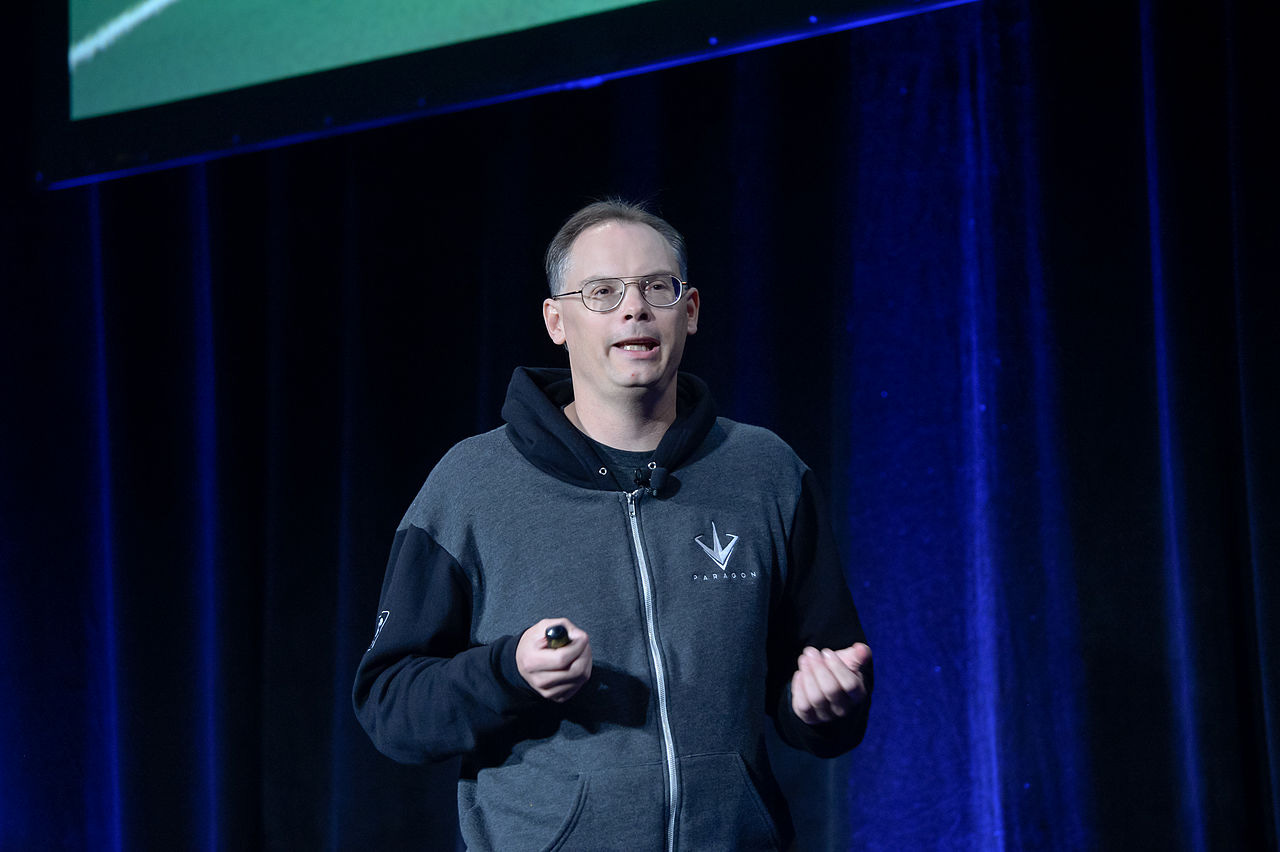
We pull apart Tim Sweeney’s censorship argument about Grok
Fired Rockstar employees lose first round of union-busting case
Animal Crossing: New Horizons gets a Switch 2 update in the week’s releases
Hello VGIM-ers,
A hearty hello for this second newsletter of the year. I’ve got a few quick things for you before we dive into an opinionated big read.
I’m heading to Pocket Gamer Connects London on Monday next week, where I’ll be taking the temperature of the games biz. If you want to talk shop, get in touch via the email address linked at the bottom of the newsletter.
Next, the North American launch of Power Play has been delayed slightly due to the exciting world of print logistics. The book will now be available in bookstores across America on Tuesday 21st July.
And finally, the first paid newsletter of the year lands tomorrow. If you want to read Playing Politics, which is like VGIM but entirely about the wonderful world of video games policy, sign up as a paid subscriber below.
Update: Thursday 15th January, 08:10am - The following piece was written and uploaded to Substack’s backend prior to an announcement by X in the early hours of Thursday morning, which said that it will stop allowing users to generate images of people in “revealing clothes.” The story can be found here.

The big opinion - Why Tim Sweeney is wrong about X
Knock, knock: I was wondering when the controversy surrounding the sustained use of Grok to generate non-consensual sexualised content of women and children would knock on the video games industry’s door. I wasn’t expecting the thudding to come from inside the industry’s house.
Going off on one: Last Sunday, Tim Sweeney, CEO of Epic Games, Leroy Jenkins-ed his way into the middle of the Grok-powered political scandal that’s made its way around the world. In response to a post on Mac Rumours about three US Senators writing to Apple and Google to ask them to remove X - and by extension Grok - from its stores, Sweeney argued against the app’s removal. He suggested that it was important for platforms to remain open “to shut down every politician’s incessant demands…to censor all of their political opponents.” He went on to argue that “all Major AIs have documented instances of going off the rails,” suggesting that the senators’ request to remove X amounted to “demanding gatekeepers selectively crush the one [AI model] that’s their political opponent’s company.”
Media pick up: Unsurprisingly, Sweeney’s remarks were quickly picked up by the games press. Vikki Blake at Eurogamer was first out of the gate with the story. Blake reported Sweeney’s headline comments and follow-up comments to users, where he stated that “the bad stuff people do with AI, I do not defend, but I staunchly oppose the wrongdoing of a few from being used as a pretence to undermine the freedoms of all.” Shortly after, Sweeney would go on to accuse PC Gamer - who followed up on Blake’s story - of spreading a “vile lie” about his support for Grok and X in general, arguing that it misrepresented his efforts to criticise a “government official for pressuring Apple and Google to block a speech app.”
Kicking the tyres: In the glorious post-truth age we live in, it is tempting to pass over the farrago around Sweeney’s remarks as little more than social media chit-chat. That would be a mistake. Sweeney is one of the few figures in the games industry who has genuine cut-through into the world around us. His perspective matters. His comments deserve investigation. And after giving the evidence base a thorough kicking, I believe that Sweeney’s opinion doesn’t stand up to scrutiny and deserves to be critiqued.
Evidence-based arguments
A quick precis: Sweeney’s argument to keep X on the app stores rests on three pillars. He suggests that all major AI tools can go off the rails and enable the creation of CSAM content by determined users. He argues that “all major AI companies make their best efforts to combat this.” Therefore, he concludes that Grok’s selective targeting by senators must be a move to crush an opponent as part of “basic crony capitalism” - rather than authentic concern over the content being generated by its users.
On paper argument: If you don’t look too closely at Sweeney’s argument, it makes sense. Generative AI service providers such as OpenAI and Anthropic have reported the creation of child sexual abuse material (CSAM) through their tools to the National Center for Missing and Exploited Children (NCMEC) in the United States. All of these companies, including X, have content policies which expressly prohibit the creation of CSAM and allow for enforcement action against people who do. The focus on Grok’s use in the creation of CSAM by the three Democrats is therefore factually “selective”, meaning it is theoretically possible to suggest their letter calling for X’s shutdown is a pretext for political action.
A problem of scale: However, the pillars of his argument crumble when you prod them with evidence. Yes, all image generation tools can, and are, used by people to create sexually problematic content. But Grok enables the creation of such content on a scale that dwarves other platforms in the space. Open source researcher Genevieve Oh estimated that Grok was being used to generate 6,700 sexually suggestive images per hour at the start of 2026, a run rate of up to 160,000 images per day or tens of millions of images per year if it continues. By contrast, OpenAI filed roughly 150,000 reports to NCMEC about its users generating CSAM in the first six months of 2025. And Anthropic, which admittedly does not have an image generation functionality within its model Claude, reported that its users generated 613 pieces of CSAM content in the same time frame as OpenAI’s reporting. While the comparison points are not perfect - for example, Oh’s research includes wider harmful sexual content such as adult ‘nudification’ which would not constitute CSAM - Grok is clearly being used to generate much more problematic content than its rivals. This justifies the attention by policymakers toward it.
Different priorities: This leads, in turn, to the demolition of Sweeney’s second point: that every company is doing their best to combat it. In response to concerns about CSAM on its platform, OpenAI released an extensive post in September 2025 outlining its efforts to tackle its creation through reporting to NCMEC, by using ‘hash’ technology to identify offensive images as they’re uploaded into a model, and advocating for public/private partnerships to address the problem at a regulatory level. Anthropic has committed to similar, arguably deeper, work in its own business. X’s leadership, by contrast, fanned the flames of the crisis. Elon Musk responded to the ‘put her in a bikini’ trend that sparked the crisis by asking Grok to dress him up in one. The platform responded to concerns about users generating CSAM via Grok by putting the image generation tool behind an easily navigable paywall, rather than amending the model or tightening the guardrails around it. Musk then claimed that mooted action by UK internet regulator Ofcom against the platform amounted to “an excuse for censorship.” If Grok is being selectively targeted because it is being used to generate a vast amount of illegal and harmful content, X is being targeted because its response to concerns merits further investigation.
Reading homework: So that leaves Sweeney’s characterisation of the letter from senators Ron Wyden, Ben Ray Lujan, and Edward J. Mackey to Apple and Google as selective political interference to undermine their rivals. The extent to which Sweeney read the letter is questionable, given that his response to PC Gamer suggested it was the work of a singular “government official” rather than three elected senators.
Targeted action: However, a read-through shows that the letter is not a brute-force attempt to censor a rival. Instead, it’s a proportionate and even-handed request for platforms to act against a business not complying with their own illegal and harmful sexual content policies. The senators open the letter by identifying how Grok’s use in the “mass generation of nonconsensual sexualised images of women and children” has shown “complete disregard for your stores’ distribution terms.” It cites specific policies from both stores that would justify the app’s removal, while alluding to public statements each business has made about creating safe environments for their users. And while the senators do call for X’s removal, they suggest that the removal should be “until X’s policy violations are addressed.” It is not a permanent attempt to remove a free-speech platform; it’s an exhortation for Apple and Google to remove a service until it follows the rules they’ve set. In fact, the only reference to censorship within the senators’ letter regarded the removal of two apps from the App Store and Google Play that allowed members of the public to track enforcement actions by the Department of Homeland Security. Neither app explicitly breached the rules of either app store. Both were pulled from download last year for “safety reasons”, following pressure from the US Government.
Considering the implications
Myopic, not malicious: So on all counts, I believe that Sweeney is wrong. Grok does generate significantly more sexually compromising content than its rivals. X does considerably less to stop users from going ‘off-the-rails’, with its leadership actively encouraging its users to do so. The “selective” targeting of Grok by the senators is precisely because the service clearly contravenes app store policy, rather than a political pretext akin to the Trump Administration threatening charges against the Chair of the Federal Reserve due to a disagreement over monetary policy. And while Sweeney’s comments don’t have malicious intent, and he clearly opposes the misuse of generative AI image generators for inappropriate sexual purposes, his opinion is misleading: pulling us away from the truth of what is happening in the process.
Epic fail: Therefore, it’s important to take Sweeney’s argument apart like this for three big reasons. For starters, his comments risk undermining the work that his own business does to protect young players. The Epic Games store has banned content featuring sexual themes that it deems inappropriate for children. The company has worked extraordinarily hard to roll out a range of features designed to protect young players after receiving a record-breaking fine in the US in December 2022 for a range of child safety breaches. And its investors include the parent company of LEGO and Disney, two businesses that take the protection of young people exceptionally seriously. Sweeney’s defence of Grok is therefore likely to cause headaches for his content, legal, communications, and public policy teams, who may need to negotiate the issue with much greater diplomacy than he has.
Recall the ambassador: Sweeney’s comments also have to be challenged because he is an ambassador for our industry. He has undoubtedly done enormous good for the sector through the creation of Unreal Engine, the growth of Fortnite, and the impact his campaigning has had on loosening competition rules across the world. But because he is a recognisable figurehead for the industry, there’s a risk that his careless comments are seen as reflective of our overall culture. Given the decades of work that video game businesses have done to assure the public that the medium is safe for children, creating some distance between his remarks and the sector as a whole is important so that we don’t muddy the water.
Punchy conclusion: But most importantly of all, we need to challenge arguments like this because facts, in the end, still matter. As we wade deeper into the confusing morass of the modern information age, we must have the confidence to challenge assertive political opinions where the evidence base doesn’t support them. Otherwise, we risk losing touch with the truth altogether.

News in brief
Wasted (for now): A judge has denied a request from Rockstar Games staffers, who were fired by the company for allegedly leaking confidential materials, to receive pay while challenging their dismissal. Judge Frances Eccles said that staff supported by the Independent Workers’ Union of Great Britain had not demonstrated a “pretty good chance of success” in winning their case against the GTA maker via an employment tribunal. However, Bloomberg reports that the bar for achieving a favourable interim ruling is higher than receiving a favourable ruling in the final case - suggesting the battle has a long way to run.
Massive acquisitions: Video game industry M&A hit a record $161bn, according to M&A corporate advisory firm Drake Star. The Public Investment Fund’s acquisition of Electronic Arts for $55bn, Netflix’s likely acquisition of Warner Bros, and Niantic’s acquisition by Scopely pushed the market to new heights. Drakestar predicts that 2026 is likely to be buoyant again, boosted by private equity investment in the industry and some possible high-profile IPOs (hello, Discord).
Loot boxed in: Fortnite is allowing user-generated content developers to sell their own in-game purchases within their titles, including loot boxes. Developers who activate creative mode transactions will receive 100% of the V-Bucks value of purchases until January 2027, dropping to 50% thereafter. But who will receive 100% of the stick for bringing loot boxes back into a game that famously dropped them to great applause years ago? We’ll find out soon enough…
Job losses latest: Ubisoft has announced that it is cutting 55 jobs at Massive Entertainment and Ubisoft Stockholm. Jon Hicks reports in GI Biz that the job losses “were not related to performance issues”. The layoffs follow a round of voluntary redundancies in the business in October 2025 and come just a week after the company announced it was shutting down its recently unionised studio in Halifax.
Awesome outcome: And finally, Awesome Games Done Quick (AGDQ) has raised $2.44m for charity in this year’s live-streaming extravaganza. The event, which ran between 6th January and 10th January, saw streamers tackle Majora’s Mask with a blindfold on and beat a Resident Evil game using a Guitar Hero controller. All funds this year were donated to the Prevent Cancer Foundation.
Moving on
Tom Dore has been appointed Managing Director of National Student Esports…Becky Mullen has been promoted to Client Services & Campaigns Director at Bastion…Richard Burnham is Principal Legal Counsel at Everplay Group… Valentine Piedelievre-Eman will become Chief Communications Officer at Ubisoft from February 2026…And Adam Phillips is the new Head of Gaming at Make-A-Wish UK…
Jobs ahoy
This Week in Video Games is hiring a News Editor, with a preference for someone UK-based…Pantaloon wants a Brand Manager to support its mission to help creative misfits thrive…Hasbro is hunting for a Senior Manager Digital - YouTube in its City of London office…Gameloft is bringing in a new Creative Lead in Brisbane…And Board is hiring a Senior Game Designer to support its forthcoming tabletop games console in New York…
Events and conferences
Pocket Gamer Connects, London - 19th-20th January 2026
DICE Summit, Las Vegas - 11th-13th February 2026
Guildford Games Festival, Guildford - 14th February 2026
devcom leadership summit, Lisbon - 24th-26th February 2026
Game Developer Conference, San Francisco - 9th-13th March 2026

Games of the week
Animal Crossing: New Horizons - Ignore the fact that you’ve not visited your island in approximately half a decade by upgrading to the Nintendo Switch 2 edition of this Covid classic.
Quarantine Zone - Prevent a different kind of plague from being unleashed in Brigada’s zombie-tinged twist on Papers, Please.
Big Hops - Do you like Spiderman-style swinging? Do you enjoy 3D platformers? And do you have a sense of whimsy? Then this, my friend, is the game for you.
Before you go…
Unless you’re lucky enough to live in the Southern hemisphere, January is pretty darn dark and chilly.
So why not curl up with one of nine cosy games tipped by The New York Times’s Haley Perry, whose expertise is listed by the publication as video games and booze.
Cheers to that!
Keep up with VGIM: | Linkedin | Bluesky | Email | Power Play |
I feel I was seeing people talking about this for days before Musk/X did anything about it. When it comes to CSAM, the response needs to be immediate, and because Grok is so public-facing and integrated into a social platform known for its reach, it should have been drastic. The paywall somehow felt sleezier than if they just let it be.
Hell, the first time it generated an image with the N word, it should have been taken offline and assessed.
The confusion about “free speech” is actively dividing societies, fostering hatred, and destroying lives.
You are entitled to your opinions. You are not entitled to your own facts. A fact is a fact.
Free speech is about expressing opinions publicly and engaging in debate. What it is not is a right to spread lies and baseless claims that harm people, companies, or entire societies. It is not a right to share illegal content either.
In this post‑truth era, combined with how social media algorithms operate, lies wrapped in fake outrage gain visibility and eventually turn into “truth” for many, even when there is nothing factual behind them. I respect Tim Sweeney’s positions on many issues, but on this one, he is wrong.