


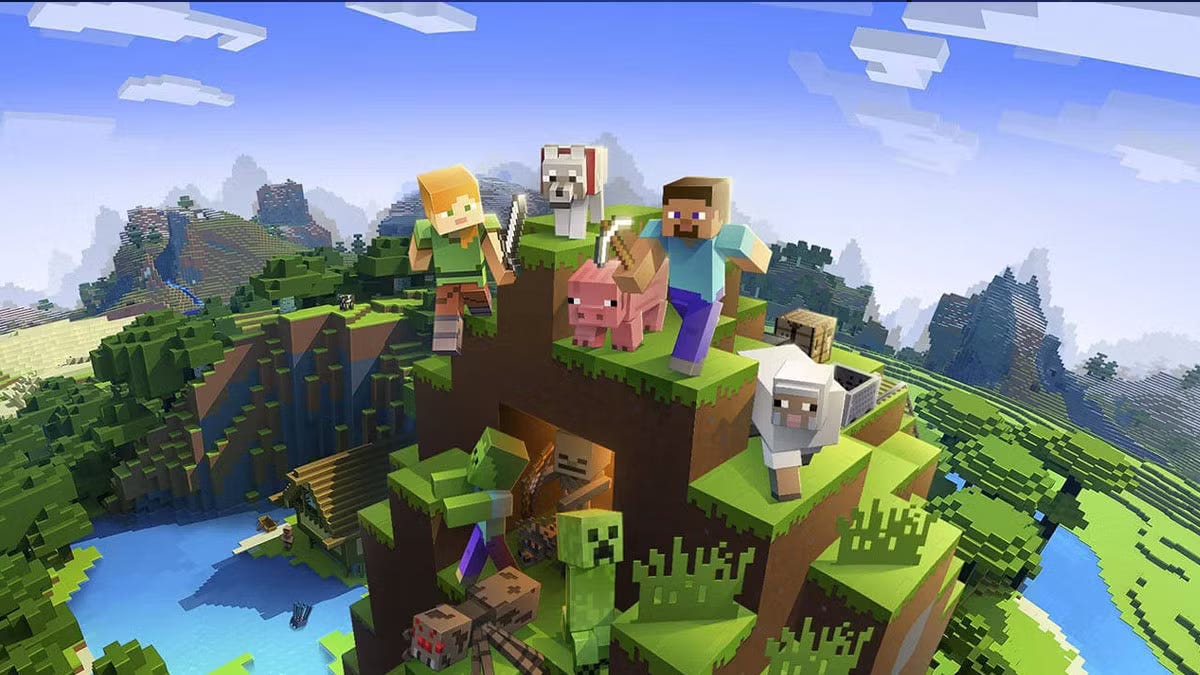
Xbox resets business, cuts 3,200 jobs and five companies along the way
Sony’s decision to stop making physical discs annoys a French politician
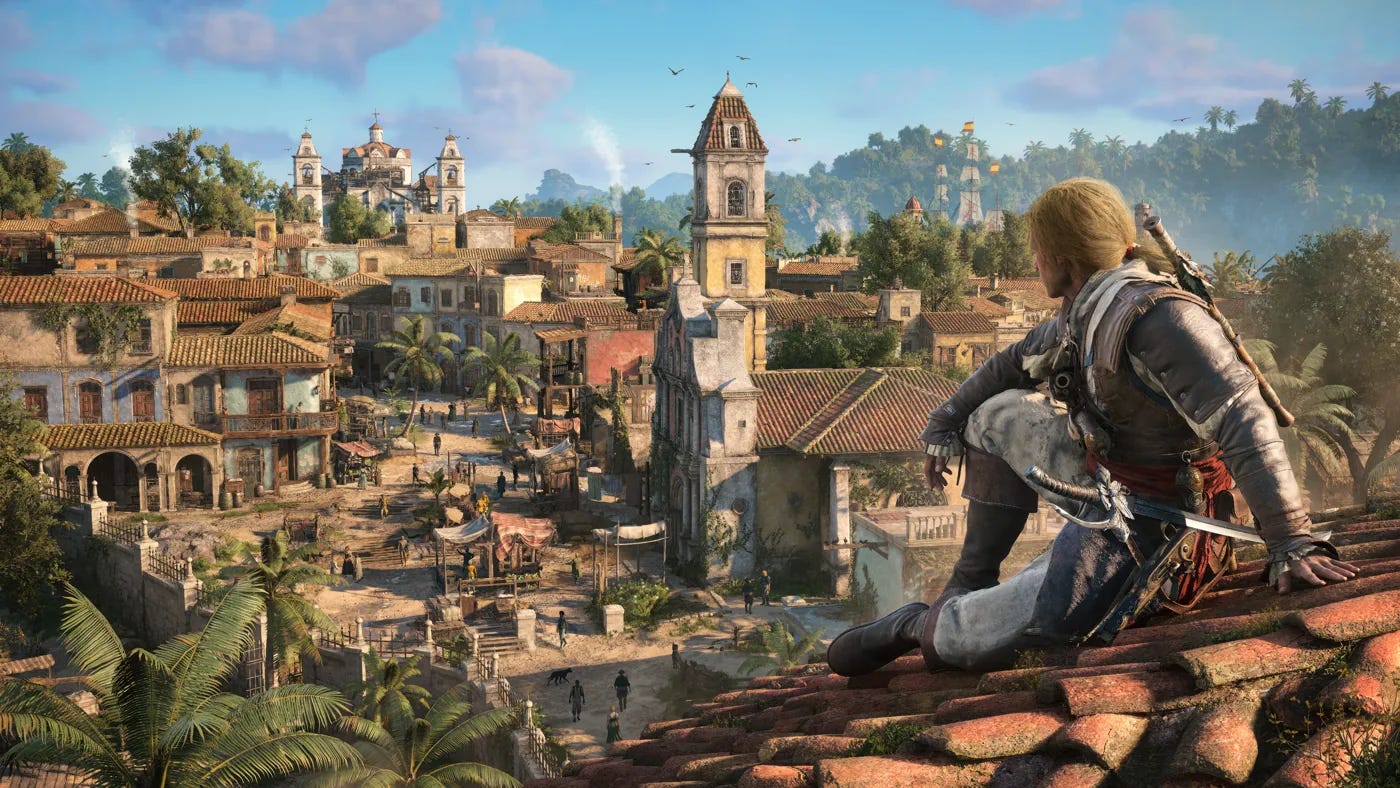
Assassin’s Creed: Black Flag Resynced yo-ho-hos onto devices in the week’s releases
Hello VGIM-ers,
This email comes slinging your way from Norwich, home of an excellent cathedral, a sometimes slightly mighty football team and Britain’s greatest fictional sports broadcaster.
I’m wending my way across the UK for the first chunk of Power Play tour dates. Join me in Cambridge tonight or in Hitchin on Saturday morning by grabbing your ticket here.
But even more importantly for you business types, I’m heading to Develop next week. And I want to see you at the VGIM Business Breakfast on Wednesday 15th July, which is sponsored by the fine folks at PXN.
Join me and reps from PlayStack, PQube, PXN and Hooded Horse for coffees, pastries and a chat about how to stand out in a crowded video game publishing landscape by getting your ticket here.
I also have a few final meeting slots to talk about a gamescom-related VGIM sponsorship offer and partnership opportunities for the AI and Games Conference.
Email george@videogamesindustrymemo.com if you’d like to talk.
The big read - Xbox presses reset
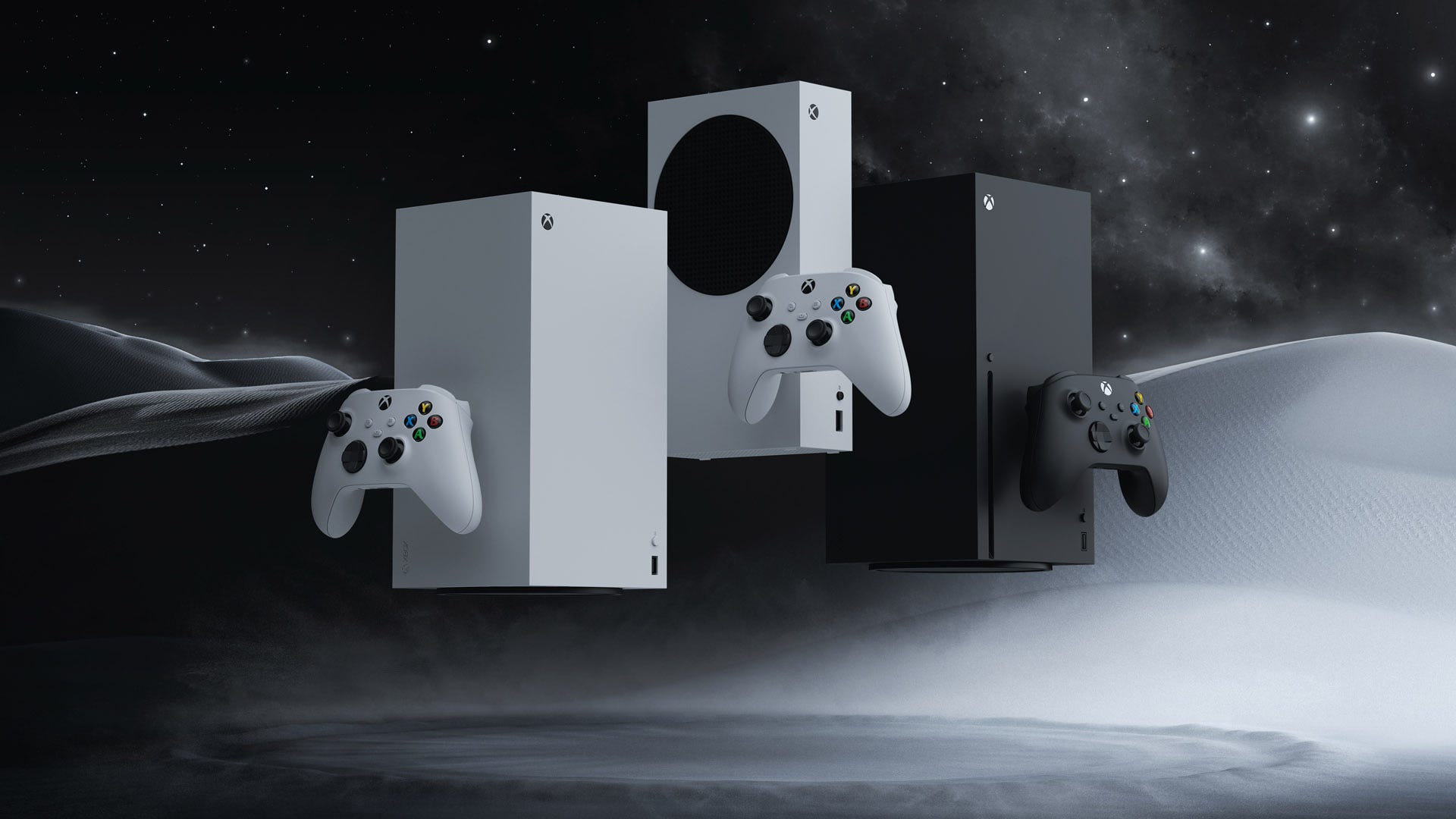
Ouch: It’s been a brutal week for Xbox. On Monday, Asha Sharma, the company’s Chief Executive Officer, sent a memo to employees to announce that it was cutting 3,200 jobs as part of a strategic reset. Half the layoffs are taking place this week, with RPG-maker Obsidian, Doom creator id Software and the team responsible for The Elder Scrolls Online badly hit. The second half of the layoffs will occur later this year.
Divest-a-thon: Sharma also announced a reorganisation of businesses within Xbox’s portfolio. Mojang, which makes Minecraft, and King, which created Candy Crush Saga, have moved under Sharma’s control. Five game businesses are being divested. Double Fine and Compulsion Games have been spun out as independent businesses under their founders. Ninja Theory and Undead Labs are being sold, although buyers have yet to be disclosed. Arkane Studios is also likely to be spun out, but the process is taking longer due to French labour laws.
Not enough in, too much out: Sharma’s rationale for change is simple enough: the company ain’t making enough cash to cover its hefty outgoings. In a note sent to employees, she stated that “our business today is not healthy.” She states that Xbox is operating at margins “that are 3-10x lower than comparable platform and publishing businesses.” She goes on to say that the business entered the current generation with a smaller install base and higher cost structure than rivals. Attempts to expand that audience by investing in games businesses have exacerbated the problem, with Sharma stating that Xbox has lost 64 cents on every dollar invested. Not enough money coming in and too much money going out is very much no bueno for any business. Xbox, it seems, is no different.
Game passing out
Netflix for games: The big thing that Sharma’s memo left unsaid is why Xbox is in this mess in the first place. The chief culprit internally is the failure of its big bet on Game Pass. The company’s strategy was to turn its brand into a Netflix-style content subscription service that would run across devices and generate persistent revenue to support a portfolio of world-class studios. The hope was to become a cross-platform service that would dominate the industry. This ambition was partly why the company’s stonking $69bn acquisition of Activision Blizzard attracted intense attention from competition regulators.
Notflix for games: Unfortunately, Game Pass didn’t work. The Wall Street Journal reported that subscriptions reached 30 million – well below the 70 million the company sought. Recurring revenue from subscribers was nowhere near enough to stop the service from cannibalising its core properties, most dramatically seen in the form of a $300m loss on the launch of Call of Duty as a Day One Game Pass release. Low hardware sales exacerbated the problem, with the Xbox Series S and X selling 35 million units compared to the PlayStation 5’s 94 million. Investing billions of dollars into studios to support the Game Pass strategy has proven unsustainable because it has failed to kickstart a flywheel of console purchases, subscription sign-ups and premium purchases capable of supporting that expenditure.
Artificial cost increases: However, Xbox’s position has been worsened by structural changes in Microsoft’s business that have made its commercial underperformance a big problem. Five years ago, when the company announced its intentions to buy Activision Blizzard, artificial intelligence was a glint in Microsoft’s eye. In 2026, it is a staggeringly costly part of its business. Tech Index reported in March 2026 that the business had earmarked over $150bn for capital investments in infrastructure such as data centres to support its AI strategy. In May 2026, The Next Web revealed that Microsoft was cutting swathes of its engineers off from using Claude Code because engineers were using the tool so frequently that it blew apart the company’s coding budget. The cost of an Xbox has also increased by $100 as a result of disruption in the AI economy, with the company saying that increases in the cost of memory – one of the main components of AI capital spend – forced the increases. The fact that the Xbox layoffs were accompanied by additional cuts across Microsoft suggests the commercial impact of AI on the business can’t be discounted.
Platform problems: Xbox, despite its size, is also subject to wider market forces that have crunched the rest of the industry. The console sector has reached maturity, meaning that the vertical’s growth rate struggles to tick above the rate of inflation each year. The emergence of games-as-a-platform such as Roblox and Fortnite has sucked millions of players to services that overcome the traditional console, PC and mobile divide. These have reduced available play time, player base and player spend within the market, reshaping the commercial landscape that Xbox operates in at the same time its big bet on Game Pass failed.
Triple A risk: Additionally, the company’s portfolio of Triple A studios has also been outmanoeuvred by nimbler studios capable of creating tighter, cost-effective games that get to market faster. Getting a return on a decade-long project like Starfield was hard enough in a market dominated by $60 releases. In a market where you can pick up throwaway fun for a few bucks (Mecha Chameleon), get a great indie game for the cost of your lunch (Balatro) or pay between $30 to $50 for a primo premium experience developed with more discipline and a tighter pitch to players (Helldivers 2, Split Fiction), Xbox’s bloated premium titles with enormous budgets became even riskier for the business.
The move to China: Finally, Xbox’s problems are compounded by a shift in the industry’s centre of gravity towards Asia. China’s $53bn consumer market is the centre of the global games economy, but Xbox’s presence is limited and unlikely to grow due to Microsoft’s often frosty relationship with the local government. The emergence of talented but cost-effective development hubs in South-East Asia, Latin America and Eastern Europe has raised big questions about the affordability of game development in America and Western Europe. Given that these are the two regions where Xbox does most of its business and development, it’s a final additional headache for the business to deal with.
Ending on a flat note
A rough outline: Whether these cuts will arrest Xbox’s slide or simply slow its descent into irrelevance depends largely on the success of Sharma’s reset plan. We don’t have precise details of the strategy, but her memo gives us the gist of it. Rebuild Xbox around core franchises like Minecraft and Candy Crush Saga, which could reach a combined audience of a billion people by offering platform-style experiences à la Roblox. Reduce complexity by unifying operations and functions across the business to give the company a clearer direction. Create a flatter, less bureaucratic organisation to move quickly and more cost-effectively, including through the use of shared tools across the company. In short, Sharma wants to streamline Xbox, consolidate around its biggest IP and rebuild from there.
Practical problems: Unfortunately, Sharma’s plan works on paper, but collides awkwardly with the reality of Xbox’s current situation. How do you get studios using shared toolsets when you’ve built a portfolio of widely diverse businesses with differing needs? How does the company achieve Sharma’s goal of a ‘50% reduced vendor spend’ when it is cutting its in-house capacity and much of the industry is moving towards a ‘crewing up’ model reliant upon external support? And how on earth does the company believe it can reach an audience of a billion people through games when its flagship subscription product has failed, it is mostly locked out of the biggest market in the world and a hardware price crunch is pinching the market for players even further? Answering any of those questions successfully is hard. Answering them all, and the many more that I’ve left unsaid, feels impossible. Streamlining and succeeding is not as simple as Sharma’s memo suggests.
Changing dynamic: What we can say is that this round of cuts is particularly significant. Xbox has cut thousands of roles over the past few years, as laid out depressingly by Game Developer’s Chris Kerr. But these are the first cuts made by the company’s new leadership in service of their agenda. In the years ahead, the success or otherwise of Sharma’s strategy will determine whether Xbox lives on in Microsoft, spins out separately like LinkedIn, or is sold off for parts. This will be of little interest to those whose lives have been affected by the swingeing cuts. But for the rest of us, what comes next for Xbox will undoubtedly have a major effect on the shape of the global games industry for years to come.
News in brief
Taking the disc: Sony has confirmed that it will stop producing physical discs for new video game releases from January 2028. It said the move was a result of a “general preference for digital media” amongst consumers. The furious online backlash to the move, including from the leader of France’s left-leaning political party La France Insoumise, suggests that the word ‘preference’ may have been poorly chosen.
The Rest isn’t Video Game History: In the wake of Sony’s disc-sastrous news, the Video Game History Foundation has criticised the Entertainment Software Association (ESA), the US’s video game trade association, for failing to offer a ‘meaningful alternative’ for legal video game preservation. Frank Cifaldi, director of the foundation, said that foundations had already been preparing for a discless future but that a lack of industry co-operation in the conservation cause is hampering its work.
Have I got news for EU: Nintendo has announced that players in the European Union will be able to buy a Switch 2 with a replaceable battery from early next year. The company has confirmed that the new version of its console will supersede its existing console from February 2027 to meet its requirements under the 2023 EU Batteries Legislation. The original Switch will be discontinued in the region to comply with the rules.
Y’all over age here, right?: The Supreme Court has paved the way for Texas to enact a law to force platforms to age verify its users. The court issued a temporary order to allow the state to continue to enact the order, following an emergency request from the Computer and Communications Industry Association (CCIA) and a group of students to suspend its deployment on free speech grounds. The order does not stop the law from being tested within the lower courts, where it is currently being challenged by the CCIA.
Niantic no more: The studio behind Pokémon Go and Pikmin Bloom has been rebranded as Scopely Explore. The company, which was acquired by Saudi-backed Scopely last year, will continue to sit within its parent as a “mission-driven” organisation dedicated to getting players outdoors. Those damn video games, making you exercise…
Moving on
Dave McCarthy is retiring from his role at XBOX as part of the company’s latest reset…Tobias Knoke is the new Head of Apps and Gaming Partnerships EMEA at Google…Najmah Salam is shortly starting as a Brand Manager at Team 17…And Iwo Zakowski has joined MTG as Chief Marketing Officer for its midcore division…
Jobs ahoy
Fight to become LEGO Group’s Vice President - Head of Game Development…Become the Senior Audio Producer at Games Workshop…Fusebox Games has an ad out for a Project Lead Writer…Discord is hiring a Regulatory Counsel, APAC…And consider becoming a Senior Communications Producer for Naughty Dog…
Events and conferences
Develop, Brighton - 14th-16th July
VGIM Business Breakfast, Brighton - 15th July
Games for Change, New York - 21st-22nd July
ChinaJoy, Shanghai - 31st July-3rd August
Serious Play, North Carolina - 5th-7th August
Games of the week
Assassin’s Creed: Black Flag Resynced - It’s a return to the pirate’s life for the Assassin’s Creed series, with the long-awaited remake of fan favourite Black Flag releasing today.
EA Sports College Football 27 - The latest entry in EA’s surprisingly lucrative student-powered sports game hits PlayStation, Xbox and PC this week.
Backyard Baseball - Kid-friendly sports game that went unexpectedly viral on social media gets a lick of paint in this modern reboot.
Before you go…
Ever wondered what it’s like to be England’s header-loving World Cup hero Dan Burn? I’ve got good news for you.
You can experience his many important defensive headers against Mexico from his perspective as a result of the BBC’s tie-up with Immersiv, which delivers its perspective-shifting magic with the help of video game-like technology.
Football really has come home.
Keep up with VGIM: | Linkedin | Bluesky | Email | Power Play |