

A UK Video Games Council-ing session, 22/01/2026
Game developing frustration with government policy 😠

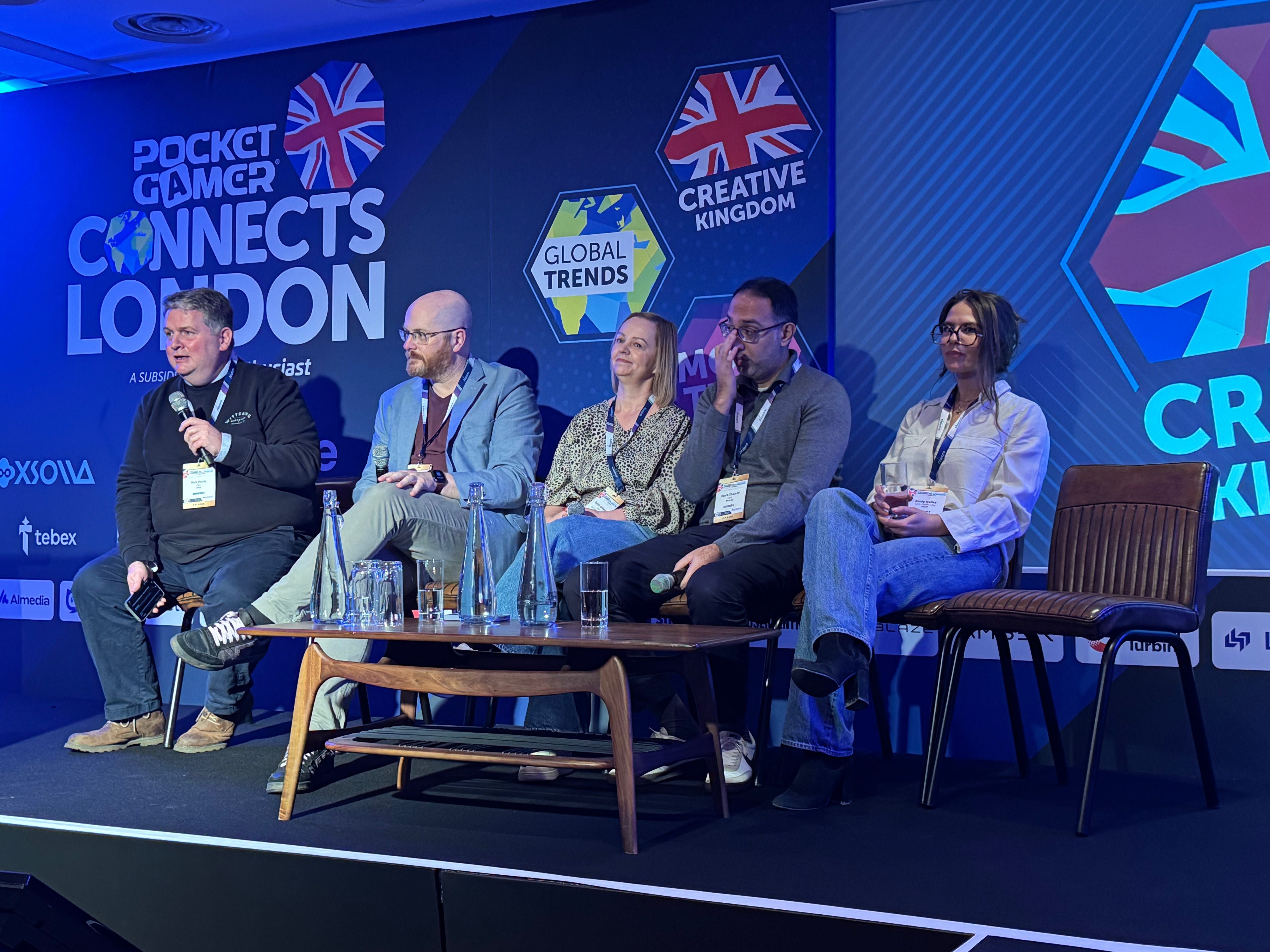
The UK Video Games Council kicks off at Pocket Gamer Connects
Scotland’s Games Network unveils new plan to grow the local games biz
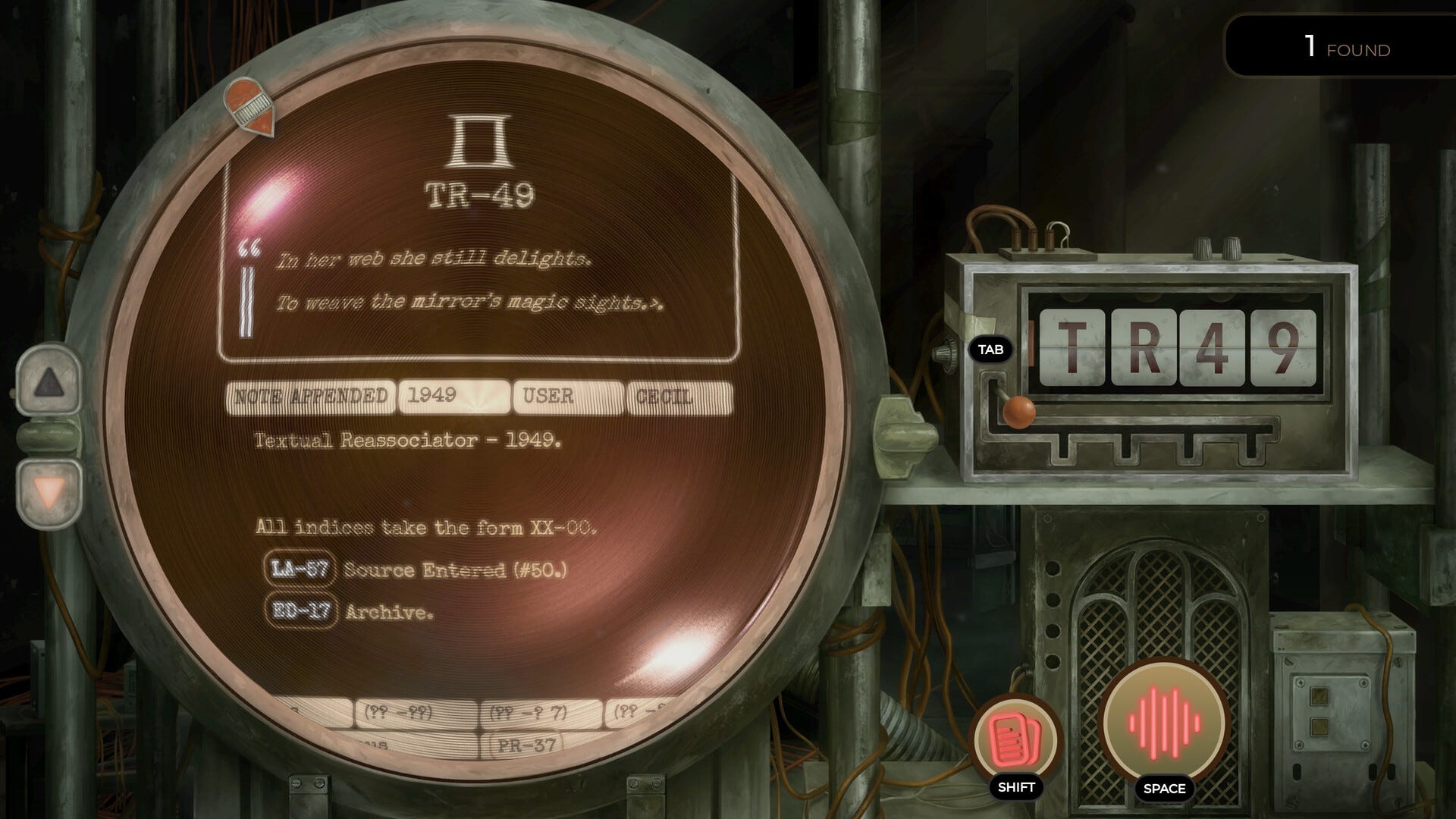
Inkle’s TR-49 offers up eerie puzzling in the week’s releases
Hello VGIM-ers,
It’s been another busy week here. Last Friday, I sat down for my comms planning meeting for Power Play. On Monday, I joined an Out Making Games roundtable about the censorship of LGBTQ+ content on video game platforms. And on Tuesday, I hosted a private roundtable for leaders in the external development biz on behalf of Moore Kingston Smith.
But the good news is that I still found plenty of time to write this week’s VGIM. A relief for you all, I’m sure.
Note: The original newsletter contained a misspelling of Donna Orlowski’s surname, due in no small part to my terrible handwriting. Apologies to Donna and holders of surnames of Polish descent everywhere.
The big read - A UK Video Games Council-ing session
The whale trail: Pocket Gamer Connects, the video game conference with more whale chat than Captain Ahab, came ashore in London this week. The event, which kick-started Pocket Gamer’s 20th birthday celebration, once again saw thousands of industry professionals descend on The Brewery and the Barbican to talk shop.
Following the story: As the industry’s premier place for talking politics, VGIM was naturally drawn to the policy chatter spread throughout the schedule. And while your humble writer had to duck out of panel duties due to a scheduling snafu (sorry, Celia), he did find time to check in on a panel all about the still-relatively-recently-established UK Video Games Council to see how the heck it is doing.
Terms of endearment
Time for a callback: Eager VGIM readers will remember this isn’t the first time the council has graced these virtual pages. Last July, we ran a story about its formation to find out how it plans to advance the interests of the UK Industrial Strategy-approved video game sector.
Teething issues: Six months on from its formation, it’s fair to say the council hasn’t had the smoothest start. Shortly after it launched, co-convener Ukie was forced to respond to a social media spat about one of the Council’s founding members, which raised questions about its governance structures. There were also plenty of private concerns that the Council’s membership did not represent the regional diversity of the UK games sector, leading to a rumbling of grumbling.
Rules and regulations: However, the Council has recovered its gait after stumbling out of the blocks. It is now chaired solely by Nick Button-Brown, who emerged as the council’s true knight in shining armour following a formal election process amongst its members. The body also now has terms of reference around its membership, including term limits, a process for booting bad eggs off the board, and a method for selecting new members to address the regional disparity within its board membership. Expect to hear more details on this soon.
Disappointingly limited: The reboot has also given the UK Video Games Council a chance to clarify its true purpose to the games business. It is not Team UK Video Game Industry: World Police or the Unofficial Games Industry Governing Body, as one source told me. Instead, it really is just a way for the UK games biz to talk to the Government about economic growth on a regular basis. That’s why Chucklefish’s Donna Orlowski is off on a government trade mission to China later this month that Prime Minister Keir Starmer is reportedly set to join. Will she push the case for a boosted version of the country’s Video Game Expenditure Credit for indie developers on the flight over? Or will she convince him to romance someone more interesting than Penny in Stardew Valley? Only time will tell.
Council culture
Heckling the audience: But if Orlowski is planning to collar Keir to discuss ways to grow the UK games biz, what kind of tone would she strike? Judging from the panel, it’d be punchy stuff. To the likely non-delight of onlooking government officials, members of the UK games council responded to Ukie CEO Nick Poole’s gentle questions about the government’s support for the biz by *checks notes* relentlessly punching it in the stomach.
Heavyweight criticism: Miniclip’s Saad Choudri was the council’s pugilist-in-chief. As chief exec of one of the few British-born games businesses capable of dropping a casual billion dollars on an acquisition, Choudri was withering about how little help his business received from our government. “We’ve [the UK games industry] all the talent and none of the support.” In contrast to markets like Canada, Vietnam, or Turkey, where developers can benefit from cash to support everything from prototyping to funding mobile ad buying, Choudri argued that the UK industry has comparatively little financial or structural support to lean on. “If I was setting up a 100-person studio today, I wouldn’t do it in the UK,” he added scathingly.
Brexit from the main menu: It wasn’t just the current Government that received jabs from the council, though. I asked the panel whether the Brexit vote in 2016 had helped or hindered the UK games industry in the decade since. After reeling off its negative impact on the sector in terms of hiring talent, accessing funding from across the continent, and receiving support from our friends in Europe, Nick Button-Brown channelled his inner Gennaro Gattuso to describe its impact as “not great” and “really shit.” A ringing endorsement, then.
Laundry list of complaints: And sandwiched between Choudri’s rant and Button-Brown’s Brexit despair (a great name for a flavour of ice cream, you’ll agree), the Council reeled off a load of other concerns that presumably caused the coterie of civil servants to fidget in their seats. Orlowski unloaded about her concerns regarding the UK’s education system and the extent to which it prepares youngsters for the business world they’re stepping into. Choudri opened fire on the “anti-immigration” sentiment sweeping the country, describing international hiring as almost impossible due to the UK’s lack of a visa comparable to the effectiveness of the US’s H1-B temporary skilled worker visa. And to land one extra punch, Emily Bailey, co-founder of service provider Jeco and the “baby” of the council, added to Choudri’s earlier remarks by saying she wouldn’t set up a two-person games business in the UK either. Better make sure that you hire between three and ninety-nine people for your next games business, then.
Chipping in(to our shoulders)
Playing diplomacy: So, it was a total bloodbath then? Well, not entirely. Nick Poole once again demonstrated his mastery of the diplomatic arts by spinning the Brexit question into an opportunity to discuss UK games companies trading with countries across the world. Bailey may not be keen on founding another game studio, but she did agree that support from the UK PLC had helped Jeco to get off the ground (including through the support of the British Business Bank). And while the panel did spend most of the conversation laying into the Government, it did share some practical tips on how we could schmooze our overlords more effectively. This included getting games businesses to talk to their Members of Parliament more effectively and remembering to invite political dignitaries to jazzy video game launch events to give them the glitzy photo ops that they’re all desperate for.
Overly self-sufficient: Overall, though, I left the panel feeling a little bit concerned that the UK Video Games Council was at risk of leaning too hard into negativity about the industry’s historic lack of Government support.
Lacking a plan: Yes, we still don’t have a UK-wide national strategy for growing our domestic games sector. The impact of Brexit and our hostile immigration environment has dramatically weakened our ability to hire the brightest talent from across the world. Public funding for games in the UK appears increasingly sparse compared to direct rivals like Germany and madly funded petro-states like Saudi Arabia. And as any regular reader of VGIM knows, it definitely is important to be unafraid to noisily state when something isn’t working on the policy front.
A little less chippy?: But while the Council clearly enjoyed having a lovely little vent on stage, Poole’s steer towards a more diplomatic approach is necessary. Things certainly aren’t perfect in the UK games industry, but they’re much better now than they were when I worked for Ukie four years ago. Extra support for the industry in the form of a boosted game fund, the explicit backing of the games business in the Industrial Strategy and even by the presence of Sir Chris Bryant MP, Minister of State for Trade Policy, at Pocket Gamer Connects itself demonstrates that the Government really is paying attention for once.
Chips off the menu: So while I can understand that the UK games biz (and much of the industry around the world) still has a chip on its shoulder about being ignored by policy makers for years, I left the session on Monday feeling like it’s time to remove it. Otherwise, we risk being seen as whingers stuck in the past rather than pragmatic problem-solvers pushing towards a brighter future.

News in brief
Scotland’s game plan: In further UK video games policy news, the Scottish Games Network has unveiled a “national action plan” to push forward its video game industry. The plan, which has been put together by the Scottish Games Network in conjunction with the devolved government, aims to support 5,000 video game jobs and £1bn of economic value by 2030. VGIM likes the overall plan. And we specifically like suggestions such as creating a “chief games officer” and creating a National Games Innovation Centre to grow the local sector effectively. Nicely done, everyone.
VGIM’s Steam prediction update: Simon Carless of GameDiscoverCo spotted that Steam has rewritten its AI disclosure rules for its storefront. Game developers who use ‘AI-powered tools’ for ‘efficiency gains’ no longer need to disclose usage. But the company still requires game companies to declare if they use generative tools to create content or if their game allows users to generate their own AI-powered content on the fly. It’s not quite what VGIM forecasted at the top of the year, but it’s close enough to count as a win.
More Grok backlash: Min-Liang Tan, Razer’s CEO, had an interview to forget on The Verge’s Decoder podcast. Tan was forced on the defensive about his company’s decision to use Grok to power its physical AI companion product Ava, unsuccessfully arguing that Razer’s commitment to trust and safety countered the very public problems with the model. He also ended up in an unconvincing chat about consumers loving to pay ongoing subscription costs to access services, which is well worth cringing your way through if you get a chance.
Good game, good game: You’ll be forgiven if you’ve missed this Davos development due to the current state of geopolitics. But a new podcast launched at the event, which aims to promote the positives of play across the world. The Good Game Club, hosted by Jude Ower MBE and Mathias Gredal Nørvig, CEO of Subway Surfers creators SYBO, will interview a series of guests about the importance of video games, video game companies, and charities to doing good across the world.
Listing the cost of job cuts: Finally, Stephen Totilo has found an itemised way to show the at times dizzying impact of video game job cuts. In a piece for Game File, Totilo has run the rule over letters sent to Washington State’s Employment Security Department by video game businesses informing them of headcount reductions. And while letters from businesses like Microsoft do not name who has been affected by job losses, the line-by-line breakdown of job roles affected does provide a brutal insight into the far-ranging impacts of cuts.
Moving on
Jonathan Hales is the new CEO of Megabit Publishing…Mattias Wiking has also landed a new CEO role at strategy game funsters Winterkeep Interactive…Max Downton has been appointed as Senior Account Manager at DDA…Izzy Jagan has popped up at the heavily capitalised YRS TRULY as a Campaign Manager…And Ukie has made two new hires, with Cinzia Musio joining as Programme Manager with responsibility for the Raise the Game inclusion campaign and Stacey Jubb signing up as a Senior Programme Manager leading on the org’s Skills Network work…
Jobs ahoy
Epic Games is recruiting a Senior Counsel (Game Production)...Sony Interactive Entertainment wants a Digital Games Monetisation Development - Manager…Arrowhead Game Studios is hiring a Craft Manager in Sweden…Rockstar Games needs an Associate Director of Creator Strategy…And Riot Games is hunting for the delightfully named Director of Music Affairs…
Events and conferences
Taipei Game Show, Taiwan - 29th January-1st February
DICE Summit, Las Vegas - 11th-13th February
Guildford Games Festival, Guildford - 14th February
devcom leadership summit, Lisbon - 24th-26th February
Game Developer Conference, San Francisco - 9th-13th March
Games of the week
TR-49 - New Inkle game set in a World War II codebreaking facility channels The Room and spooky detective game vibes for your amusement.
Final Fantasy VII Remake Intergrade - The latest part of the FFVII remake arrives on Nintendo Switch 2 and Xbox.
Cult of the Lamb: Woolhaven - DLC to the incredibly popular sacrificial lamb simulator arrives today, to the delight of all you utter sickos out there.
Before you go…
What’s the story behind the making of Nate, the “pathetic character” whom you steer in the remarkably hard Baby Steps?
Keza MacDonald has the story in The Guardian.
Keep up with VGIM: | Linkedin | Bluesky | Email | Power Play |
Absolutely fascinating to read as someone from across the pond!