

The UK social media ban punishes kids for our failure, 18/06/2026
Also, Power Play is out today 🎉

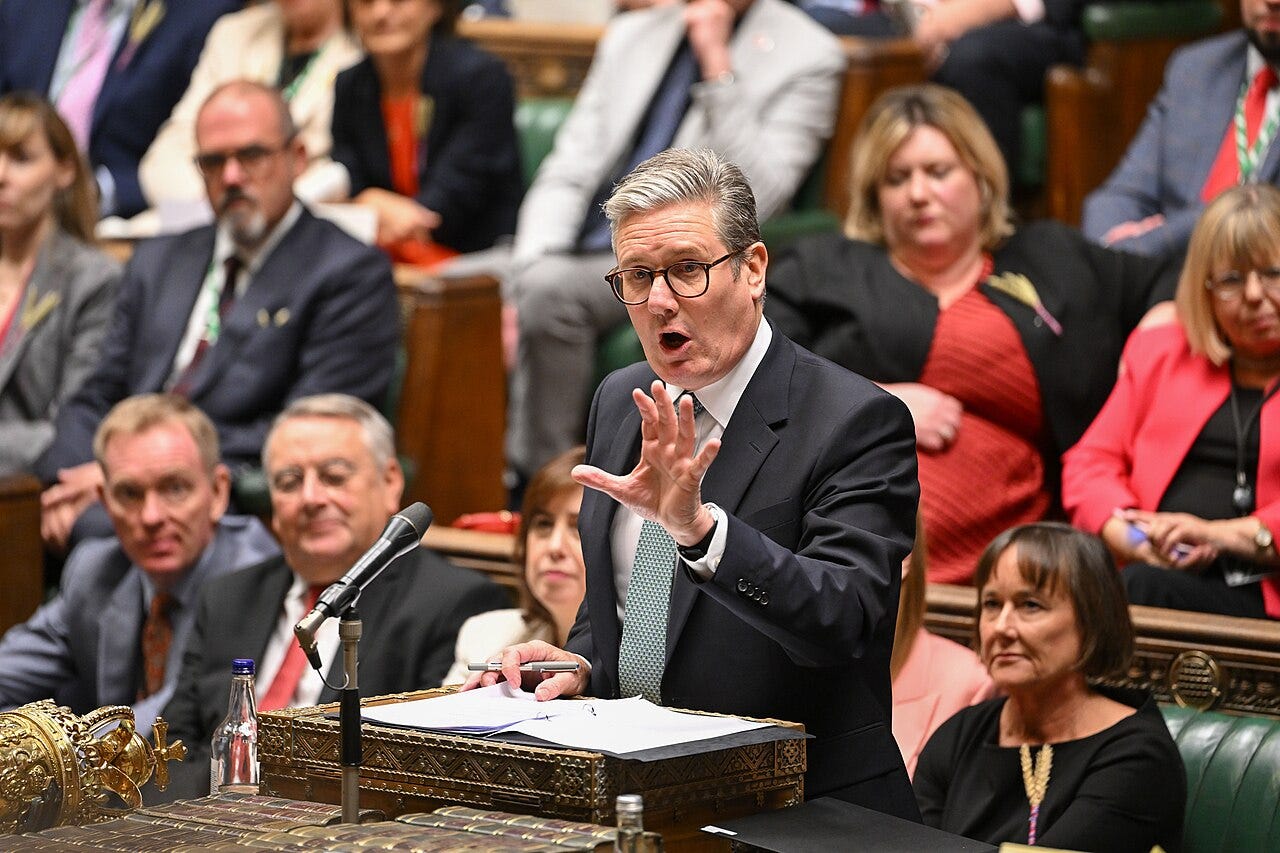
UK social media ban says that it’s the children who are wrong, not the digital world they’re living in
European Commission deals blow to Stop Killing Games
EA’s UFC game lands just after idiocy in the White House in the week’s release round-up
Hello VGIM-ers,
It’s finally here! Power Play: Video Games, Politics and the Battle for Global Influence is available to buy as a hardback, e-read or audiobook in the UK and Commonwealth territories today after literally years of teasing.
Instead of banging on about the book in this week’s newsletter, you can get your teaser on how video games have become a channel for geopolitical influence through:
A print and digital interview with Chris Alnutt from the Financial Times.
An episode of My Perfect Console with Simon Parkin.
A chat with Arthur Snell on the Behind the Lines podcast.
Today’s episode of Conflicted with Thomas Small, which should be in feeds right now.
Ready to buy Power Play? You can get it from many of your favourite online book stores, audiobook providers or indie favourites by hitting the button below.
And thank you all so much for the support over the past two and a half years. It’s a genuine privilege to have written the book, and I can’t wait for you to read it.
The big opinion - The UK social media ban punishes kids for our failure
I promise this introduction goes somewhere: Power Play is a book about taking the digital world seriously on its terms. It argues that the weaponisation of video game content, communities and the information ecosystem surrounding it is not evidence that the medium is inherently harmful. Instead, it’s a by-product of the disdain and disregard Western democracies have towards the digital world. By mocking digital culture, failing to take its influence on our reality seriously and taking no steps to bring the norms we value into the spaces and ecosystems we inhabit, the people within them can easily become disillusioned and disconnected from wider society. And unless we come up with serious, cross-society interventions that accept that standards are just as important as regulation, the influence of digital spaces won’t just disappear; it’ll continue to shift its centre of gravity towards states, groups and actors who can persuade disaffected players and people that they care about them. That leads to meaningful harm for our communities, who get dragged towards darker thinking, culture or ideologies without a democratic counter to defend them.
Don’t pull your punches: I mention this because the UK Government’s proposed social media ban for under-16s is precisely the wrong-headed, moral-panic-inflected policy that promises to make digital life much harder for young people and society at large. Rather than creating a digital world where young people can grow up in digital spaces with adequate protections from the platforms they use, the Government is instead setting up an easily hopped-over barbed-wire fence around spaces to pretend it is doing the hard work of cultivating our values within these digital environments. The result will almost certainly not be a safer online world for children and young people that respects their rights to express themselves, to talk and play. It’ll feel more transgressive and dangerous for them to enter, pushing them towards those darker spaces where hostile voices thrive in the process.
Rushing to conclusions
A quick rundown of the policy: The proposed social media ban is a blunt instrument that tries to keep teens safe by punting them out of most of the internet. The Government’s fact sheet supporting the announcement says that ‘under-16s will no longer be able to use certain social media.’ The government said that services like Instagram, YouTube, TikTok, Snapchat, Facebook and X will be affected by the ban, with messaging services like WhatsApp and Telegram excluded. It claimed ‘high-risk’ features like livestreaming and contacting strangers will be restricted for under-16s, including through unspecified gaming services. It also said that this’ll all be backed by stronger requirements for age checks on platforms, with Ofcom set to judge what forms of age assurance are effective before the ban comes into place in Spring 2027.
Making it up as they go along: You’d expect that a policy that bans 12m people from talking to friends, accessing information or building their communities in an important part of the world would be fully fleshed out before it’s announced. You’d be wrong. The loose list of platforms subject to a ban was immediately queried, with journalists left with vague answers over whether Roblox, Reddit or Telegram – a messaging service currently under investigation from Ofcom for allegedly failing to do enough to prevent the sharing of child sexual exploitation material – would be subject to it. The supposedly ‘harmful’ nature of features like livestreaming wasn’t defined, with the Government telling everyone to check back in with it in mid-July when it’s worked out what it is talking about. There’s also no timeline for the ban’s rollout, other than a handwavey reference to Spring 2027.
Alarmingly quick: The announcement felt hasty. And that’s because it was. The social media ban emerged from the government’s Growing up in an Online World Consultation. The Department for Science, Innovation and Technology (DSIT) received a record 116,000 responses to its 54 questions before it closed on Tuesday 26th May. Typically, Cabinet Office says that government departments should respond to a consultation within 12 weeks of its closing. DSIT, by contrast, was given barely 12 working days to assess the findings and propose a policy solution in time for this week’s announcement. That’s not enough time to assess the evidence, let alone analyse it properly. This shows that the consultation was a farce and undermines confidence in its conclusions.
Legacy before policy: Of course, DSIT should not be blamed for delivering its analysis so promptly under pressure. Instead, we must criticise the crass political cynicism from our country’s leadership which forced them to rush the process. Last week, Politico reported that the Government wanted to announce a ban before the Makerfield by-election taking place later today. Was the government’s rush to announce the ban a reassuring move for the thousands of parents responding with concern to the consultation? Or was it because a dead-in-the-water Prime Minister wanted to announce a legacy-sealing policy before his main political rival could enter Parliament and sweep him out of power? It’s the latter, obviously. When it comes to regulating the spaces that shape our world, that just isn’t good enough. And the opinion that the ban is not the plan is shared more widely than you think.
Punishing kids for our bad choices
Not the usual suspects: Despite the social media ban’s popularity amongst parents, it’s gone down badly with groups and individuals who were firmly behind the passage of the UK’s monstrously sized Online Safety Act. Criticism of the social media ban has come from such noted firebrands as *checks notes* the NSPCC, the 5Rights Foundation, the Molly Rose Foundation, the UK Safer Internet Centre and dozens of other civil society organisations, who’ve claimed that bans are the ‘wrong solution’. Academia responded with a similar lack of enthusiasm, with the Science Media Centre compiling responses from dozens of bigwigs at universities such as Cambridge, Oxford, Durham, Royal Holloway, and Nottingham who have raised serious objections and concerns about the ban.
Early numbers: For many, the expected criticism of a social media ban is that it is too easily circumvented. Australia’s eSafety Commissioner revealed earlier this year that 61% of teens remain on social media after the country barred access late last year. Advocates for a social media ban such as Ed Rith argue that this demonstrates the effectiveness of a ban, saying that a 40% drop in social media usage is huge in behavioural and cultural terms. Given the alleged harms within social media, which Rith compares to tobacco or alcohol, he argues that a ban is better than nothing and a valuable starting point for changing teens’ social media habits.
Interesting analogy: It’s not a bad argument if policymakers were seeking the answer to the question “what’s the best way to keep young people off social media?” The problem is that policymakers are answering a different question: “how do we keep young people safe online?” Regulation is part of that answer, including potentially limiting access to platforms, banning features or restricting access to content (e.g. pornography) to protect younger users where appropriate. But it goes much deeper than that, towards fostering behaviours, standards and cultures across society that allow children to interact with the digital world. If we want to respect the rights of children to relax, play, freely express themselves, form identities, and access information to participate in the world around them, we have to make sure they can access the digital world safely and freely. Otherwise, we’re failing to respect their rights and failing to prepare them for the world they’ll actually live in.
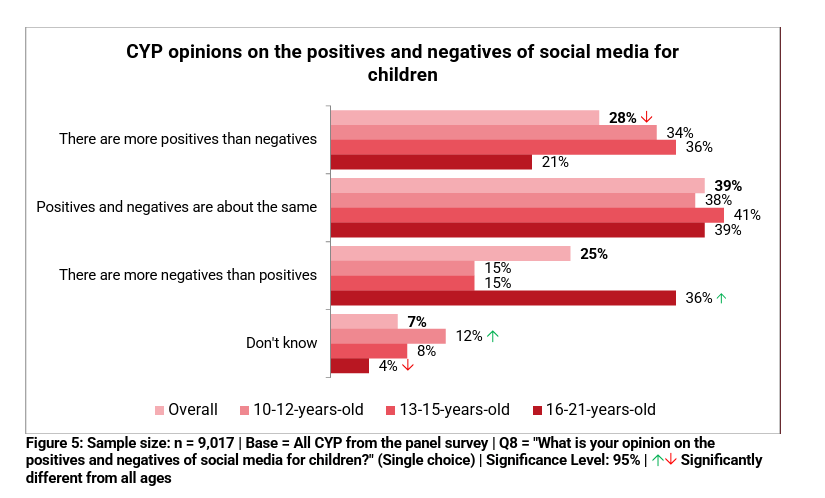
Digital natives: This brings us to the substance of the criticism of the social media ban. There’s extensive concern that children and young people’s voices about the importance of digital life haven’t been listened to. The consultation response showed that the opinions of youngsters differed from parents. But public polling from Savanta, which reached a representative sample of 9,000 parents and teens and was commissioned alongside the consultation, showed how important the digital world is to young people. Young people were nearly twice as likely to say that social media helps them feel connected (82%) or included (71%) than anxious (39%). They marginally said that the positives of social media outweigh the negatives (28% to 25%). And perhaps unexpectedly, the majority of children and young people wanted some limitations of social media use for under-16s without an outright ban. Kids and teens wanted help from policymakers, not to be cut off from their community.
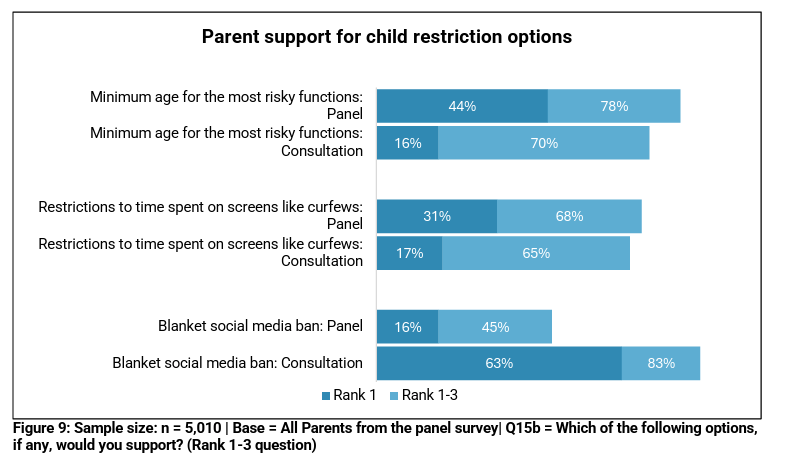
The parents aren’t always right: A blanket ban on social media doesn’t just deny children their right to be listened to; it doesn’t align with what parents want either. Turning to Savanta’s data yet again, 16% of parents within its panel wanted a blanket ban on social media compared to 31% being in favour of restrictions to time spent on screens and minimum ages for most risky functions (44%). By contrast, the 116,000 consultation responses – which were self-selecting and featured 33,000 pro forma responses from a campaign group in favour of the ban - suggested that 63% of parents supported a ban. The government’s case for banning social media rested on conclusions from a dataset subjected to widespread lobbying, which tilted heavily in favour of a ban. But Savanta’s data found that a majority of parents and young people supported a graduated approach to accessing social media, bolstered by targeted restrictions, time-based controls and specific safeguards for AI features (e.g. chatbots). A fairer policy option to limit young people’s access to social media was on the table. The Government chose to ignore it, favouring an easy answer.
Not very informed voters: The decision to boot children and teens out of social media is inconsistent with efforts to build a generation of engaged, resilient young people ready to navigate the modern media landscape. At the same time that the government weighs up an 8:30 pm curfew for 16- 17-year-olds accessing social media, it is handing those same people the right to vote in a national election. If 57% of young people get their news from social media and 51% of adults do, excluding teens from platforms won’t mean that they’ll suddenly gravitate towards ‘proper’ news sources to get their information. It is much more likely that they won’t engage with that content at all, or they’ll access information secretly on social media. This is a recipe for creating a less informed, less digitally literate and less resilient cohort of voters, something that hostile actors will be delighted to hear.
Double standards: But most unforgivably, the implementation of the ban when the Government is failing to enact existing laws or set societal standards shifts the blame for online harms onto those suffering it. Nowhere is it clearer than the Government’s policy towards X. It is willing to ban teenagers from accessing it until 16 because of harms within the space, such as Grok’s brief phase generating child sexual exploitation material and the role the platform has played in fomenting riots in Southport, Belfast and Southampton. But despite the radicalisation of the space, Government departments, ministers and the Prime Minister keep giving X the thumbs up by posting directly into its information environment. Rather than enforce the Online Safety Act or lead from the front by exiting extreme spaces, the Government’s social media ban tells young people that hateful and harmful spaces are fine as long as you’re over the age of 16. That doesn’t make the online world safer. It makes it more dangerous, punishing young people for our timidity and complacency.
Unhappy times ahead
Wasy answers win: Will the misguided ban come into effect? Almost certainly. Despite the rush to announce the ban, the lack of meaningful thought behind it or even any certainty that the Prime Minister will be in post long enough to see it through, the direction of travel is set. In an age of utter political mediocrity within just about every British political party, the social media ban is exactly the kind of easy, popular answer to a complex problem that politicians love (without it delivering meaningful benefits to society at large). It is unlikely to be taken off the table from this point onwards.
There is a better option: Nevertheless, I hope that there is room to change direction in a way that brings together reasonable parental concern with respect for the rights of young people. There is room for regulation which allows young people to access more parts of social media with the help of parents, something that Roblox – of all platforms – has shown is possible with its multiple account layers for kids, teens and older players. We can support the development of the norms we want to see in digital spaces by funding public awareness campaigns, community initiatives and education programmes to help children grow into the citizens we want to see. And the Government still has a chance to lead from the front through its own communication channels to demonstrate the values it believes are important in our digital world. The Mayor of London’s ‘Build a Man’ campaign, which saw young men use video game character creators to create what they thought to be positive male role models for their communities, is a fantastic example of this.
One last warning: As it stands, we’re on the cusp of a major error. In an effort to give a lame duck Prime Minister a policy win before he’s booted out of office, we’re about to tell young people and teens that it’s their fault that the digital world we built for them doesn’t protect them well enough. And by kicking them out of it, we won’t make them safer. We’ll increase their disaffection and disappointment. We’ll make it more likely that they’ll disconnect from society, or go into the digital landscape undercover or underground to avoid censure. And in doing so, we’ll push them away from the mainstream towards darker spaces and communities — perpetuating harm, rather than trying to end it.
News in brief
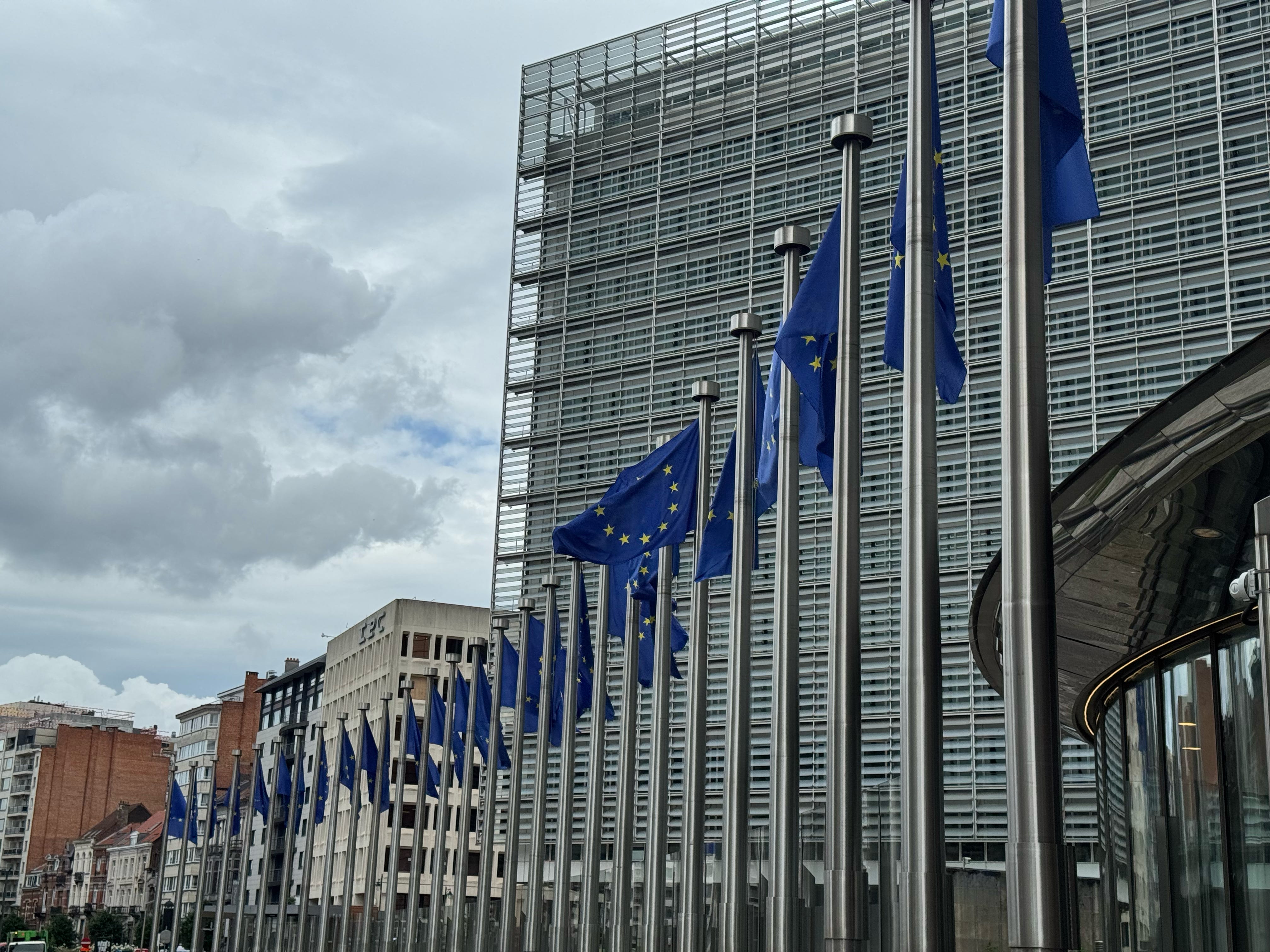
Steadily Stopping Killing Games: The European Commission has dealt a blow to the Stop Killing Games campaign by saying that it cannot force video games to stay playable after they’ve been withdrawn from sale. In its response to a European Citizens’ Initiative about the campaign, the Commission said that it cannot propose a legal obligation due to copyright and intellectual property rules. It has committed to working with industry to draw up an industry code to manage the ‘end of life’ process for service games, while also working with consumer authorities to raise awareness of consumer rights with players.
Steaming up: Dutch not-for-profit group the Consumer Competition Claims Foundation has launched a campaign to cut the commission Steam takes from its store. The organisation is inviting players in the region to join its Game Claim campaign, with the initial aim of sitting down with Valve to discuss issues such as its 30% standard cut, its policies discouraging developers from releasing games on other platforms and geoblocking Steam keys bought in other EU nations. This paves the way for a possible class action claim in the country, akin to similar efforts currently underway in the UK and US.
Fake Act News: The US games industry is facing an unexpected challenge from a bill designed to stop AI-generated deepfakes in their tracks. The No Fakes Act aims to prevent the creation of ‘digital replicas’ for the purposes of attacking public figures, defining replicas as “a newly created, computer-generated, highly realistic electronic representation that is readily identifiable as the voice or visual likeness of an individual.” The lack of subtlety in the drafting has drawn concerns from the Entertainment Software Association, which notes the definition’s lack of distinction between carefully crafted digital game content and a deepfake of a person. Frankfurt Kurnit Klein + Selz breaks down the concerns.
Savvy sponsorship: Hat-tip to VGIM reader Mark who noticed that Savvy Games Group has been popping up on advertising hoardings as part of the 2026 FIFA World Cup. The Saudi Arabian games publisher was announced as a sponsor of the event as part of the Public Investment Fund’s (PIF) support for the tournament. And to think I still remember the time when Savvy’s PR lines were that it was completely separate from the PIF…
Game jam today, tomorrow and yesterday: Finally, Playing for the Planet’s Green Game Jam is underway. 70 games including the likes of Subway Surfers, Just Dance and Magic: The Gathering Arena are facing off in a competitive campaign to raise funds for causes preserving rainforests or coral reefs. Content rolled out in the first games in time for World Environment Day a couple of weeks ago, but there’s still a week’s worth of competitive game-jamming to go.
Moving on
Craig Duncan, Head of Xbox Games Studio, has stepped down from his post. Louise O’Connor, who was Duncan’s Chief of Staff, is also out as part of a reset…Kelsey Medeiros has started a new role as Content Creator at Sega of America…Rohan Jain is the new Head of Corporate Development at Lego Digital Play…And congrats to Liz Prince from Amiqus, who was named an MBE in the King’s Birthday Honours…
Jobs ahoy
Kojima Productions is looking for a Social Media Manager based in Tokyo…Rocksteady Studios is hiring an External Development Manager…Playground Games is hunting for a new Senior Producer…Epic Games needs a Social Media and Content Ops Director in the States…And Hasbro is hiring a Director, Studio Operations in Montreal…
Events and conferences
Serious Play Europe, Mainz - 18th-19th June
Develop, Brighton - 14th-16th July
VGIM Business Breakfast, Brighton - 15th July
Games for Change, New York - 21st-22nd July
ChinaJoy, Shanghai - 31st July-3rd August
Games of the week
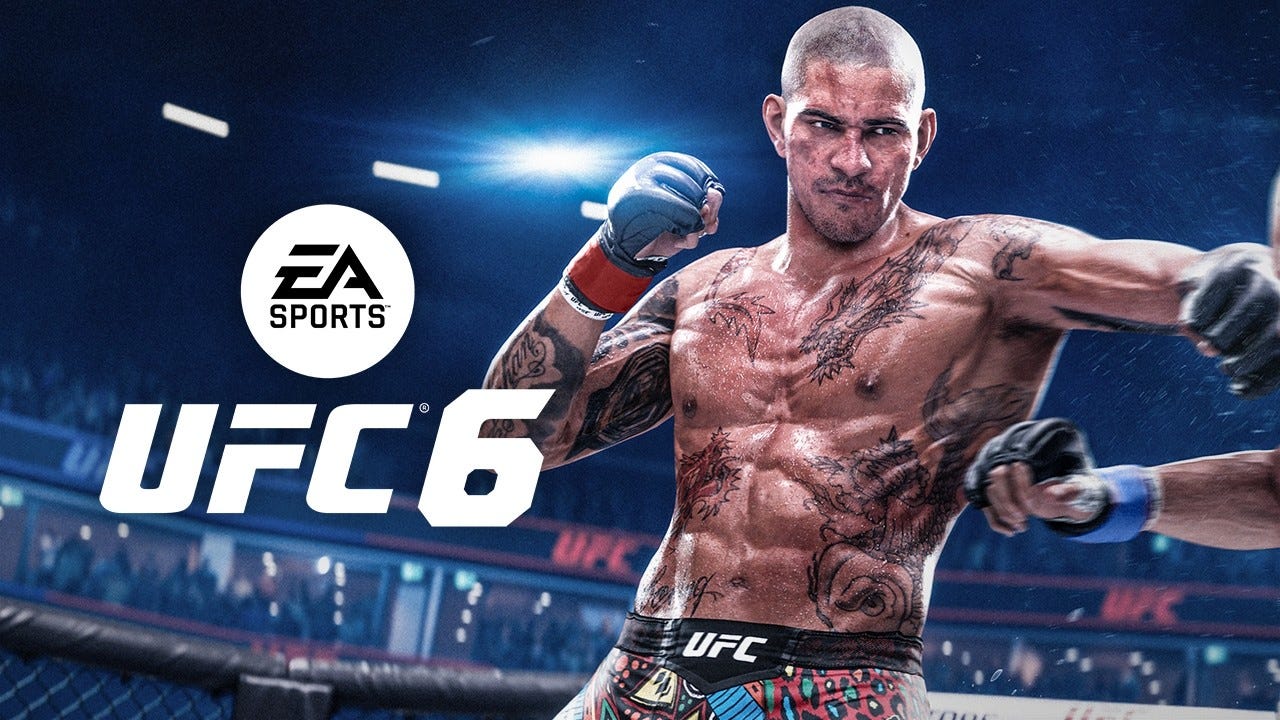
EA Sports UFC 6 - Recreate the stupidity of what happened in the White House last week with the latest entry in the UFC fighting series.
R-Type Tactics I.II Cosmos - Remakes of two strategy games based on classic shmup R-Type arrive on all platforms this week.
The Adventures of Elliot: The Millennium Tales - JRPG from the makers of Octopath Traveller and Bravely Default with ‘stunning HD-2D visuals’ lands for your role-playing pleasure.
Before you go…
I’m also happy to celebrate the launch by unveiling the snazzy Power Play Up, an asset designed by the wonderful Anna Hollinrake.
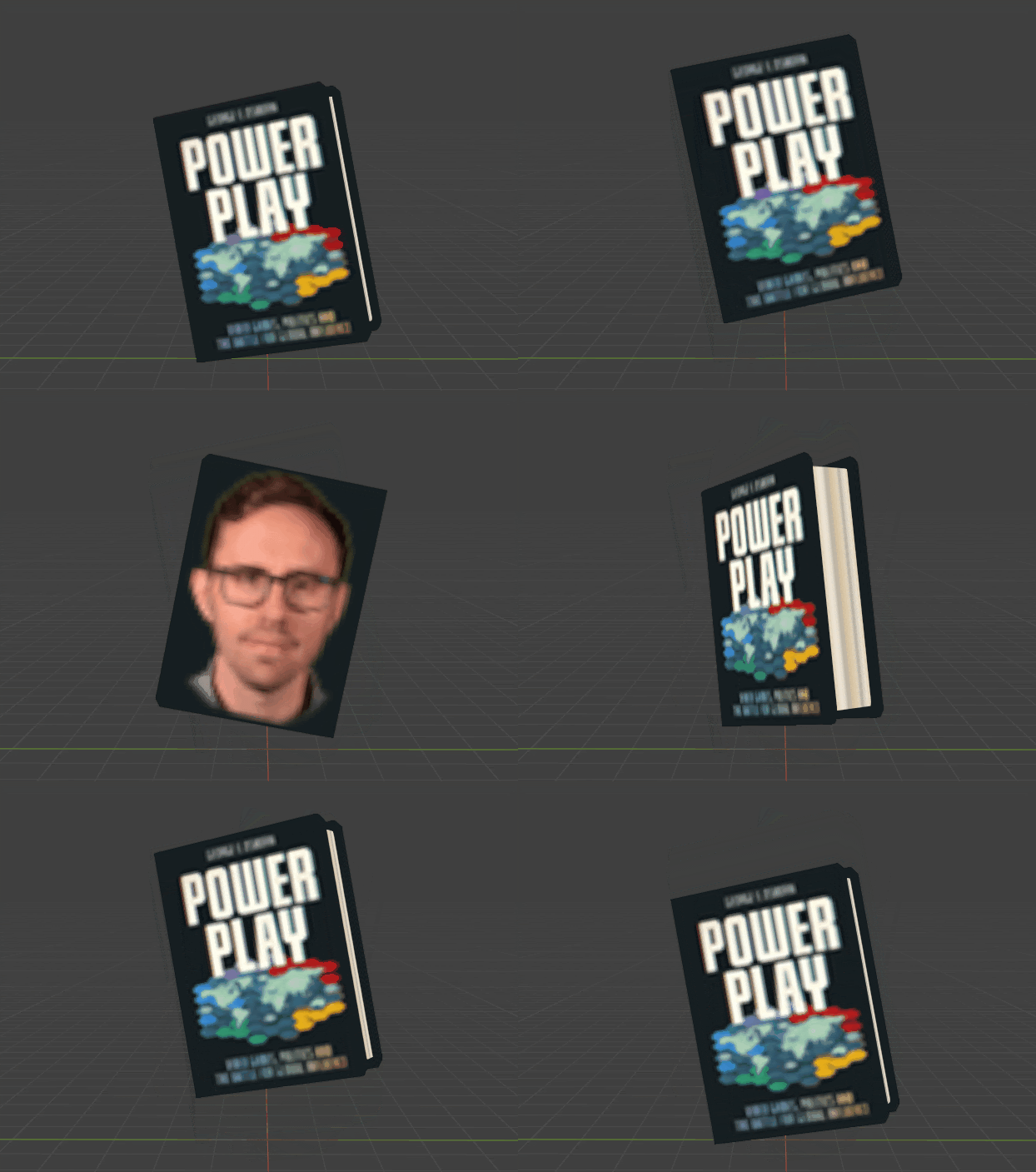
Get in touch if you’d like to include it in your game.
Keep up with VGIM: | Linkedin | Bluesky | Email | Power Play |