

Fighting Russia’s video game warfare, 26/02/2026
How to stop the Kremlin's invasion of games 🎮

We explore new research showing the extent of Russia’s hybrid warfare in games
Spencer and Bond out in major Xbox reshuffle
There’s a Requiem for Resident Evil in the week’s big releases
Hello VGIM-ers,
Welcome back to the newsletter. We’ll dive into a serious big read shortly.
Before we do, though, I’ve got three things to tell you about.
Games for Change London speaker submissions close today. If you would like a chance to speak at the conference, submit your session here before the clock hits midnight.
The next VGIM Insider newsletter lands tomorrow morning. If you’d like to get it, sign up as a paid supporter of VGIM here.
And as always, we’re looking for companies to sponsor the newsletter to help us keep VGIM free for all. Email george@videogamesindustrymemo.com if you’d like to support this esteemed organ’s mission to insert thousands of puns into the sector’s bloodstream.
Let’s get down to reading.
The big read - Fighting Russia’s video game warfare
A grim landmark: This week marked a grim anniversary. Four years ago, on the 24th February, Russia embarked on an unprovoked full-scale invasion of Ukraine. It failed in its attempt to wipe out a neighbour whom it has been attacking and undermining since 2014. But its failure has come at an extreme cost to Ukraine, which has suffered years of fighting, bombardment of its cities, and upwards of half a million casualties as it has defended itself against unjustified aggression.
Hybrid war theory: However, the limitations of Russian hard power in the face of Ukrainian resistance have forced the Kremlin to expand the front in unexpected ways. The country has engaged in ‘hybrid warfare’ against Ukraine and its allies in an effort to expand beyond the front where it has suffered a million casualties. By sabotaging Ukraine’s supply chains across Europe, coercing rivals through threatening displays such as fly-bys, and waging information warfare through digital channels to subvert democratic norms, Russian actors have brought the war into all of our lives.
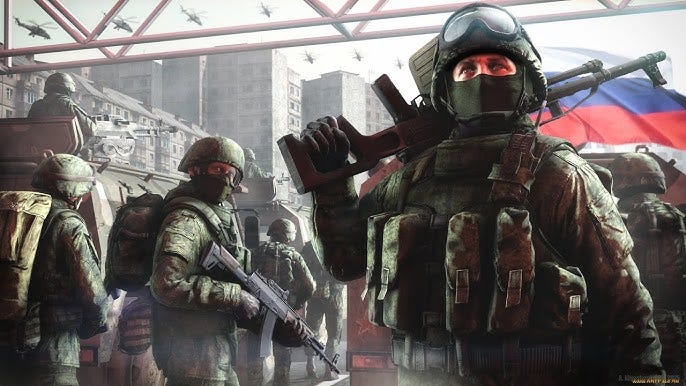
The video game frontline: And somewhat despairingly, the Kremlin has turned video games and video game communities into an effective channel to pursue its hybrid warfare goals. Recently published research from the Royal United Services Institute (RUSI) shows that Russia has steadily escalated its assault on Ukraine via video games over the past half-decade. This has brought its war to our medium, turning games, related social spaces, and our communities into a digital frontline in the process.
Under attack
Contested information space: In a post published on 13th February, Galen Lamphere-Englund and Petra Regeni argue that Russia’s “weaponisation of video games for recruitment and influence is no longer a theoretical risk.” They say that “the political and cultural reality of online games as contested information spaces” makes them a potent arena for a state to spread its perspective. And because video games are seen as apolitical or less culturally relevant by audiences worldwide, Moscow has been left with “ample room to exercise hybrid tactics against audiences abroad” within games. This has allowed it to recruit, influence, and spread its stories into games and out into our wider digital discourse, with little pushback from democratic actors.
Exploiting Discord: RUSI’s piece was prompted by an article published in Bloomberg in January 2026. Antony Squazzin reported that the Russian military successfully recruited two South African men to fight in the Ukraine war via video game communities in 2024. The men were Discord users who chatted online together while playing the military simulator ARMA 3. They were approached by a user with the handle Dash, who convinced them to join the war effort. After heading to the Russian consulate in Cape Town, the men flew to Russia via the United Arab Emirates and signed up to fight in the war in September 2024. Within weeks, one of the men was dead. The other person’s whereabouts are currently unknown.
A pattern emerges: There is absolutely no suggestion that Discord or the creators of ARMA were responsible for what happened to the two men. Nevertheless, Lamphere-Englund and Regeni zeroed in on this case because Russia’s recruitment tactics bore similarities to research they had previously conducted regarding the radicalisation of violent extremists via games. The men were targeted because of their interest in realistic military simulation games, providing the recruiter with a pool of targets who could have a cultural, political, or economic grievance to play into. They were persuaded to join with messages that leaned into the cultural tropes of the games they love, a tactic used by the Wagner Military Group to recruit drone pilots. After ‘meeting’ the men within Arma 3 and its related communities, they built their trust to move them ‘off-platform’ to spaces where implicit conversation can turn into an explicit call to action. And while the recruitment campaign has all the characteristics of a state-led campaign, the authors argue that using layers of video game communities to tap up fighters offers “minimal state-level diplomatic fingerprints and greater plausible deniability.” After all, Russian actors wouldn’t operate on services that its censorship body felt necessary to ban…right?
Fighting on multiple fronts: However, the Kremlin’s sophisticated use of video game channels to recruit foreign fighters for its grim ‘meatgrinder’ is not a one-time problem. Instead, Regeni and Lamphere-Englund argue that it is a microcosm of Russia’s wider weaponisation of video games against Ukraine. The state has funded and supported the development of games which promote internal Russian narratives, such as The Best in Hell (a first-person shooter based on a propaganda film created by the Wagner Military Group). It has encouraged pro-Russian players and content creators to spread their own version of its messages on its behalf, whether through video streaming platforms or by misusing user-generated content services like Minecraft or Roblox. And though it is not mentioned in RUSI’s piece, Russian actors have also attacked Ukrainian developers in an attempt to dominate the narrative within the video game space. For example, GSC Gameworld, the developers of the S.T.A.L.K.E.R. series, has been attacked by hackers, smeared by state-backed disinformation campaigns, and even threatened with bans by Russian politicians for simply becoming a symbol of Ukrainian pride under fire (read more in Power Play in June).
A growing threat: And unfortunately, there is no sign that Russia’s aggression through video game channels is set to end. As the war grinds on, its efforts to influence audiences via our medium appear to be growing. In July 2025, The Guardian reported that a game called Berloga, which is notionally about a bear defending itself from a swarm of bees, was being used as an aptitude test to put children on the pathway to becoming drone pilots. Lesta Studios, which runs the Russian version of the popular online multiplayer game World of Tanks, was seized by the Russian government in June 2025 on grounds of ‘extremism’ because its long-since separate sister company Wargaming had raised funds for Ukrainian ambulances. It has since ended up in the hands of Boris Dobrodeev, the former CEO of Russian social media service VK and the son of a man who owns one of the country’s state-run media conglomerate VGTRK. And in Autumn 2025, Ukrainian researchers released an in-depth analysis of Russia’s use of video games for propaganda purposes. It found that the volume of propaganda and its aggressiveness grew considerably after 2022, transforming the medium into “another channel for frontline propaganda aimed at domestic and foreign audiences.” As the Kremlin’s hybrid warfare has intensified, so have its efforts to dominate the video game information space — presenting problems to all of us in the process.
Rolling back the video game frontline
Time to act: Regeni and Lamphere-Englund conclude their article by arguing that “intervening in Russia’s weaponisation of gaming ecosystems is both a tactical necessity and strategic imperative” if we want to roll back its hybrid warfare from our entertainment frontier. The question is how to intervene in a way that supports Ukraine, that protects our players, and keeps us all safe.
Acknowledge the problem: “The first step is to acknowledge that there are state actors that are very interested in using video games for propaganda and malign influence, said Dominik Swiecicki, a Counsellor in Psychological Defence for Sweden’s Psychological Defence Agency. He told me that “Kremlin-backed video games have had limited spread among western gamers,” but that Ukrainians have “experienced serious Russian malign influence.” Accepting that this is happening and taking action now will stop us from making what Swiecicki describes as the “naive mistake” made by social media platforms in 2016, when they proved utterly unprepared for their platforms coming under attack from actors keen to disrupt democratic elections around the world.
Responding at all levels: How we avoid making this mistake depends on where we are in the chain. At the top of it in the heat of government, RUSI recommends that state organisations like law enforcement, intelligence agencies, and the military need to develop much better knowledge of games to monitor and combat hybrid warfare. Game professionals, studios, and platforms also need to develop better processes to defend themselves and their communities from cognitive warfare. This includes warning players of the risks of being influenced by state actors, working with partners across society to track influence campaigns when they land in games, and doing everything possible to stop user-generated content platforms or video game storefronts from hosting blatantly propagandising games (many of which deliberately skirt terms of service to try to stay online).
Play for freedom: Players, meanwhile, have their own valuable role in pushing back against Russian aggression. While civil society and businesses must equip them with the skills to spot, resist, and report influence campaigns to push back against hybrid warfare, Lamphere-Englund told me that players have plenty of power to push bad actors out of the spaces they love to unwind in. “People who play games should absolutely try to build more democratic game societies,” he said. “Gamers like to be independent; gamers don’t like to be told what to do. They absolutely should use that independence to fight back and say games should be spaces for fun, for play, and also more importantly for building free, tolerant, incredibly resilient spaces.”
Following a bad example: Russia’s weaponisation of video game spaces has a specific strategic goal of undermining Ukraine as part of its increasingly desperate attempts to win a war it has fought at extreme costs. But while Russia’s aims may be targeted, its strategy relies on insidiously polluting all of our digital worlds to exhaust, confuse, and reduce resistance from its enemies everywhere. And the more it succeeds in spreading its narratives in the video game third places we inhabit and along the social highways that connect them to the rest of our digital world (and reality), the more likely it is that others will follow suit.
Defending our communities: We must push back against the Kremlin’s efforts to make video games a front of its hybrid war to help the people of Ukraine continue to defend themselves against unjustifiable, ruinous aggression. But we must also roll back the use of games as a frontline for malign digital influence more generally, or risk hostile states, groups, and individuals using our players, our communities, and our mediums to achieve disturbing ends in the future.
News in brief
Xboxing up their desks: Phil Spencer and Sarah Bond’s departure from Xbox has dominated the industry discourse this past week. Despite Spencer playing a big role in turning around Microsoft’s video game fortunes following the Xbox One disaster, the business has suffered in the past few years under the weight of the Activision acquisition, the waning fortunes of Game Pass, and the latest Xbox’s failure to establish itself as a meaningful force in the console market. The departure of both executives and the arrival of the AI-focused Asha Sharma as EVP and CEO for Microsoft Gaming shows that the company knows it needs to change course. The question is whether its new leadership really knows where it needs to go next.
LA Not So Confidential: LA County has joined the states of Texas and Louisiana in suing Roblox over allegations that the platform is failing to protect children from online predators. In a statement released to the press, Hilda L. Solis, LA County Board Chair and First District Supervisor, said that the company has “allowed its platform to become a place where children can be exposed to grooming and exploitation.” Roblox has responded, saying that it “strongly disputes” the allegations.
Guillemot speaks out: Ubisoft CEO Yves Guillemot sat down with Variety last week to discuss the business’s decision to split into five creative houses. In the interview, Guilemot argues that the creative house structure will allow the business to grow its established IP by ensuring that similar properties are grown by teams with the right expertise to push them forward. He also argued that investment from Tencent is key for accessing the Chinese market, gave a flim-flammy answer about lay-offs and suggested that Ubisoft’s perspective as a family company “helps us take a long-term view.” That’s one way to justify hiring your son as a co-CEO of your swankiest new Creative House.
Taxing times: Labour MP Tracy Gilbert has described Rockstar’s claiming of nearly half a billion pounds in tax relief as an example of “Grand Theft Tax.” Her comments came in response to a piece in The Scotsman, which reported that the company claimed £70m in Video Games Tax Relief (VGTR) in 2024/2025. The IWGB union claimed that “when one company is taking that much of the pot, smaller studios suffer” and that it fails to adhere to ‘British values’. The problem? Those statements aren’t accurate (the pot isn’t limited, it’s not solely aimed at small companies, and that’s really not how the cultural test works). It also ignores the fact that VGTR has long supported thousands of jobs in the games industry that wouldn’t otherwise exist without it — suggesting that IWGB should take more care with its commentary in the future.
Mm. 165 Slides of Games Industry Analysis, Please: Finally, Matthew Ball’s long-awaited state-of-the-industry mega deck landed last week. Come for 165 slides of hot graphs and charts about the video games sector. Stay for analysis on how China is eating the industry, why external development is becoming one of the big winners of the sector’s restructure, and why video game companies have found themselves in an attention war with several terrifying horsemen of the digital apocalypse: OnlyFans, gambling, and AI chatbots.
Moving on
Christie Golden has popped up at IO Interactive as its new Principal Writer…Kangwook Lee has been promoted to the role of Chief AI Officer at Krafton…Patrick Söderlund has been appointed Executive Chairman at Nexon following the success of Arc Raiders…Robin Lau is in at Hoyoverse as Senior Global Brand Partnerships Manager…And William Goodwin has left King to become Chief of Staff at Supercell…
Jobs ahoy
There’s a really big General Manager gig open at Sony Interactive Entertainment in London…EA Sports is hiring a Senior Game Product Manager in Southam…Sports Interactive has a post open for a new Head of Social and Content…Wizards of the Coast needs a Game Editor - D&D in the States…And Discord is hunting for a Public Policy Advisor, U.S. States, to settle into its offices in San Francisco…
Events and conferences
Game Developer Conference, San Francisco - 9th-13th March
PAX East, Boston - 26th-29th March
London Games Festival, London - 13th-19th April
Games for Change Summit, London - 15th April
gamescom Latam, São Paulo - 29th April - 3rd May
Games of the week
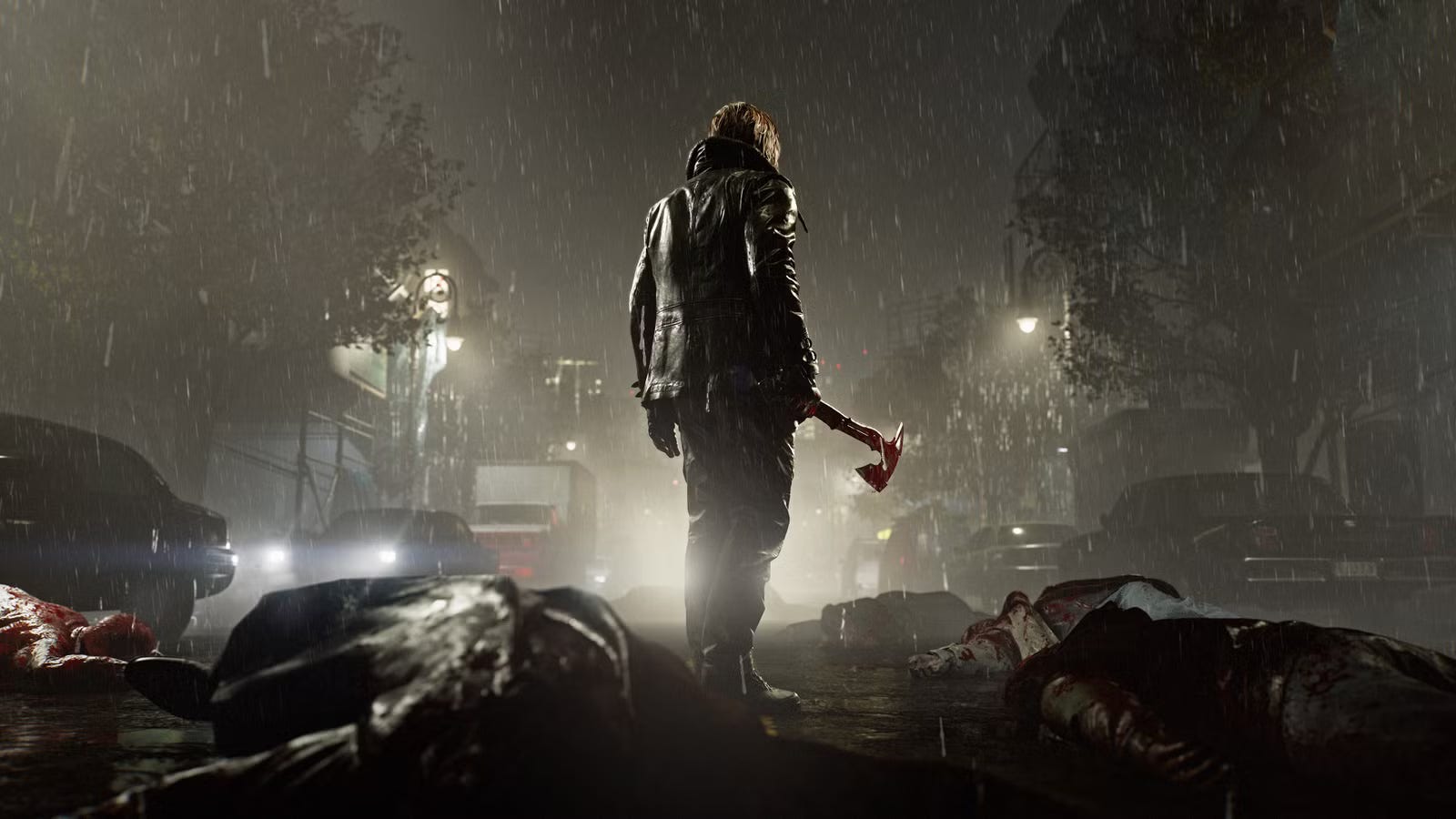
Resident Evil Requiem - Latest entry in the storied survival horror series offers a Requiem for a nightmare from tomorrow.
Pokémon FireRed and LeafGreen - Ports of Game Boy Advance classic land on Nintendo Switch in time for the latest Pokémon Day.
Reigns: The Witcher - Another officially licensed entry in the ‘Tinder for decision makers’ lands on PC and iOS.
Before you go…
Mortal Kombat is making your kids take up ice-skating. Or at least, that’s what we learned from the final days of the Winter Olympics.
Georgian ice-skating duo Anastasiia Metelkina and Luka Berulava performed a routine inspired by the fighting game in Milano-Cortina, with each skater performing a ‘Friendship’ and a distinctly family-friendly ‘Fatality’ during their four-minute-long show.
When will someone ban this sick, sick filth?
Keep up with VGIM: | Linkedin | Bluesky | Email | Power Play |